Original Catalog Showcase
High-Precision Engineered Structural Hardware & OEM Components
Direct manufacturing output supporting smart architectural furniture, motorized ergonomic framing, and heavy-load structural systems.
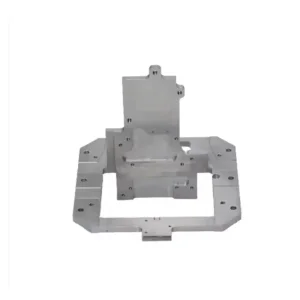
OEM Custom High-Precision CNC Machined Metal Bracket & Structural Frame Wire EDM & Milling for Aerospace & Automotive Applications Manufacturer, Quotes
Configure & Quote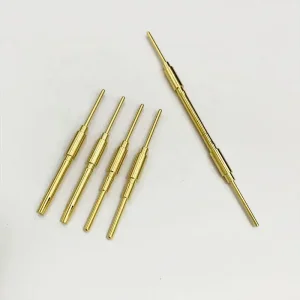
ODM Custom CNC Turned Contact Pins & Test Probe Components Manufacturer, Exporters
Configure & Quote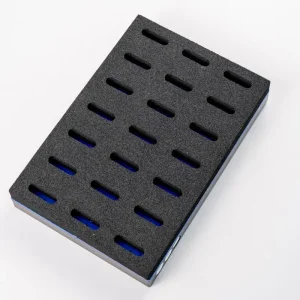
China Custom CNC Machined Foam Vacuum Gripper Plates for Robotic EOAT Manufacturer, Service
Configure & Quote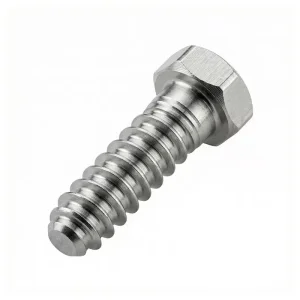
Custom Titanium Medical Implant / Bone Screw Exporter, Factories
Configure & Quote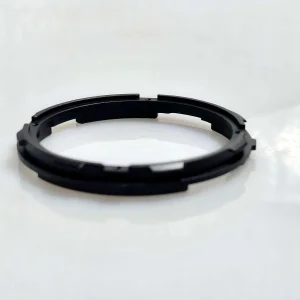
Custom Custom CNC Turn-Milled Bayonet Mount & Locking Ring Supplier, Suppliers
Configure & Quote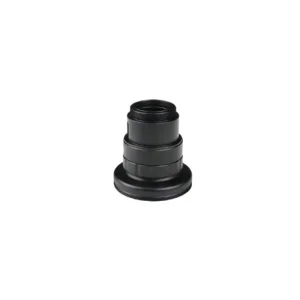
OEM Custom Precision CNC Turned Black Anodized Aluminum Lens Barrel & Optical Housing Components Manufacturer, Product
Configure & Quote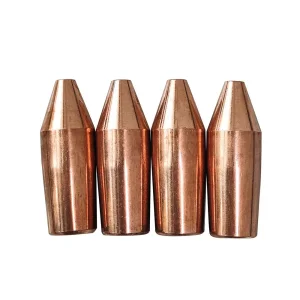
OEM Custom Resistance Spot Welding Electrode Caps Exporters, Factories
Configure & Quote
Industry Macro Intelligence
Evolutionary Trends in Modern OEM Furniture Hardware Manufacturing
The contemporary commercial and architectural furniture sectors demand tight integration of kinematics, micro-tolerances, and high aesthetic endurance.
Motorized & Smart Integration
The rapid shift toward standing desks, automated concealed cabinetry, and smart ergonomic seating requires precision actuators, zinc-alloy gear reducers, and aluminum extrusions with strict coaxial tolerances.
Severe Corrosion Resistance
Global specifications require extreme durability against humid tropical conditions, coastal salt spray, and aggressive cleaning chemicals. Anodized coatings, cathodic electrophoretic finishes, and PVD titanium nitride layers are setting the standard.
Invisible & Frameless Architecture
Minimalist interior trends require heavy-duty concealed 3D-adjustable hinges, flush-mount sliding door carriages, and hidden push-to-open latch assemblies that deliver high load capacities within tight spatial envelopes.
Global Procurement Intelligence
Addressing Sourcing Fragility for Tier-1 Hardware Brands
Procurement directors and supply chain engineers frequently face batch inconsistencies, unaligned tooling schedules, and lack of true engineering accountability.
Tolerance Accumulation Deficiencies
Multi-linkage mechanisms often suffer from dimensional drift across stamping and die-casting batches, causing stiff movement or early failure. We solve this by applying unified GD&T coordinate reviews and dedicated CNC machining centers for critical hinge joints.
Material Sub-grade Substitution
Unvetted suppliers may cut costs using porous secondary zinc scrap or improper aluminum alloys, risking structural cracks. We provide full optical emission spectrometer (OES) chemical tracing with complete raw material 3.1 certs for every production run.
Prototyping-to-Mass-Production Delays
Bridging initial custom architectural designs into scalable production tooling often triggers costly delays. Our multi-process hub pairs rapid 5-axis CNC machining and 3D metal prototyping directly with multi-cavity progressive tooling pipelines under a single technical contact.
Enterprise Solutions
Integrated Multi-Process Manufacturing Framework
Combining precision CNC machining, high-pressure die casting, and progressive die stamping within an interconnected quality ecosystem.
5-Axis CNC Precision Finishing
Holding ±0.005 mm critical dimensions for architectural mounting plates, sensor-driven housings, and heavy-duty structural connector blocks.
High-Pressure Die Casting
Equipped with 280T to 1600T cold-chamber machines for high-density aluminum (A380, ADC12) and zinc (Zamak 3, Zamak 5) hinge bodies and structural corner brackets.
Progressive Tooling & Stamping
Continuous-feed stamping lines handling up to 5,000 tons annually. Tight dimensional control on spring clips, undermount drawer slides, and heavy shelf brackets.
Advanced Surface Treatment
Automated lines for micro-bead blasting, hard anodizing, electroplating (matte black, satin nickel, chrome), and anti-fingerprint cathodic coatings tested to 1,000+ hours salt spray.
Regulatory & IP Protection
Strict Global Compliance & Verified Supply Chain Governance
Meeting rigorous international quality and material compliance standards for premium furniture applications worldwide.
BIFMA & European Standards
All load-bearing hardware undergoes comprehensive static load, drop impact, and cyclic endurance testing adhering strictly to ANSI/BIFMA X5.5 (Desk Products), ANSI/BIFMA X5.9 (Storage Units), and European EN 15372 standards.
RoHS, REACH & Conflict Minerals
Full regulatory transparency across global supply chains. All metal formulations, platings, and plastic components are certified free of toxic heavy metals, compliant with EU RoHS 2011/65/EU and REACH (EC 1907/2006) chemical guidelines.
Bilateral Non-Disclosure (NDA) Protocol
Your technical drawings and proprietary mechanism designs stay secure. We execute legally binding NDAs before receiving CAD files, ensuring your intellectual property remains fully protected throughout the manufacturing lifecycle.
Next-Generation Roadmap
The Future of Furniture Hardware: Smart, Lightweight, Sustainable
Our research and engineering initiatives focus on developing high-performance hardware for tomorrow's commercial and residential environments.
PHASE 01 // KINEMATICS
Zero-Decibel Dampening
Developing micro-fluidic silicone dampers integrated directly into hinge pivots and slide runners to achieve near-silent dynamic deceleration.
PHASE 02 // IOT HARDWARE
Embedded Sensory Hardware
Miniaturized sensor housings and precision structural contact pins embedded inside ergonomic desk lifting columns and motorized commercial display mounts.
PHASE 03 // MATERIALS
Magnesium-Lithium Lightweighting
Pioneering thin-wall die casting using ultra-light magnesium and aluminum alloys to cut weight by up to 35% without sacrificing tensile or load-bearing performance.
PHASE 04 // ECO-COMPLIANCE
Zero-Discharge Green Plating
Transitioning toward closed-loop automated trivalent chromium and trivalent titanium conversion coatings, eliminating hazardous hexavalent wastewater emissions.
Engineering Knowledge Base
Frequently Asked Questions: OEM Furniture Hardware Sourcing
Detailed technical answers for procurement directors, product engineers, and supply chain managers.
What tolerances can Sunmy Hardware hold on custom furniture hardware components?
Critical CNC-milled and precision-turned features can be held down to ±0.005 mm, with ±0.01 mm standard on precision features. For die-cast zinc and aluminum components, we maintain as-cast tolerances within ±0.05 mm to ±0.1 mm, followed by secondary CNC machining for pivot pins, bearing bores, and mounting interfaces to guarantee smooth mechanism kinematics.
Which furniture hardware manufacturing processes are handled in-house?
CNC machining (3-axis, 4-axis, and 5-axis) and progressive metal stamping are performed directly in Sunmy-owned facilities. High-pressure die casting and surface finishing are handled by audited partner plants. All incoming material verification, dimensional CMM inspections, First Article Inspections (FAI), and packaging quality audits are managed directly by our in-house engineering team.
How does Sunmy protect CAD drawings, 3D models, and proprietary designs?
We sign formal bilateral Non-Disclosure Agreements (NDAs) with client engineering teams prior to receiving any 2D drawings, 3D STEP files, or samples. Overseas engineering buyers work directly with our engineering personnel—ensuring design data is never shared with third-party trading intermediaries.
What quality documentation and inspection reports accompany production runs?
Standard documentation includes Raw Material Mill Test Certificates (spectrometric chemical composition and mechanical properties), First Article Inspection (FAI) reports, CMM dimensional measurement reports, and salt spray corrosion test certificates. RoHS and REACH declarations are provided based on destination market requirements.
Can you assist in transitioning rapid prototypes into high-volume progressive tooling?
Yes. We specialize in low-volume prototype builds through CNC machining, urethane casting, and 3D printing to validate mechanical kinematics, BIFMA load ratings, and assembly clearances. Once the design is proven, our engineers run Moldflow and stamping simulations before cutting mass production dies.
Catalog Continued
Precision Fasteners, Specialized Housings & Brackets
Explore additional manufactured components produced to tight tolerances for demanding mechanical and structural assemblies.
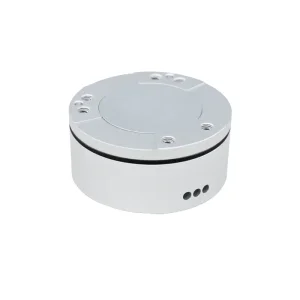
China Custom 6-Axis Force/Torque Sensor Housings & Elastic Elements | OEM/ODM Service, Factories
Configure & Quote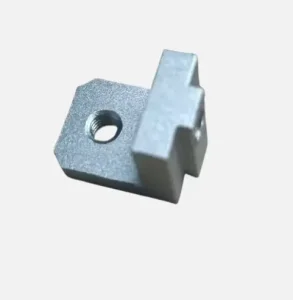
Custom Custom CNC Milled Aluminum Alloy Right Angle Mounting Bracket Manufacturer, Supplier
Configure & Quote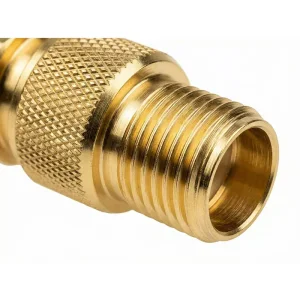
High-Quality Precision Knurled Brass Threaded Connector Manufacturers, Factories
Configure & Quote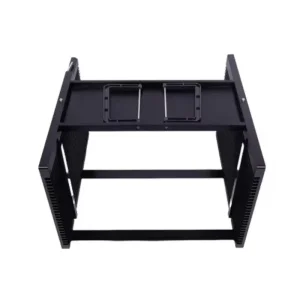
OEM Premium 8-Inch CNC Machined Aluminum Semiconductor Wafer Carrier Factories, Quotes
Configure & Quote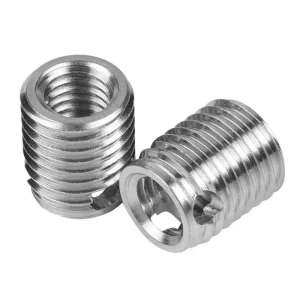
Custom Custom Self-Tapping Threaded Inserts Product, Exporters
Configure & Quote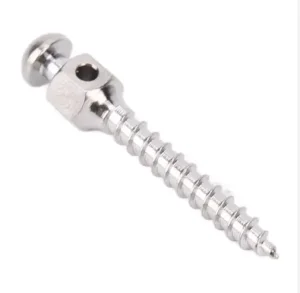
China Custom Precision Titanium Orthodontic Micro Implant Screws Manufacturers, Factories
Configure & Quote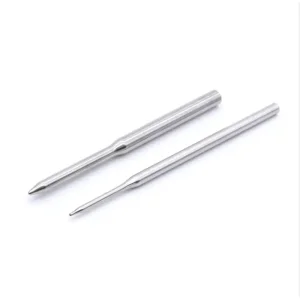
OEM Custom Stainless Steel Waterproof Sensor Probe Housing / Thermowell (OEM Support) Manufacturer, Suppliers
Configure & Quote