High-Precision OEM Components & Structural Assemblies
Engineered hardware and cast assemblies delivering micron-level tolerances, exceptional strength-to-weight ratios, and full First Article Inspection (FAI) traceability.
-
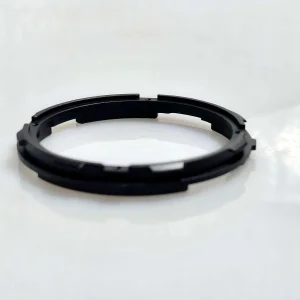
Custom Custom CNC Turn-Milled Bayonet Mount & Locking Ring Supplier
Configure & Inquire -
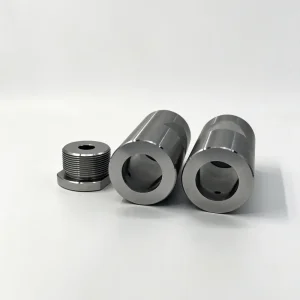
China Custom CNC Turned Tooling Sleeves & Threaded Retaining Plugs
Configure & Inquire -
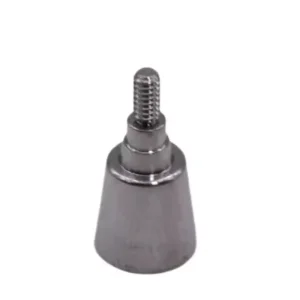
Titanium Abutment Implant Driver & Prosthetic Connector
Configure & Inquire -
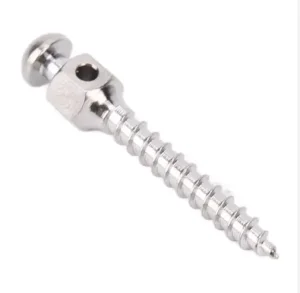
Precision Titanium Orthodontic Micro Implant Screws
Configure & Inquire -
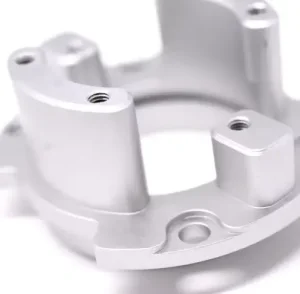
5-Axis CNC Machined Housing Mounting Bracket Aerospace/Auto
Configure & Inquire -
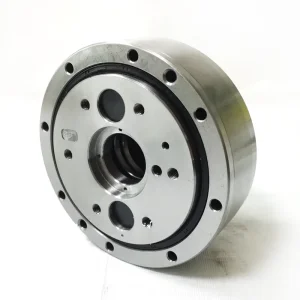
ODM Custom Hollow-Shaft Cycloidal Reducer OEM Parts
Configure & Inquire -
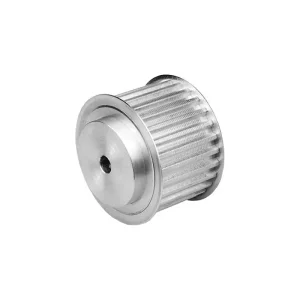
OEM CNC Machined HTD 3M Aluminum Timing Belt Pulley
Configure & Inquire -
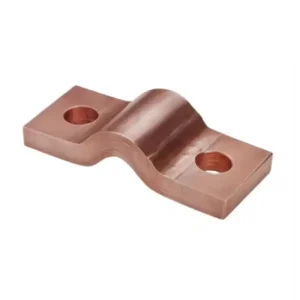
Flexible Laminated Copper Busbar for Battery Systems
Configure & Inquire
Magnesium Die Casting Alloys: Microstructural Mechanics & Selection Criteria
Magnesium (Mg) stands as the world's lightest structural metal, possessing a density two-thirds that of aluminum and one-quarter that of structural steel. In OEM high-pressure die casting (HPDC) and thixomolding applications, selecting the appropriate chemical composition dictates mechanical performance, ductility, creep resistance, and corrosion barriers.
| Alloy Designation | Composition Breakdown | Tensile Yield (MPa) | Elongation (%) | Thermal Conductivity | Optimal Industry Application |
|---|---|---|---|---|---|
| AZ91D | Mg-9Al-0.7Zn-0.2Mn | 160 MPa | 3% | 72 W/(m·K) | High mechanical strength, electronics chassis, powertrain brackets |
| AM60B | Mg-6Al-0.3Mn | 130 MPa | 8% - 12% | 61 W/(m·K) | High energy absorption, automotive steering wheels, crash rails |
| AM50A | Mg-5Al-0.3Mn | 125 MPa | 10% - 15% | 65 W/(m·K) | Extreme ductility, IP beams, seat frame structural sub-assemblies |
| AS41B | Mg-4.2Al-1.0Si-0.35Mn | 140 MPa | 4% - 6% | 68 W/(m·K) | Elevated temperature creep resistance (up to 150°C), engine housings |
| Elektron 21 / EV31A | Mg-Nd-Gd-Zn-Zr | 175 MPa | 5% | 90 W/(m·K) | High-rel aerospace gearboxes, defense optronics, motorsport blocks |
Process Engineering: Cold-Chamber, Hot-Chamber & Thixomolding
Executing zero-defect magnesium die casting demands precise melt shielding, high shot speeds, and rapid solidification controls to harness the metal's ultra-low latent heat of fusion.
Hot-Chamber HPDC
Utilizes an internal gooseneck submerged directly in molten magnesium alloy. Ideal for smaller consumer electronics, optical lens bezels, and complex miniature brackets requiring ultra-fast cycle rates, minimized thermal cycling losses, and wall thicknesses down to 0.65 mm.
Cold-Chamber HPDC & Vacuum Assist
Employs robotic ladling under protective inert atmospheres (N2 / CO2 / R134a carrier gas) into horizontal shot sleeves. Combined with high-efficiency vacuum blocks (<50 mbar cavity pressure) to eliminate trapped gas porosity, enabling post-cast heat treatments and structural safety welds.
Semi-Solid Thixomolding
Injection of chipped magnesium alloy in a semi-solid slurry state (globular solid fraction suspended in liquid) via specialized twin-screw barrels. Yields virtually zero laminar porosity, superior dimensional stability, and tight shrinkage behavior without molten metal open handling.
Technology Roadmap & Metallurgy Horizons (2025–2035)
The transition toward extreme lightweighting, carbon neutral transportation, and multi-functional robotic hardware drives unprecedented structural advancements in magnesium manufacturing.
Large-Scale Integrated Giga-Casting
Scaling up clamping tonnage to 6,000T–9,000T to consolidate 40+ stamped and spot-welded steel/aluminum parts into a single monolithic die-cast magnesium rear subframe or firewall unit. Slashes structural body mass by up to 45% while optimizing crash energy dissipation path designs.
Micro-Arc Oxidation (MAO/PEO) & Self-Healing Sol-Gels
Eliminating magnesium's historic corrosion bottleneck through plasma electrolytic oxidation, generating a high-density, ceramic-grade crystalline layer (spinel-structured oxide). Provides 1,000+ hours of ASTM B117 neutral salt spray resistance without toxic hexavalent chromium coatings.
Thermally Conductive Nano-Composite Alloys
Synthesizing carbon nanotubes and ceramic nanoparticles into AZ91 and AM60 matrices to push thermal conductivity beyond 120 W/(m·K) while preserving magnesium's vibration damping characteristics. Essential for AI edge-computing chassis, 5G RF transmitters, and LIDAR housings.
Cross-Sector Applications: Engineering Solutions for Demanding Environments
From crash-tested automotive safety components to thermal-dissipating aerospace electronics envelopes, magnesium die castings satisfy stringent operational thresholds.
Automotive & EV Powertrains
Instrument panel (IP) cross-car beams, steering column skeletons, transmission valve covers, and EV battery module trays. Provides massive mass reduction, low center of gravity, and exceptional kinetic impact energy absorption.
Aerospace & Defense
UAV airframes, gimbal stabilized sensor housings, satellite attitude control enclosures, and pilot cockpit avionics chassis. Meets strict mil-spec requirements for flight vibration damping and radiation-hardening compatibility.
Robotics & Edge Hardware
High-speed SCARA and humanoid robotic joint linkages, robotic arm articulated segments, camera housings, and high-frequency power tools requiring minimal rotational inertia and immediate heat spread.
Consumer & Medical Devices
Ultrabook internal chasses, AR/VR optical frames, medical ultrasound casing structures, and surgical drill housings offering robust drop-test resilience and built-in electromagnetic shielding (EMI/RFI).
Supply Chain Resilience: China's Magnesium Dominance & Factory 4.0
China supplies over 85% of the world's primary magnesium ore reserves and refined ingot production via advanced thermal reduction (Pidgeon and vertical retort technologies). Sunmy Hardware leverages this geographical supply integration to offer unassailable price stability, short cycle runs, and complete traceability.
Upstream Mineral Assurance
Direct mine-to-foundry ingot sourcing agreements shield buyers from raw material volatility. Standardized batches of certified AZ91D, AM60B, and custom rare-earth master alloys guarantee virgin chemical purity and eliminate tramp element inclusions (Ni, Fe, Cu kept strictly below critical ppm thresholds).
Automated Robotic Cells
Integration of multi-axis ABB/KUKA extraction robots, automatic spray-lubrication systems, inline laser degating stations, and automated conveyor routing. Guarantees uniform mold release thermal profiles and preserves cycle consistency within ±0.2 seconds shot-to-shot.
Circular Economy Closed-Loop
In-house vacuum remelting and fluxless refining recycling biscuited runners and overflows directly into non-structural secondary programs. Slashes lifecycle carbon footprint (embodied energy) by up to 80% compared to primary smelter virgin material imports.
Global Compliance, Quality Engineering & Metrology Audits
Overseas OEM engineering groups cannot compromise on verification documentation. Sunmy Hardware operates an ISO 9001, IATF 16949-aligned metrology inspection infrastructure, verifying every magnesium batch from ingot chemistry to finished surface.
CMM & 3D Optical Blue Light
Zeiss Coordinate Measuring Machines (CMM) running Calypso software to resolve GD&T true positions, coplanarity, and runout down to ±0.005 mm. Non-contact GOM optical scanning captures complete point-cloud deviation color maps against 3D CAD models.
Real-Time X-Ray NDT Porosity
160kV micro-focus industrial digital radiography systems inspect critical internal structural sections per ASTM E505 reference radiographs. Ensures internal gas bubble or shrinkage defects do not compromise safety-critical structural joints.
Optical Emission Spectroscopy (OES)
Direct spark optical emission spectrometers execute incoming melt analysis prior to shot cycles. Corrosive tramp elements (Iron <0.005%, Nickel <0.002%, Copper <0.030%) are monitored continuously to prevent galvanic cell acceleration.
Regulatory Passports
Complete traceability documentation: PPAP Level 3, IMDS submission, RoHS 3 (Directive 2015/863/EU), REACH (EC 1907/2006 SVHC), and Conflict Mineral reporting supplied alongside all commercial shipments.
Engineering DFM & Sourcing Workflow: From Concept to Production
A rigorous 5-stage procurement and manufacturability optimization protocol designed specifically for cross-border enterprise sourcing teams and design engineering departments.
DFM CAD Analysis
CAD model review evaluating draft angles (typically 1.0°–1.5° for Mg), uniform wall transitions, rib-to-wall ratios (0.8x), and parting line optimization.
MAGMA Moldflow Simulation
Thermal gating simulation predicts runner solidification fronts, air entrapment spots, and hotspot shrinkage to locate venting and chills before cutting tool steel.
Tooling Fabrication (H13/Dievar)
Core and cavity inserts machined from Premium Dievar or vacuum-hardened H13 steel (HRC 46–50) with optimized conformal cooling passages for magnesium thermal control.
T1 Trials & FAI Sign-off
Initial machine trial casting. Comprehensive First Article Inspection (FAI) dimensional reports, mechanical tensile coupons, and radiographic tests are submitted.
Serial HPDC & Finishing
Mass production under automated cellular monitoring, CNC post-machining of critical bores, micro-arc oxidation coating, clean packaging, and ocean/air freight logistics.
Frequently Asked Questions: Technical & Sourcing Specifications
In-depth responses resolving engineering questions on galvanic isolation, safety controls, cycle economics, and precision tolerances.
How do you resolve galvanic corrosion when joining magnesium to steel or aluminum?
Galvanic isolation is achieved through non-conductive boundary strategies. We specify zinc-nickel plated steel fasteners with Dacromet / Geomet coating, nylon/PTFE non-conductive washers, or zinc-rich chromate-free primers. Additionally, maintaining dry joint geometry and eliminating stagnant moisture pooling through drainage apertures suppresses galvanic cell formation completely.
What is the tool life expectancy when die casting magnesium versus aluminum?
Magnesium die casting tooling life expectancy is significantly higher—typically 150,000 to 300,000 shots, compared to 80,000 to 120,000 shots for aluminum. Magnesium exhibits far lower solubility for iron (Fe) and melts at a lower temperature (~650°C), drastically minimizing thermal fatigue cracking (heat checking) and chemical solder erosion on premium tool steels like Premium Dievar or H13.
Can magnesium die castings achieve airtight pressure tightness for fluid housings?
Yes. Utilizing high-vacuum assisted cold-chamber casting (<50 mbar absolute cavity pressure) eliminates trapped gas blowholes and laminar skin pores. For high-pressure pneumatic or hydraulic valve blocks, we apply post-cast anaerobic resin vacuum impregnation (MIL-I-17563C qualified) to guarantee hermetic leak-free sealing up to 25 bar working pressures.
How safe is magnesium machining and casting at Sunmy Hardware's factory?
Molten magnesium requires strict inert atmosphere shielding (N2/CO2/R134a blend) to prevent ignition. For CNC milling and turning operations, our facilities operate dedicated wet-dust collection cyclonic filtration stations, mineral oil cooling emulsions, Class D dry-powder fire suppression, and strict chip management protocols ensuring zero atmospheric oxidation hazard.
What is the minimum wall thickness achievable for electronic enclosures?
For consumer electronics frames and VR visor chasses using high-fluidity AZ91D via hot-chamber HPDC or thixomolding, we routinely achieve 0.65 mm to 0.8 mm continuous wall thickness across expansive surface areas, maintaining stiffness through strategically placed internal gussets, stiffening rib lattices, and corrugated cross-sections.
How does magnesium compare with carbon fiber reinforced polymers (CFRP)?
While CFRP offers high tensile strength along fiber axes, magnesium die casting provides superior 3D isotropic structural behavior, orders-of-magnitude faster cycle times (seconds vs minutes for composite cures), full net-shape feature integration (bosses, threads, interlocking hooks), intrinsic EMI/RFI shielding, lower scrap cost, and 100% infinite circular recyclability.
Complementary CNC, Stamping & Assembly Capabilities
Complete multi-process engineering programs: integrate die cast sub-assemblies with precision turned bushings, capillary tubing, and robotic end-of-arm tooling.
-
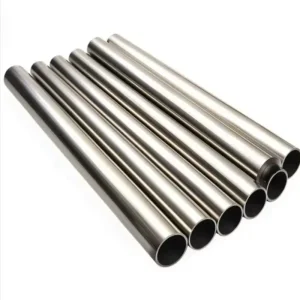
Precision Capillary Stainless Steel Tube (OD 1mm - 8mm)
Configure & Inquire -
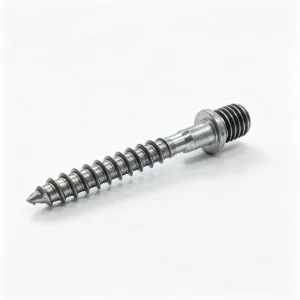
Precision Turned Stainless Steel Dual-Thread Hanger Bolt
Configure & Inquire -
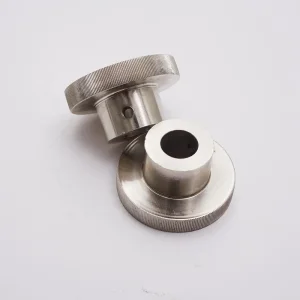
Custom CNC Knurled Feed Rollers for Packaging Machinery
Configure & Inquire -
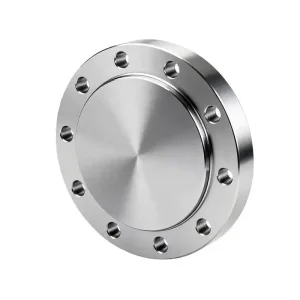
OEM Precision CNC Machined Stainless Steel Flanges
Configure & Inquire -
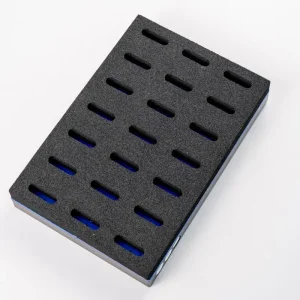
CNC Machined Foam Vacuum Gripper Plates for Robotic EOAT
Configure & Inquire -
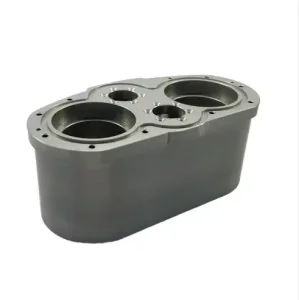
5-Axis Universal Joint Base & Gearbox Shell for Drones
Configure & Inquire -
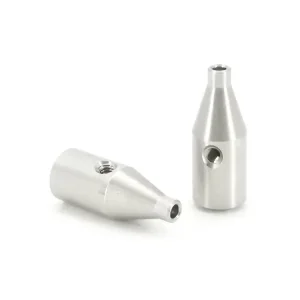
Custom CNC Turned Aluminum Nozzle & Adapter Bodies
Configure & Inquire -
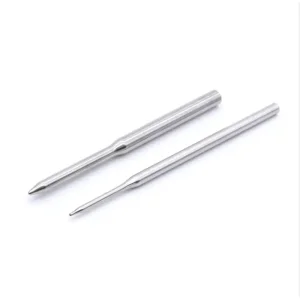
Stainless Steel Waterproof Sensor Probe Housing / Thermowell
Configure & Inquire
Initiate Your Magnesium Project with Certified Metallurgical Experts
Eliminate intermediary communication friction. Send your 3D STEP/IGES and 2D GD&T drawings directly to Sunmy Hardware's senior casting engineering team in Shenzhen. Receive comprehensive DFM analysis, gating layout suggestions, and firm tooling quotation within 24 hours.
Global IP & Trade Compliance Guarantees
- ✓ Bilateral NDA Executed First: Comprehensive Non-Disclosure Agreement executed prior to reviewing proprietary CAD/STEP models.
- ✓ Dedicated Tool Ownership: All magnesium dies, trim tooling, and CNC jigs remain 100% exclusive OEM client property.
- ✓ Direct Factory Floor Transparency: Continuous live video audits, CMM dimensional runs, and FAI material verification.
- ✓ DDP / Incoterms 2020: Seamless global door-to-door delivery handling export licenses, customs, and air/sea insurance.