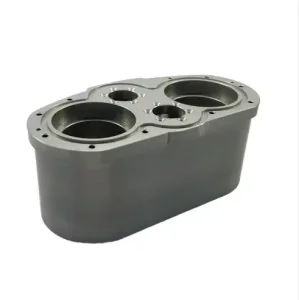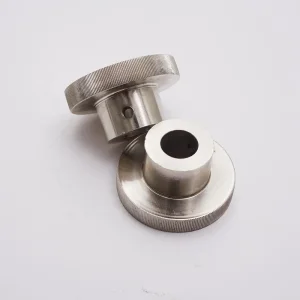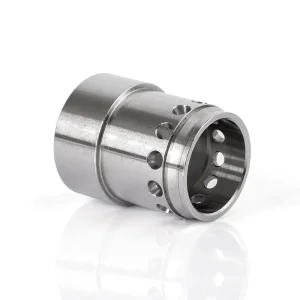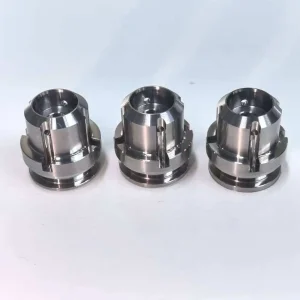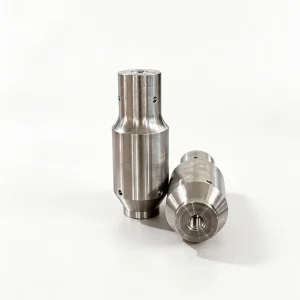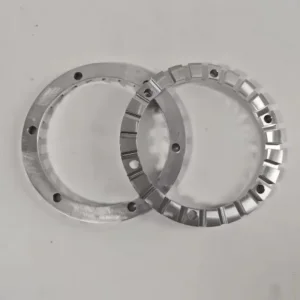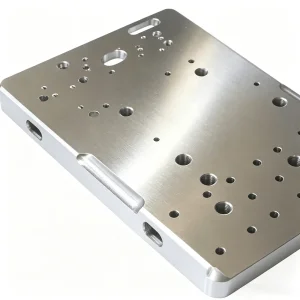
Featured Cast & Precision-Turned Component Assemblies
Engineered hardware and investment cast prototypes certified for dimensional repeatability, hermetic sealing, and high cyclic strength.
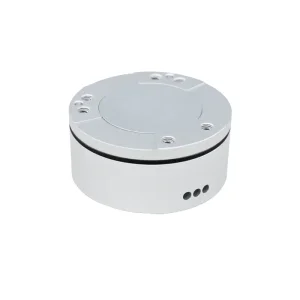
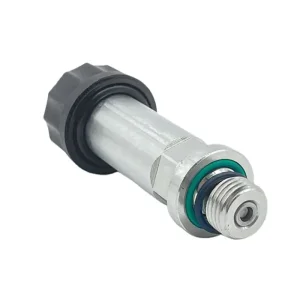
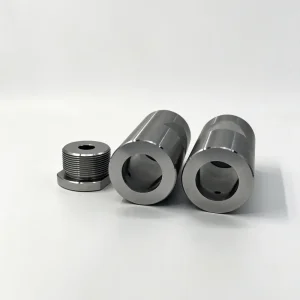
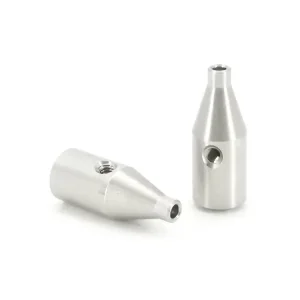
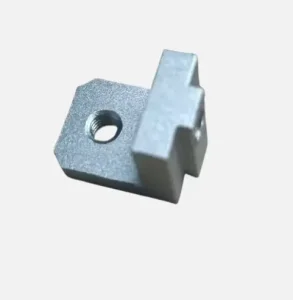
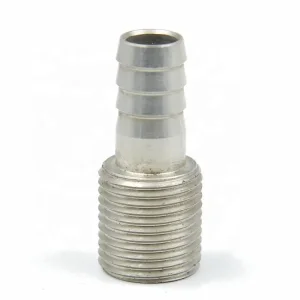
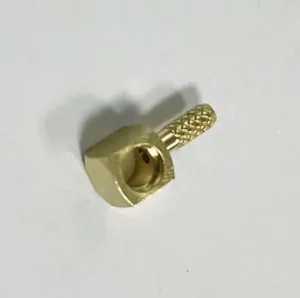
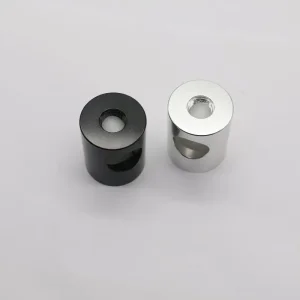
Stainless Steel Casting in Modern High-Reliability Engineering
In the contemporary industrial ecosystem, investment casting (lost-wax process) via colloidal silica sol systems has evolved from an empirical craft into a digitally controlled metallurgical science. As global OEMs seek to minimize carbon footprints while improving power density, near-net-shape casting provides unmatched design freedom and structural integrity.
Net-Shape Material Conservation
Subtractive machining from solid billet incurs significant material scrap ratios—often exceeding 70% in complex geometries like turbomachinery impellers or multi-port sensor housings. Silica sol casting eliminates material waste, freezing raw alloys directly into near-net geometries.
Isotropic Microstructural Integrity
Unlike forged directional matrices or additive manufacturing layers prone to micro-delamination under cyclic shear stress, controlled solidification creates uniform austenitic and martensitic grain distributions, maximizing fatigue resistance in corrosive pressurized environments.
Corrosion & Thermal Resistance
Deploying specialized grades including Austenitic CF8M (AISI 316), Duplex 2205, Super Duplex 2507, and Precipitation Hardening 17-4PH ensures sustained resistance against pitting, crevice corrosion, and intergranular degradation up to 850°C operating limits.
Common Stainless Steel Casting Alloys & Mechanical Performance
Selecting the optimal stainless steel alloy balances tensile strength, pitting resistance equivalent number (PREN), machinability index, and unit thermal expansion. Below is the reference matrix utilized in our Shenzhen DFM reviews.
| Alloy Grade (Cast / Wrought) | Microstructure | Tensile Strength (MPa) | Yield Strength 0.2% (MPa) | Elongation (%) | Typical Industrial Applications |
|---|---|---|---|---|---|
| CF8 / AISI 304 | Austenitic | ≥ 485 | ≥ 205 | ≥ 35 | Food processing, architectural fittings, sanitary fluid housings, manifolds. |
| CF8M / AISI 316 | Austenitic (Mo-bearing) | ≥ 485 | ≥ 205 | ≥ 30 | Marine valve bodies, chemical process impellers, pharmaceutical connectors. |
| 17-4PH / CB7Cu-1 | Precipitation Hardening | ≥ 930 - 1070 | ≥ 735 - 1000 | ≥ 10 | Aerospace linkages, pump shafts, dynamic robotic wrist joints, valve spools. |
| CD4MCuN / Duplex 2205 | Austenitic-Ferritic | ≥ 690 | ≥ 485 | ≥ 20 | Desalination high-pressure pump casings, offshore oil & gas riser flanges. |
| CA15 / AISI 410 | Martensitic | ≥ 620 | ≥ 415 | ≥ 18 | Steam turbine blades, high-stress wear bushings, excavator solenoid cores. |
Multi-Sector OEM Implementations
From subsea exploration to semiconductor fabrication cleanrooms, cast stainless components undergo extreme pressure, cryogenic temperatures, and aggressive chemicals.
Robotics & Multi-Axis Sensors
Miniature 6-axis force/torque sensor housings demand high elastic modulus coupled with zero internal casting porosity. Investment casting in 17-4PH allows internal routing of strain gauge harnesses while preserving precise thin-wall deflection geometry under dynamic loads.
Medical & Surgical End-Effectors
Biocompatible surgical clamps, endoscopic articulator knuckles, and orthopaedic drill guide bodies require cast CF3M/316L materials capable of surviving autoclave steam sterilization cycles without surface oxidation or passivated film degradation.
Heavy Hydraulic & Mobile Equipment
High-pressure excavator solenoid valve sleeves and hydraulic proportioning blocks cast in martensitic alloys provide superior wear resistance under contaminated fluid conditions, eliminating cavitational scouring common in softer fabricated assemblies.
Transparent Traceability & Risk Mitigation
Bridging overseas procurement with domestic production demands rigorous cross-border compliance. Sunmy Hardware operates under an ISO-certified quality management framework providing complete legal, technical, and regulatory clarity.
Full EN 10204 3.1 Certs
Every melt batch undergoes optical emission spectrometry (OES). Mill test reports verify chemical heat numbers and tensile test graphs matched to each casting heat code.
NDT Internal Inspection
Zero tolerance for sub-surface shrinkage voids. Available non-destructive testing includes Radiographic (RT), Liquid Penetrant (PT), and Ultrasonic Testing (UT) to ASTM standards.
Export Regulatory Shield
Shipments adhere strictly to EU RoHS 3 (Directive 2015/863/EU) and REACH (EC 1907/2006). All wood crating complies with ISPM-15 heat treatment for smooth customs clearance.
Direct IP & Legal Protection
Bilingual bilateral NDAs protect your proprietary 3D CAD geometry before transmission. Zero subcontracting of raw geometry ensures drawings never leak across open markets.
The Next Era of Investment Casting Solidification
As advanced industries converge on higher thermodynamic efficiency and reduced delivery cycles, our casting and machining workflows integrate computational intelligence and hybrid tooling.
AI Solidification & CAE Simulation
Deploying finite element thermal modeling prior to aluminum die tooling cut enables our foundry engineers to simulate molten stainless flow velocities, predict hot spots, and position chill plates and risers with mathematical accuracy, preventing porosity defects before wax injection.
Additive Hybrid Patterns (SLA/SLS)
For low-volume production or rapid functional prototypes (1 to 50 pieces), 3D printed photopolymer patterns replace CNC hard aluminum molds. This approach cuts prototype lead times from 6 weeks to 10 calendar days with zero hard-tooling amortization capital.
Robotic Shell Building & Vacuum Melt
Transitioning toward atmospheric automated slurry dipping robots guarantees uniform ceramic shell shell-wall thickness across deep internal cavities. Paired with vacuum induction melting (VIM), oxygen pickup is minimized, resulting in clean superalloy castings.
Stainless Steel Investment Casting Technical FAQ
Critical engineering considerations, process comparisons, and lead-time frameworks for procurement and design engineers.
What are the realistic dimensional tolerances for as-cast stainless steel parts?
How does silica sol casting differ from water glass casting?
What documentation is delivered with production lots?
Can Sunmy Hardware cast internal undercuts and hollow geometries?
What are the tooling lead times for prototyping versus production?
Advanced Hydraulic, Robotics & Flow Control Components
Explore our multi-axis CNC turned and cast hardware options, ready for qualification into your mission-critical supply line.