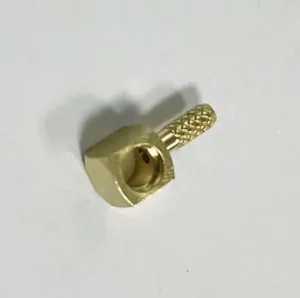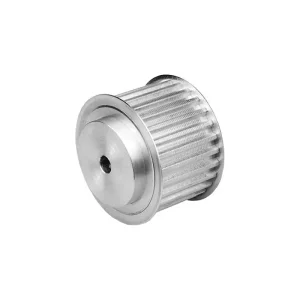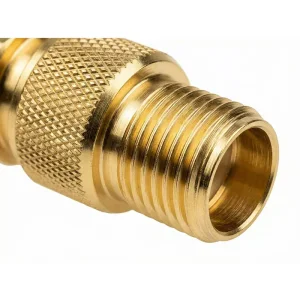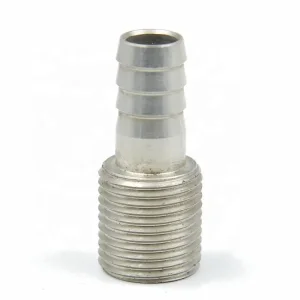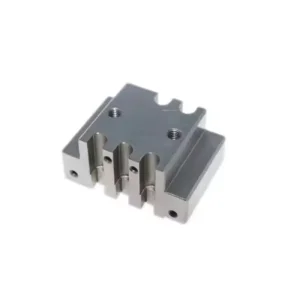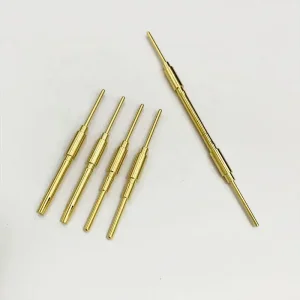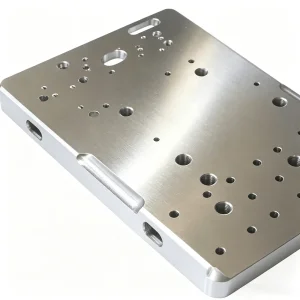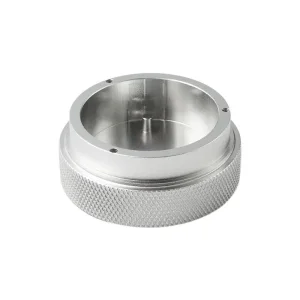
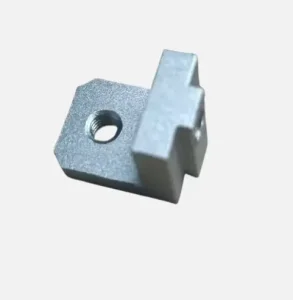
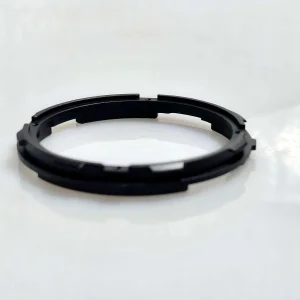
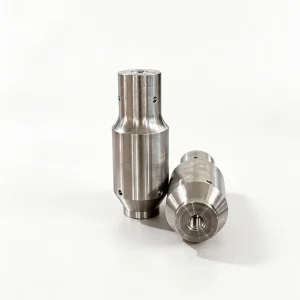
Featured Precision Machined & Fabricated Components
Direct OEM/ODM components manufactured to micron-grade geometric specifications, integrated within global automation, medical instrumentation, and structural robotics assemblies.
The Global Structural Transformation in Tube Laser Processing
How modern multi-axis fiber tube lasers are displacing traditional mechanical sawing, stamping, drilling, and deburring workflows across high-integrity engineering disciplines.
Consolidation of 5 Discrete Machining Steps
Traditional hollow structural section (HSS) profiling requires cold band sawing, secondary drill pressing, milling, manual deburring, and fit-up jigs. Industrial fiber tube laser cutting consolidates these legacy processes into an autonomous single-pass cycle, slashing manufacturing lead times by up to 72% and eliminating human handling errors.
Interlocking Tab-and-Slot Structural Joinery
Modern parametric nesting software enables self-fixturing geometries, including tongue-and-groove, bayonet locking, and miter-bent joints cut directly onto round, rectangular, elliptical, or open structural extrusions. Fabricators reduce welding fixture investments by over 80% while holding sub-millimeter chassis squareness before weld deposit.
Dynamic AI Nesting & Zero-Tail Scrap Economics
With global raw metal prices subject to market volatility, China's modern manufacturing infrastructure integrates multi-chuck feeding platforms that eliminate standard 150-300mm chuck scrap tails. Real-time nesting algorithms calculate common-line cuts between parts, generating an incremental 8% to 14% material yield across massive OEM batches.
Why Global Procurement Heads Rely on China Tube Laser Hubs
The convergence of specialized steel and aluminum extrusion mills, gigawatt-scale component manufacturing, and round-the-clock DFM response makes Shenzhen and the Pearl River Delta the world's leanest supply base.
Raw Mill Proximity
Direct tier-1 access to specialized mills for 6061-T6, 6063, 304/316L stainless, titanium, and seamless carbon alloy pipes ensures zero logistics delays and mill-test-certified alloy chemistry right from stock.
12kW to 30kW CNC Laser Fleets
Equipped with Chinese optical engines and German Precitec laser cutting heads, Chinese production lines pierce 20mm thick heavy-wall steel in milliseconds without thermal cracking or spatter buildup inside the tube bore.
24-Hour Prototype Sprints
Direct factory communication bridges the timezone gap. Receive comprehensive Design for Manufacturability reports, tooling assessments, and 3D simulation nesting files within 24 hours of CAD/STEP submission.
In-House Metrology & CMM
Sunmy Hardware guarantees dimensional verification with bridge CMM, optical laser profilometers, surface roughness testers, and full First Article Inspection (FAI) reports prior to global air or maritime freight dispatch.
Specialized Applications Across High-Tech Sectors
Discover how precision tube laser processing provides structural rigidity, weight optimization, and fluid dynamics compliance in mission-critical environments.
Chassis Subframes & Battery Safety Cages
High-strength low-alloy (HSLA) round and rectangular structural tubing laser cut with complex coping joints for EV battery trays, roll cages, suspension wishbones, and shock tower brackets. Clean inert cuts allow automated robotic arc welding without spatter removal or weld seam failure.
Surgical Articulation & Endoscopic Tubing
Micro-tube laser cutting of 316L stainless steel, Nitinol, and titanium hypodermic tubing (OD < 3.0mm, wall thickness < 0.2mm). Used in steerable endoscopes, biopsy instruments, and laparoscopic arms demanding burr-free microscopic kerf widths and zero heat-affected zones (HAZ).
Lightweight Carbon & Aluminum Linkages
Weight-relief pocketing and weight-optimized truss lattice geometries cut into 7075 and 6061-T6 aluminum tubes. Drastically lowers moving inertia on multi-axis delta robots, Cartesian gantries, camera jibs, and satellite deployment support rings without compromising torsional stiffness.
| Dimensional / Process Metric | Standard Commercial Grade | Sunmy Precision CNC Tube Laser | Engineering Benefit |
|---|---|---|---|
| Clamping Diameter (Round) | Ø20 mm – Ø220 mm | Ø8 mm – Ø350 mm (Micro to Heavy) | Enables micro-medical tubing and heavy structural piling. |
| Profile Geometries | Round & Square Only | Round, Rectangular, Oval, C/U-Channel, Angle Iron, Custom Extrusions | Accommodates bespoke aluminum heatsink profiles and channel structural iron. |
| Contour Repeatability | ±0.15 mm – ±0.20 mm | ±0.03 mm to ±0.05 mm | Perfect pin-joint alignment; eliminates secondary machining. |
| Multi-Axis 3D Bevel Angle | Fixed 90° Perpendicular | Continuous 5-Axis Dynamic Tilt (±45°) | Zero-gap bevels for complete penetration welds (AWS/ISO compliant). |
| Weld Seam Recognition | Visual Manual Alignment | AI Machine-Vision Automatic Seam Avoidance | Prevents cutting across raw pipe weld seams; protects cutter nozzles. |
Technological Trajectories in China's Tube Laser Sector
Leading Chinese contract manufacturing facilities are investing heavily in automated hardware and intelligent closed-loop algorithms to maintain a global technological lead.
Active Optical Tube Center Compensation
Mill tubes inevitably suffer from factory curvature, sag, and torsional twist. Advanced Chinese 3D tube cutting heads utilize integrated capacitive and optical laser scanners to measure material deviation in real-time, mathematically altering the G-code toolpath on-the-fly to guarantee true axial bore concentricity.
Continuous Robotic Bundle Feeders
Unattended lights-out operation is achieved through automatic bundle loading stations capable of untangling, weighing, sorting, and loading 6-ton steel pipe bundles without crane assistance. Cycle times between finished profile release and new raw stock insertion are compressed to under 18 seconds.
High-Pressure Nitrogen & High-Frequency Air Assist
To eliminate post-cutting oxide layers that degrade powder coating and electro-galvanization adhesion, advanced factories use high-purity (99.999%) nitrogen cutting or ultra-filtered 1.6MPa dry compressed air, reducing consumable gas overhead while providing pristine, mirror-like edge profiles.
Buyer's Audit Guide: Evaluating Chinese Tube Laser Suppliers
Critical engineering criteria for sourcing directors, quality engineers, and international procurement managers seeking zero-defect supply security.
1. Machine Chuck Configuration & Clamping Rigidity
Evaluate whether the factory operates dual pneumatic chucks or triple/quad-chuck traveling systems. Triple-chuck setups maintain rigid support on both sides of the cutting head during the cut, preventing tube sag, chatter, and tapered wall cuts on longer lengths (6m to 12m stock).
Verification Checklist: Ask for machine specifications on chuck clamping stroke, stroke repeatability, and chuck pneumatic clamping pressure adjustability for thin-walled tubes to prevent mechanical crushing.
2. Heat-Affected Zone (HAZ) & Slag Mitigation Inside the Bore
For hollow structural fluid conduits or mechanical telescoping tubes, internal molten slag accumulation is catastrophic. Premium suppliers deploy anti-spatter internal spraying, sacrificial copper protective inserts, or internal water-cooled cooling flushes during laser piercing.
Verification Checklist: Require First Article Inspection cross-sections and internal boroscope imaging to verify the tube interior is free of adherent slag burrs.
3. Traceability, Metallurgical Certs & Export Packaging
Global buyers must mitigate raw material substitution risks. A reliable partner issues complete EN 10204 Type 3.1 Mill Test Certificates (MTC) matching the heat numbers stamped directly onto raw stock, along with full chemical spectrometer verification.
Verification Checklist: Audit packaging protocols: individual vacuum poly-tubing, VCI anti-corrosion barrier papers, desiccant pouches, and fumigated reinforced plywood cases configured for sea container de-stuffing.
4. In-House Post-Processing & Secondary Operations
Contracting with a supplier that only cuts tubes causes logjams downstream. Prioritize integrated plants like Sunmy Hardware that combine fiber laser cutting with in-house CNC milling, rotary draw tube bending, robotic TIG/MIG welding, anodizing, and powder coating.
Verification Checklist: Confirm single-facility ownership of end-to-end tolerances, ensuring no finger-pointing between separate cutting and bending subcontractors.
Need Engineering Feedback on Your 3D Tube Assemblies?
Submit your .STEP, .IGES, or .SLDPRT files. Our manufacturing engineers conduct a complimentary DFM analysis, highlighting tab-and-slot joint optimizations, laser kerf allowances, and wall thickness structural recommendations within 24 hours.
Frequently Asked Questions: Tube Laser Cutting Services
Comprehensive engineering responses addressing tolerance budgets, materials, minimum features, and international trade compliance.
What dimensional tolerances can Sunmy achieve on CNC fiber tube laser cuts?
Our standard production tolerances for feature positions, slot cutouts, and length dimensions are held to ±0.05 mm across standard profiles up to 3000 mm in length. On critical aerospace or optical chassis components utilizing real-time dynamic centering systems, we reliably maintain cut contour tolerances to ±0.03 mm. Achievable tolerance depends directly on raw tube straightness, wall thickness uniformity, and material alloy grade, which are strictly qualified during incoming material inspection.
Which tube profiles and structural cross-sections can your lasers process?
Our CNC laser chucks handle round pipes (Ø8 mm to Ø350 mm), square tubes (10×10 mm up to 250×250 mm), rectangular tubes, elliptical tubes, flat-sided ovals, and asymmetrical custom aluminum extrusions. Additionally, our machines are equipped with auxiliary channel clamps to cut open structural profiles, including standard C-channels, U-channels, L-shaped angle iron, and H-beams up to 12 meters in overall raw stock length.
How does your 3D 5-axis bevel head assist in heavy structural welding?
Traditional flat cutting produces a straight 90° edge perpendicular to the pipe surface, requiring manual angle grinding or mechanical milling to create weld preps. Our 5-axis articulating head tilts up to ±45°, cutting dynamic V, Y, K, and X-style weld bevels in the same automated pass. This ensures exact root-gap tolerances and consistent groove geometry, allowing robotic welders to execute 100% full-penetration welds compliant with AWS D1.1 and ISO 5817 standards.
How do you protect internal bore surfaces from thermal slag and back-spatter?
When cutting hollow sections, the laser beam and molten metal can strike the opposite interior wall. For critical applications such as hydraulic piping, medical devices, or cosmetic furniture, we apply three primary countermeasures: 1) Automated anti-spatter chemical barrier coating injected prior to piercing; 2) Traveling copper internal heat-sink mandrels; 3) Software-controlled dynamic focus and gas-pressure modulation that instantly halts laser emission once the immediate wall is pierced.
What are the minimum hole sizes and slot dimensions that can be cleanly laser cut?
As a best-practice engineering rule, the minimum laser hole diameter should not be less than the material wall thickness (D ≥ 1.0T) for carbon and stainless steel, and 1.2T for highly reflective aluminum alloys. However, by deploying fine-focus optical cutting heads and ultra-high-frequency pulsed piercing routines, we routinely achieve micro-apertures down to 0.5T on wall thicknesses up to 4.0 mm without edge taper or thermal burnouts.
How do you safeguard proprietary designs and confidential CAD models?
Sunmy Hardware enters into bilateral Non-Disclosure Agreements (NDAs) before receiving customer CAD data. Files are archived on air-gapped engineering networks with encrypted access control. Because we manage manufacturing directly within our facility, drawings are never circulated to third-party commercial trading houses or unvetted brokers.
What quality documentation accompanies international exports?
Every overseas shipment includes: 1) EN 10204 Type 3.1 Mill Test Certificates certifying chemical composition and tensile elongation; 2) First Article Inspection (FAI) reports with critical GD&T callouts; 3) Zeiss CMM dimensional verification data sheets; 4) Plating/anodizing coating thickness test reports (XRF); 5) RoHS and REACH compliance declaration certificates where mandated.
Custom Precision Hardware & Mechanical Sub-Assemblies
Explore our full line of custom turned, milled, and fabricated components designed to integrate with tube laser frames and structural enclosures.