Precision Engineering Library
Featured Industrial Components & Assemblies
Explore our verified high-tolerance structural, functional, and prototype components manufactured via vacuum casting, CNC machining, and advanced forming.
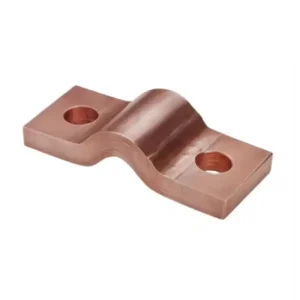
Custom Custom Flexible Laminated Copper Busbar for Battery & Electrical Equipment Service, Products
Explore Part Details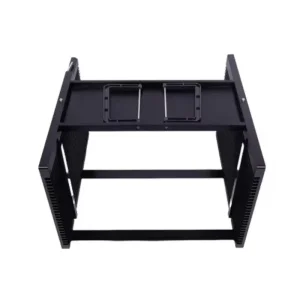
OEM Premium 8-Inch CNC Machined Aluminum Semiconductor Wafer Carrier Factories, Quotes
Explore Part Details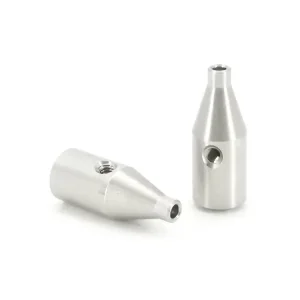
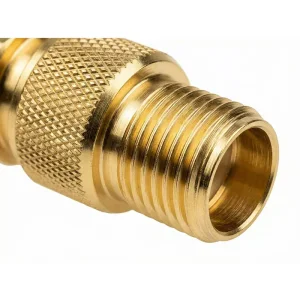
China Custom CNC Turned Aluminum Nozzle & Adapter Bodies Exporter, Factory
Explore Part Details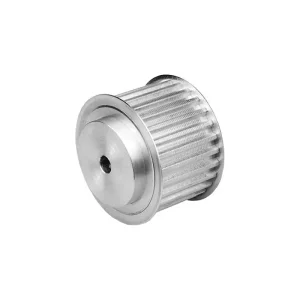
OEM Custom CNC Machined HTD 3M Aluminum Timing Belt Pulley Supplier, Products
Explore Part Details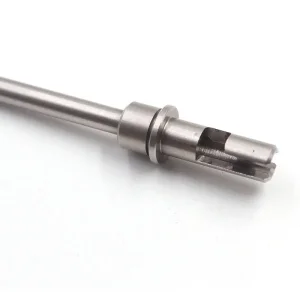
OEM Precision CNC Turned Stainless Steel Stepped Shaft Service, Products
Explore Part Details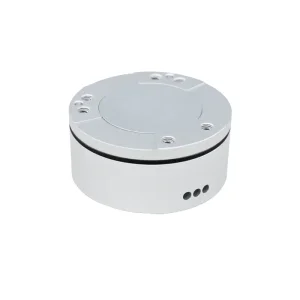
China Custom 6-Axis Force/Torque Sensor Housings & Elastic Elements | OEM/ODM Service, Factories
Explore Part Details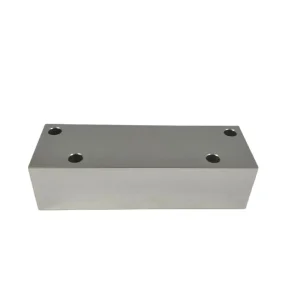
ODM Custom CNC Machined Aluminum Vacuum Manifold Block Manufacturer, Products
Explore Part Details
Technical Whitepaper & Strategic Insight
State of Vacuum Casting in Precision Contract Manufacturing
Evaluating technical nuances, rapid polyurethane chemistry, dimensional repeatability, and multi-process cross-compatibility for high-value engineering programs.
Vacuum casting (commonly referred to as polyurethane or urethane casting) has evolved far beyond rudimentary prototyping. Within modern international agile manufacturing pipelines, China Vacuum Casting Services represent the pivotal bridge connecting initial 3D digital design iterations to high-volume injection molding. Utilizing master patterns produced via SLA/SLS additive manufacturing or high-precision 5-axis CNC machining, vacuum casting cures two-part liquid polyurethanes inside flexible room-temperature-vulcanizing (RTV) silicone molds under a complete deep vacuum environment.
By eliminating airborne entrapped porosity and simulating engineering-grade thermoplastics—including flame-retardant ABS (UL94-V0), polycarbonate (PC) transparency, high-flex polypropylene (PP), and shock-absorbent elastomeric polyurethanes (shore ratings 30A to 90D)—vacuum casting permits functional verification, pre-compliance testing, environmental stress screening, and initial bridge volume market rollouts without committing hundreds of thousands of dollars to hardened steel tooling.
| Evaluation Parameter | Vacuum Casting (Polyurethane) | Direct CNC Machining | Production Injection Molding |
|---|---|---|---|
| Typical Tooling Lead Time | 1 to 3 Days (Silicone Mold) | Zero Tooling (Immediate Setup) | 4 to 8 Weeks (P20/H13 Steel) |
| Optimal Production Run | 10 to 500 Units | 1 to 50 Units (Complex Geometry) | 10,000+ Units |
| Surface Finish Range | SPI-A1 Mirror, VDI 12-36, Soft-Touch | Ra 0.8–3.2 μm, Machined Lines | Infinite Textures & Grainings |
| Standard Tolerances | ±0.15 mm per 100 mm (Material dependent) | ±0.005 mm to ±0.01 mm | DIN 16742 / ISO 20457 Compliant |
| Part Complexity & Undercuts | High (Handled via flexible elastic molds) | Constrained by 5-axis tool clearance | Requires lifters, side actions, sliders |
Procurement Intelligence
Global Procurement Demand & Risk Mitigation Patterns
Analyzing why sourcing heads and lead mechanical architects across North America, the EU, and APAC leverage specialized Chinese vacuum casting ecosystems.
Capital De-risking & Cash Flow Agility
Global original equipment manufacturers (OEMs) face compressing product lifecycles. Vacuum casting mitigates capital expenditures by enabling pilots of 20 to 250 units directly from functional resins, deferring multi-cavity injection mold tooling costs until regulatory certifications and clinical pilots confirm final product validation.
Fast Iteration of Complex Geometries
Silicone molds naturally flex over deep undercuts, negative draft angles, and organic contours, allowing industrial design teams to evaluate anatomical contours, ergonomic robotics handles, and snap-fit assemblies without adding complex slide mechanisms or hydraulic pull cores.
Seamless Bridge-to-Mass Transition
By engaging an integrated manufacturer equipped with CNC, die casting, stamping, and injection tooling under one roof, engineering data is not trapped in an isolated model shop. The identical DFM engineering analysis transfers straight from casting into hard tooling without re-qualifying vendor chains.
Macro Solutions
Engineered Solutions Across Critical Verticals
Delivering tailored material compliance, micro-structural integrity, and tight geometrical tolerances across specialized modern sectors.
Aerospace & Unmanned Systems
Low-weight aerodynamic nacelles, custom sensor fairings, and high-strength drone structural mounts. Castings are executed utilizing thermoset polyurethanes featuring high thermal deflection temperatures (HDT > 130°C) and custom electromagnetic interference (EMI) shielding coatings.
Medical Diagnostics & Surgical Devices
Short-run clinical enclosures, reagent cartridge prototypes, and non-invasive handheld shells. Resins are tailored to simulate clear medical polycarbonates or chemical-resistant PC/ABS blends with ISO 10993 cytotoxicity and RoHS/REACH compliance documentation.
Automotive Lighting & Functional HVAC
Optical-grade crystal-clear urethane lenses polished up to SPI-A1 optics, coupled with heat-resistant ducting, flexible vibration isolators, and custom interior trim bezels featuring custom grain textures matched directly to VDI/Mold-Tech specifications.
±0.005mm
CNC Critical Machining
24h
DFM Engineering Turnaround
100%
In-House CMM & FAI Verifications
5,000t/yr
Integrated Precision Metal Capacity
Compliance, QA & Localization
Quality Control Architecture & Intellectual Property Protection
Executing stringent multi-tier quality inspection with legal and technical safeguards protecting global brand equity.
Enforceable Non-Disclosure & CAD Firewalls
IP protection is central to our engagement model. Sunmy executes formal Non-Disclosure Agreements (NDAs) directly with overseas enterprise sourcing teams prior to collecting STEP, IGES, or DWG models. Internal server routing restricts CAD distribution exclusively to dedicated project production cells, eliminating intermediary broker leakage.
Full Batch Metrology, CMM & FAI Documentation
Every casting run undergoes comprehensive First Article Inspection (FAI). High-precision Zeiss coordinate measuring machines (CMM), optical visual comparators, and calibrated digital height gauges log dimensional adherence against 2D GD&T blueprints. Shipments are accompanied by raw material certs, RoHS compliance, and dimensional heatmaps.
Technology Roadmap
Future Directions: AI-Assisted Curing & Bio-Based Resins
Pioneering tomorrow's rapid prototyping and bridge manufacturing standards through advanced polymer science and intelligent automation.
AI-Controlled Vacuum Degassing
Integrating real-time vacuum chamber barometric sensor telemetry with automated multi-axis mixing systems to eliminate micro-cavity air bubble entrapment, ensuring 99.9% solid core density across thick-to-thin transitional wall geometries.
Bio-Based & High-Recyclability Resins
Formulating sustainable bio-polyols that match standard PU mechanical yields while reducing the carbon intensity of rapid bridge manufacturing batches destined for eco-conscious consumer and industrial markets in the European Union.
Automated In-Mold Insert Placement
Implementing robotic kinematic pick-and-place fixtures for high-accuracy threaded brass bushings, steel reinforcement shafts, and sensor flex circuits directly inside RTV molds prior to vacuum resin casting.
Knowledge Center
Frequently Asked Sourcing & Engineering Questions
Clear, technically detailed answers covering lead times, achievable tolerances, mold longevity, and multi-process transitions.
What dimensional tolerances can China vacuum casting reliably maintain?
Standard vacuum casting tolerances generally hover around ±0.15 mm for the first 100 mm of linear dimension, plus ±0.05 mm for each additional 100 mm thereafter. These tolerances depend on wall thickness homogeneity, part geometry, and the shrinkage rate of the chosen polyurethane resin (typically 0.15% to 0.25%). Critical mating points, tight bores, or high-tolerance bearing seats can be precision post-machined via 5-axis CNC to reach ±0.005 mm.
How many functional parts can be cast from a single silicone mold before degradation?
An RTV silicone mold typically yields between 15 and 25 parts depending on polyurethane resin aggressiveness, curing temperatures, geometry complexity, and cosmetic surface requirements. Highly aggressive resins or deep intricate undercuts wear mold surfaces faster. When production runs exceed 50 to 500 units, we cast parallel silicone molds simultaneously from the same CNC or SLA master pattern to guarantee batch-to-batch dimensional stability.
Can vacuum casting resins replicate production-grade thermoplastic performance?
Yes. Modern formulated polyurethane casting resins closely emulate structural ABS, high-impact polypropylene (PP), optical-grade polycarbonate (PC), and flexible elastomeric rubbers (silicones and thermoplastic elastomers from Shore 30A to Shore 90D). Specialized formulations offer UL94-V0 flame retardancy, electrostatic dissipative (ESD) protection, and high heat deflection temperatures (>130°C) matching strict industrial standards.
How does Sunmy Hardware support the progression from vacuum casting to injection molding?
Because Sunmy operates integrated in-house CNC machining, metal stamping, and partner tool shops for injection molding and die casting, your CAD geometry is reviewed during vacuum casting DFM with hard tooling in mind. Once your market validation or pilot batch is completed, our team shifts the CAD model into multi-cavity hardened P20 or H13 steel injection tooling without losing lessons learned from gate locations, draft angles, or shrink factors.
Precision Engineering Library
More Custom Precision Engineered Components
Expanding production capabilities with turnkey turning, 5-axis milling, optical bases, and non-standard precision hardware.
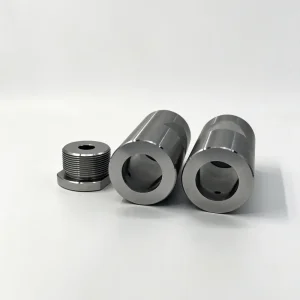
China Custom CNC Turned Tooling Sleeves & Threaded Retaining Plugs Products, Exporter
Explore Part Details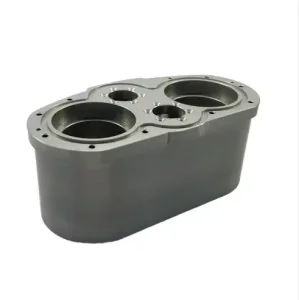
Custom Factory Custom 5-Axis CNC Machined Steel & Aluminum Universal Joint Base and Gearbox Shell for Robotics & Drone Industry Products, Exporters
Explore Part Details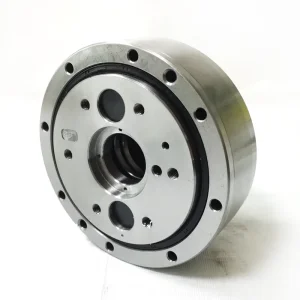
ODM Custom Hollow-Shaft Cycloidal Reducer | OEM Parts & Assembly Product, Exporters
Explore Part Details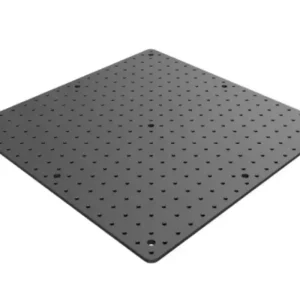
China OEM Custom Precision CNC Machining Non-Standard Solid Aluminum Optical Breadboard Product, Factory
Explore Part Details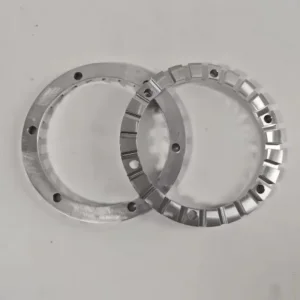
China Custom CNC Machined Anodized Sealing Rings for Semiconductor & Optical Instruments Factories, Factory
Explore Part Details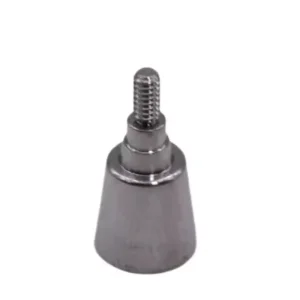
Custom Custom CNC Turned Titanium Abutment Implant Driver & Prosthetic Connector Manufacturers, Product
Explore Part Details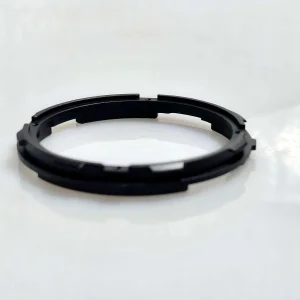
Custom Custom CNC Turn-Milled Bayonet Mount & Locking Ring Supplier, Suppliers
Explore Part Details