High-Precision CNC Machined & Turned Assemblies
Manufactured to aerospace, medical, and high-performance industrial standards with critical feature tolerances held to ±0.005 mm.
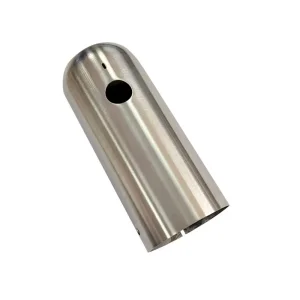
China Custom Precision CNC Turned Medical Sleeve Bushing Suppliers, Factory
Request Technical Specs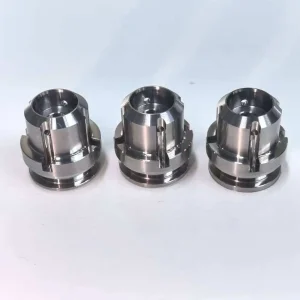
High-Quality Custom Precision Turned Stainless Steel Valve Component Exporter, Factories
Request Technical Specs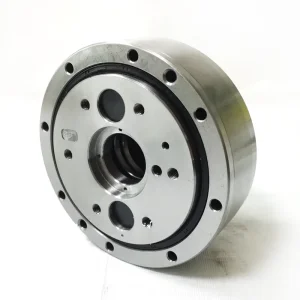
ODM Custom Hollow-Shaft Cycloidal Reducer | OEM Parts & Assembly Product, Exporters
Request Technical Specs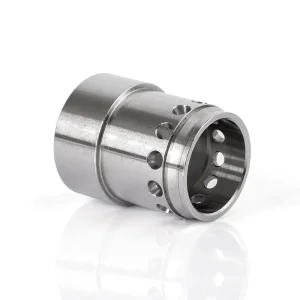
ODM Custom CNC Precision Turned Stainless Steel Filter Sleeve (OEM/ODM Industrial Grade) Manufacturer, Manufacturers
Request Technical Specs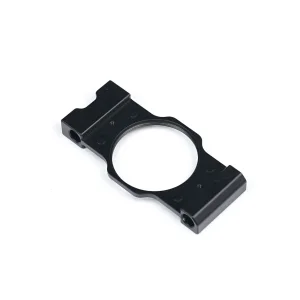
OEM Custom CNC Machined Aluminum Optical Lens Mounting Bracket (Matte Black) Service, Products
Request Technical Specs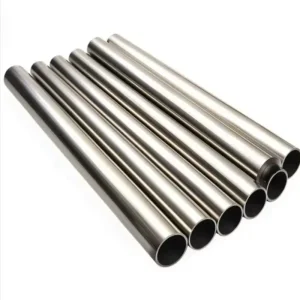
High-Quality Custom Precision Capillary Stainless Steel Pipe / Tube (OD 1mm - 8mm) Supplier, Factory
Request Technical Specs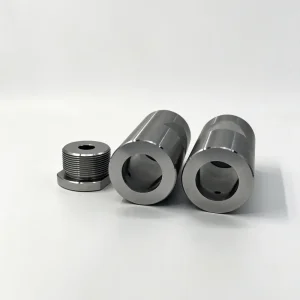
China Custom CNC Turned Tooling Sleeves & Threaded Retaining Plugs Products, Exporter
Request Technical Specs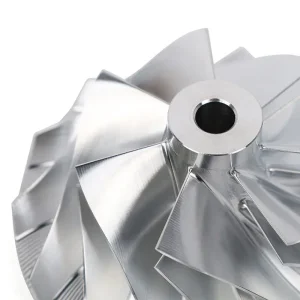
High-Quality Custom 5-Axis CNC Machined Billet Aluminum Impeller Compressor Wheel Manufacturers, Exporter
Request Technical SpecsThe Global Landscape of Magnesium CNC Machining
Magnesium has transitioned from an exotic aerospace curiosity to an essential engineering material across next-generation e-mobility, avionics, defense, and implantable medical hardware.
Magnesium (Mg) stands as the lightest structural metal commercially available today, possessing a density of approximately 1.74 to 1.81 g/cm³—making it 33% lighter than aluminum, 60% lighter than titanium, and roughly 75% lighter than structural steel. In modern precision engineering, achieving higher power-to-weight ratios and minimizing inertia in reciprocating components has made magnesium alloy machining a key differentiator for global original equipment manufacturers (OEMs).
Globally, China manufactures over 85% of primary magnesium ingots, anchoring primary supply chain reliability. However, precision machining of wrought and forged magnesium alloys requires specialized factory environments. Unlike standardized aluminum turning or steel milling, magnesium machining requires advanced fire-safety infrastructure, controlled mineral-oil flood or high-pressure MQL (minimum quantity lubrication) systems, dedicated dust extraction cyclones with Class-D inerting media, and specialized diamond or micro-grain tungsten carbide tool geometries with polished flutes to mitigate chip buildup and galling.
EV Range Optimization
Every 10% structural weight reduction yields an estimated 6–8% increase in battery electric vehicle (BEV) operating range. Magnesium motor stators, inverter heatsinks, and steering knuckles drastically lower curb weights without compromising crashworthiness.
Aerospace & UAV Payloads
Drones, satellite optical benches, and gimbal frames demand extreme rigidity under thermal fluctuation. Rare-earth magnesium alloys such as WE43 and EV31 maintain dimensional stability up to 250°C under severe aerospace vibration spectra.
Bio-Absorbable Implants
High-purity magnesium alloys (e.g., Mg-Zn-Ca, WE43) dissolve safely into human bone tissue over 12–18 months, eliminating secondary removal surgeries for orthopedic pins, cranial fixation plates, and vascular stents.
Magnesium Alloy Metallurgy & Machinability Guide
Selecting the precise alloy composition dictates cutting parameters, thermal dissipation behavior, surface passivity, and mechanical properties under load.
| Alloy Grade | Composition Breakdown | Tensile Strength (MPa) | Yield Strength (MPa) | Machinability Index | Recommended Industrial Applications |
|---|---|---|---|---|---|
| AZ31B-H24 | Mg + 3% Al + 1% Zn | 260 MPa | 200 MPa | 500% (High Speed) | Aircraft interior fittings, camera bodies, optical mounting plates, electronics chassis. |
| AZ91D / T6 | Mg + 9% Al + 1% Zn | 280 MPa | 160 MPa | 450% | Automotive transmission covers, powertrain components, drone arms, structural brackets. |
| ZK60A-T5 | Mg + 5.5% Zn + 0.5% Zr | 315 MPa | 260 MPa | 420% | High-impact automotive suspension parts, performance bicycle hubs, lightweight wheels. |
| WE43 / EV31 | Mg + 4% Y + 3% RE (Nd/Gd) | 330 MPa | 250 MPa | 380% (Heat Stable) | Helicopter gearbox housings, aerospace turbine baffles, defense optronics, medical implants. |
| AM60B | Mg + 6% Al + 0.3% Mn | 220 MPa | 130 MPa | 480% (Ductile) | Instrument panel beams, steering wheel armatures, impact-absorbing seat frames. |
Technical Roadmap: Safety, Tooling & Surface Passivation
1. Tool Geometry
Uncoated tungsten carbide or PCD (Polycrystalline Diamond) tooling with 15–20° rake angles and 10–15° relief angles prevents heat buildup and ensures mirror Ra 0.4 µm surface finishes.
2. Fire Safety Protocols
Eliminate water-based coolants to avoid hydrogen generation. We employ high-flash-point mineral oils, dry cutting with inert gas flooding, and Class D extinguishing stations at every CNC spindle.
3. Micro-Arc Oxidation
Plasma Electrolytic Oxidation (PEO/MAO) converts the outer magnesium layer into a 15–30 µm ceramic oxide matrix capable of passing 1,000+ hours of ASTM B117 neutral salt spray corrosion tests.
4. CMM Thermal Control
With a thermal expansion coefficient of 25.2–26.0 × 10⁻⁶/K, all precision magnesium inspections are performed in our 20°C ±0.5°C climate-controlled metrology laboratory using Carl Zeiss CMM machines.
Multi-Sector Engineering Solutions
From Shenzhen to European and North American production assembly plants, our custom magnesium components power mission-critical equipment.
Automotive & Commercial EVs
High-volume subframe nodes, battery enclosure covers, steering column supports, and transmission actuator cases. Transitioning to CNC-finished forged magnesium lowers unsprung weight and vibration resonance, boosting handling dynamics and thermal dissipation across electric drivetrains.
Aerospace Avionics & Satellites
Star-tracker sensor housings, nanosatellite cube frames, gimbal rings, and electronic chassis. By capitalizing on magnesium’s electromagnetic interference shielding and high thermal conductivity (100–140 W/m·K), engineers secure lighter payloads and reliable thermal control in deep space.
Robotics & High-Speed Automation
High-speed delta robot arms, 6-axis end-effectors, collaborative robotic elbows, and optical sorting heads. Lowering mass at the arm’s extremity slashes motor torque demands, decreases servo cycle times, and suppresses positioning jitter during rapid start-stop sequences.
Direct-to-Factory Engineering Accountability Without Intermediaries
Founded in Shenzhen in 2016, Shenzhen Sunmy Hardware Co., Ltd. operates direct OEM/ODM precision manufacturing lines. We eliminate non-technical intermediaries, allowing your engineering and sourcing teams to collaborate directly with machining leads, metallurgical technicians, and quality inspectors.
Our owned workshop is equipped with 3-axis, 4-axis, and 5-axis CNC machining centers, high-speed Swiss-type CNC lathes, alongside audited casting, sheet metal stamping, and surface finishing partner plants. Every single magnesium batch comes complete with raw material certifications, spectrometer chemical assays, and full First Article Inspection (FAI) dimensional reports before export.
Audited Factory Qualifications
Strict Intellectual Property Protection: Prior to receipt of your 3D CAD or 2D technical drawings (.STEP, .IGES, .X_T, .PDF), we sign mutual Non-Disclosure Agreements (NDA) guaranteeing your proprietary designs remain protected.
Frequently Asked Questions on Magnesium Machining
In-depth responses resolving metallurgical, machining, tolerance, surface passivation, and export supply chain inquiries.
How does Sunmy Hardware mitigate fire risks during high-speed magnesium CNC milling?
What surface treatments protect machined magnesium parts from galvanic corrosion?
What dimensional tolerances can be consistently held on complex magnesium parts?
Which is better: CNC machining from wrought magnesium billet or die casting with CNC finishing?
• Billet CNC Machining (AZ31B / ZK60 / WE43): Ideal for prototypes and low-to-medium volumes (1 to 2,000 units). Extruded or rolled billets eliminate internal gas porosity, providing superior tensile strength, superior airtightness, and tighter mechanical tolerances for aerospace brackets, satellite mounts, and sensor bodies.
• Die Casting + CNC Post-Machining (AZ91D / AM60B): Cost-effective for high volumes (>5,000 units/year). High-pressure die casting creates thin-walled near-net structures, with CNC post-machining reserved for precision bearing bores, gasket grooves, and mating threads.
What documentation and traceability reports are provided with export shipments?
Advanced Multi-Axis CNC Machining & Turned Assemblies
Engineered for high thermal transfer, extreme vibration damping, and superior surface integrity across global industries.
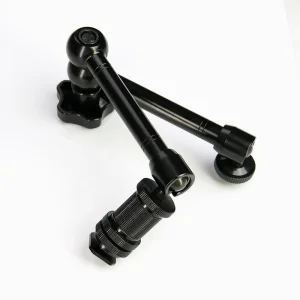
OEM 7-Inch CNC Aluminum Articulating Magic Arm for Camera & Monitor Service, Product
Request Technical Specs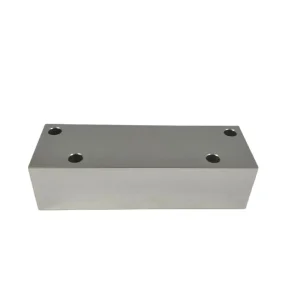
ODM Custom CNC Machined Aluminum Vacuum Manifold Block Manufacturer, Products
Request Technical Specs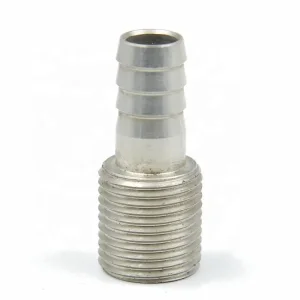
OEM Custom CNC Turned Hose Barb Fittings & Threaded Adapters Manufacturer, Factory
Request Technical Specs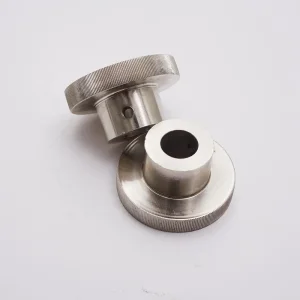
High-Quality CUSTOM CNC KNURLED FEED ROLLERS FOR PACKAGING MACHINERY Products, Factories
Request Technical Specs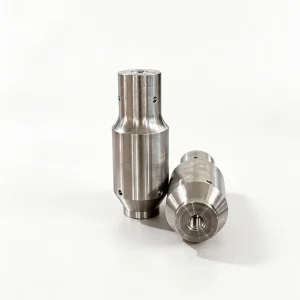
ODM Custom Titanium Ultrasonic Booster Manufacturers, Factory
Request Technical Specs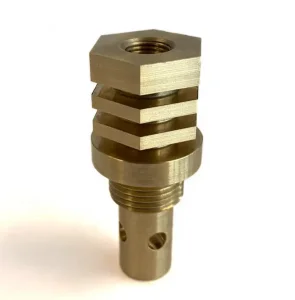
China Custom Precision CNC Machined Brass Cooling Block Factories, Quotes
Request Technical Specs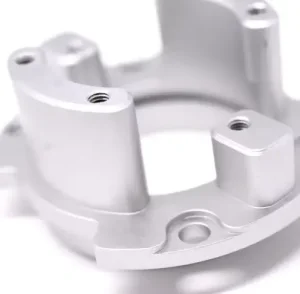
High-Quality Precision 5-Axis CNC Machined Aluminum Housing Mounting Bracket for Aerospace & Automotive Suppliers, Exporter
Request Technical Specs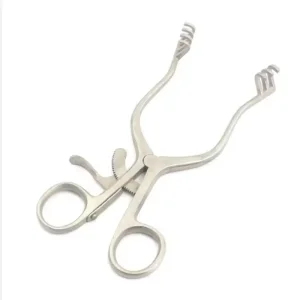
China Professional Quality Stainless Steel Custom Surgical Retractor Service, Exporter
Request Technical SpecsReady to Transition Your Magnesium Design Into Production?
Upload your 2D and 3D technical packages (.STEP, .IGES, .X_T, .PDF). Our senior machining engineers will review critical GD&T, surface passivation compatibility, and deliver a comprehensive DFM assessment and quotation within 24 hours.