Precision Engineering Catalog
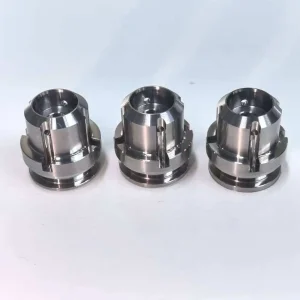
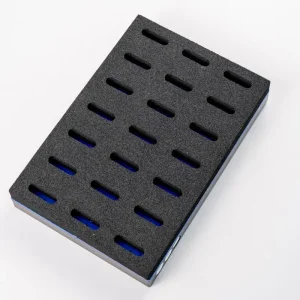
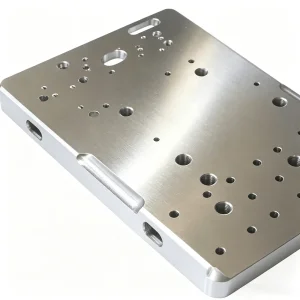
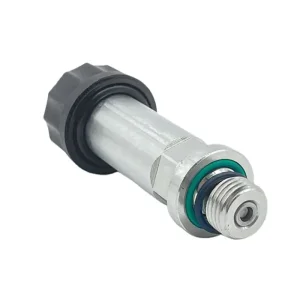
Featured CNC Machined Components & Assemblies
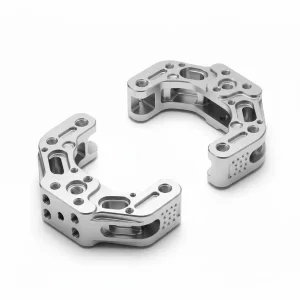
Precision-machined structural connectors, thermal interfaces, and complex functional components held to ±0.005 mm tolerances with end-to-end metrology validation.
Thermal Dynamics & Paradigm Shift
The Evolution of Aluminum Heat Sink Machining in High-Density Computing
As semiconductor node shrinkages push chip Thermal Design Power (TDP) beyond 800W to 1200W, convective thermal architecture has reached its physical limits. Standard extruded or gravity-cast profiles can no longer provide the necessary volumetric heat transfer coefficients.
AI Server & GPU Hyper-Density
Next-generation compute architectures demand complex thermal geometries featuring variable pin-fin arrays, vapor chamber embedding channels, and direct-to-die liquid cold plates. CNC machining provides the micro-channel depth-to-width aspect ratios and planar tolerances required to maintain interfacial contact resistances below 0.05 K·cm²/W.
TDP > 1000W
Direct-to-Die
Micro-Fin Channels
Wide-Bandgap Power Electronics
The rapid transition from silicon IGBTs to Silicon Carbide (SiC) and Gallium Nitride (GaN) devices in EV traction inverters and renewables introduces extreme localized heat flux spikes. Machined aluminum heat sinks with localized copper heat spreaders or friction stir welded (FSW) cooling cavities ensure uniform heat spreading and thermal equilibrium.
SiC / GaN Modules
FSW Integration
High Heat Flux
Precision Metrology & Boundary Layer
Boundary layer optimization demands continuous variations in fin pitch and taper, achievable only via high-speed 5-axis milling or micro-skiving. Conventional tooling limits convective cooling by causing laminar boundary stagnation; 5-axis CNC sculpts aerodynamic profiles that induce controlled vortex generation.
Vortex Generation
Fin Taper
CFD Optimization
Technical Insight: Overcoming Thermal Resistance at the Interface Material (TIM) Level
In high-power dissipation systems, microscopic air gaps between the heat sink base and the heat source represent over 50% of the overall thermal resistance path ($R_{th}$). Our ultra-precision fly-cutting and continuous spindle surface grinding techniques achieve a surface flatness under 0.015 mm across a 300 mm span with an arithmetic roughness ($R_a$) below 0.4 µm. This surface profile eliminates air entrapment voids, minimizes required TIM bond line thickness (BLT), and maximizes heat conduction velocity.
Global Enterprise Procurement
Engineering Procurement Matrix & Technical Compliance
International sourcing directors and lead thermal architects from Fortune 500 equipment builders demand verifiable material traceability, dimensional repeatability under GD&T conventions, and rigorous post-finishing validations.
| Thermal Alloy Grade | Thermal Conductivity (W/m·K) | Machinability / Structural Strength | Primary Industrial Applications | Standard Tolerances & Finishes |
|---|---|---|---|---|
| AL6063-T6 | 200 – 209 W/m·K | High extrusion integrity, medium yield strength (214 MPa); superior surface finishing. | Telecom AAU housings, LED lighting backplates, modular server heat sinks. | Flatness <0.02 mm; Clear/Black Hard Anodized (MIL-A-8625 Type III). |
| AL6061-T6 | 167 – 180 W/m·K | Exceptional mechanical strength (Yield 276 MPa); outstanding 5-axis structural stability. | Aerospace electronics, EV power distribution units (PDU), robotic drive controllers. | Positional accuracy ±0.005 mm; Chromate conversion / SurTec 650. |
| AL1050 / AL1070 | 225 – 238 W/m·K | High pure aluminum content (>99.5%); soft, requires specialized tooling and chill plates. | Ultra-dense skived-fin heat sinks, high-wattage LED downlights, phase-change baseplates. | Fin thickness down to 0.2 mm; Nickel electroplating or anti-oxidation wash. |
| ADC12 / A380 (Cast+CNC) | 96 – 109 W/m·K | Die-casting geometry with secondary high-precision CNC interface milling. | Automotive transmission controllers, industrial motor inverters, ruggedized cases. | Milled face flatness 0.03 mm; Salt-spray resistance >720 hours powder coat. |
| Al-SiC Composite (MMC) | 180 – 220 W/m·K | Tailored Coefficient of Thermal Expansion (CTE: 6.5–9.5 ppm/K) matching semiconductor dies. | High-reliability IGBT baseplates for high-speed rail, avionics, aerospace radar. | Diamond grinding / ultrasonic EDM machining; Au/Ni barrier plating. |
Material Traceability (EN 10204 3.1)
Every billet undergoes Optical Emission Spectrometry (OES) analysis to verify chemical composition and prevent alloy contamination that degrades thermal dissipation performance.
Helium Leak Tightness
For liquid-cooled cold plates and vacuum-brazed assemblies, zero coolant leakage is mandatory. Sunmy executes 100% helium mass spectrometer leak detection down to 1×10⁻⁹ mbar·l/s.
Thermal Cycling Endurance
Thermal cycling qualification (-40°C to +125°C, 1000 cycles) confirms no delamination across friction-stir-welded joints, embedded copper heat pipes, or brazed fluid boundaries.
Dielectric Anodization
Engineered hard anodizing provides surface electrical insulation breakdown ratings >1000V RMS while maintaining minimal thermal interface barrier impedance.
Smart Manufacturing Ecosystem
China Factory 4.0: Supply Chain Resilience, Automation & Scale
Shenzhen Sunmy Hardware Co., Ltd. sits at the heart of the Greater Bay Area precision manufacturing cluster. By integrating smart automated workcells with an in-house tooling ecosystem, we slash new product introduction (NPI) lead times from months to days.
±0.005mm
CNC Machine Tolerance
5,000Tons
Annual Capacity
24Hours
DFM Engineering Turnaround
100%
In-House CMM & FAI QC
Automated Multi-Pallet 5-Axis Workcells
Continuous automated machining with zero re-clamping minimizes cumulative datum errors. Our high-RPM linear-motor spindles achieve single-setup processing of complex thin-wall fins, deep cavities, and complex fluid ports without cumulative tolerance stack-ups.
Zero Re-Clamping
Pallet Automation
Shenzhen Ecosystem Integration
Within a 30-minute radius, our facility accesses specialized extrusion die development, vacuum brazing, precision cold-forging, hard-coat anodization, and chemical passivation. This geographic concentration removes supply chain friction and protects delivery timelines.
Shenzhen Core Hub
Zero Bottlenecks
Direct Factory Accountability
Overseas engineering buyers communicate directly with our bilingual thermal and production engineers. No brokers, no trading markups, and absolute CAD intellectual property protection secured under strict Non-Disclosure Agreements prior to file transmission.
Direct Eng Support
Rigorous NDA
Process Engineering
Comparative Analysis: Heat Sink Fabrication Methodologies
Choosing the optimal manufacturing process is an engineering compromise between fin density ratio, thermal junction resistance, tooling capital expenditure, and prototype agility.
| Fabrication Process | Max Fin Aspect Ratio | Min Fin Pitch / Gap | Base-to-Fin Thermal Barrier | Tooling NRE & Lead Time | Engineering Suitability |
|---|---|---|---|---|---|
| Multi-Axis CNC Milling | 15:1 (Ultra-thin) | 0.5 mm | 0.00 K/W (Solid Monolithic) | Zero NRE; 2–5 Day Prototypes | Complex 3D envelopes, low-to-mid volume high-density computing, liquid cold plate channels. |
| Precision Skived Fin | 25:1 to 50:1 | 0.2 mm | 0.00 K/W (Shaved from Solid Block) | Low Tooling; 7–10 Days | High forced-convection density, semiconductor test sockets, compact industrial inverters. |
| Aluminum Extrusion | 8:1 to 14:1 | 1.8 mm | 0.00 K/W (Monolithic Profile) | Medium Die Cost ($1,500+); 3–4 Wks | Mass production of standard thermal profiles, enclosures, base chassis with post-CNC detailing. |
| Bonded / Swaged Fin | 30:1 to 40:1 | 1.0 mm | High (Epoxy) to Low (Mechanical Joint) | Low Tooling; 2–3 Wks | Extremely large form factors, high-power rectifiers, transformer cooling where extrusion sizes fail. |
| Vacuum Brazed Cold Plate | Internal Micro-Channels | 0.3 mm Fin Cavities | Metallic Solid Interface | Fixture Tooling Required; 3–5 Wks | Liquid cooling loops for EV battery packs, laser power heads, megawatt grid energy storage. |
Vibration & Fin Deflection Mitigation
Milling tall, slender fins (aspect ratio >15:1) often induces chatter marks and fin bending from cutting forces. Our multi-axis toolpaths utilize down-milling trochoidal slicing alongside water-soluble cryogenic mist lubrication to neutralize harmonic resonance and preserve fin perpendicularity.
Burr-Free Micro-Channel Evacuation
Secondary micro-burrs inside fluid cooling channels create turbulence eddies, increase pressure drop ($\Delta P$), and risk pump cavitation. Sunmy integrates automated thermal deburring and ultrasonic electrochemical cleaning to guarantee burr-free fluid conduits.
Two-Phase Phase Change Integration
Direct machining of embedded copper heat-pipe grooves with interference-fit tolerances (within 0.01 mm) ensures complete direct metal-to-metal thermal contact after hydraulic pressing, eliminating soldering voids and lowering assembly junction impedance.
Mission-Critical Deployments
Engineering Application Scenarios Across High-Tech Industries
Sunmy's custom-machined thermal management hardware operates in the field across five demanding market segments, meeting strict structural and environmental requirements.
AI Data Centers & Supercomputing
Hyperscale rack servers require liquid cold plates featuring sub-millimeter serpentine micro-channels. Our 5-axis machines mill high-purity aluminum alloys into monolithic cold plates tested to withstand 1.5 MPa burst pressures under long-term synthetic coolant flow.
Micro-Channel Plates
1.5 MPa Burst
E-Mobility SiC Traction Inverters
EV power electronics require lightweight, compact cooling solutions capable of withstanding road vibration and broad operating temperature ranges. We supply pin-fin aluminum heat sinks with custom O-ring sealing grooves and isolated mounting tabs that meet stringent automotive shock and vibration criteria.
IATF 16949 Standards
Pin-Fin Cold Plates
5G / 6G Massive MIMO Outdoor Enclosures
Outdoor base station radios rely on natural convection heat sinks designed to withstand harsh weather conditions. We machine complex corrugated fin geometries into AL6063/die-cast alloys, treated with marine-grade chromate conversion and UV-resistant powder coatings.
Corrosion Proof
Natural Convection
Utility-Scale Solar & Energy Storage
Centralized PV inverters and battery storage modules operate continuously under high thermal loads. Sunmy produces large-format CNC-milled bonded fin assemblies that maintain structural integrity and heat dissipation over 25-year service lives.
Large Platter CNC
25-Yr Operating Life
Medical Diagnostics & Laser Diodes
Surgical lasers and magnetic resonance scanners require precise thermal stabilization to avoid wavelength drift. We produce precision copper-aluminum hybrid heat sinks with integrated thermoelectric cooler (TEC) mounting pockets held to ±0.005 mm flatness.
TEC Assembly
Optical Flatness
Aerospace Avionics & Radar Enclosures
Weight reduction is critical in defense and aerospace thermal management. We mill ultra-lightweight thin-wall heat dissipation housings from billet aerospace AL7075 and AL6061 with integrated EMI/RFI shielding gaskets and environmental sealing.
Aerospace AL7075
EMI/RFI Shielding
Zero-Defect Quality Assurance
CMM Metrology, Thermal Verification & Quality Audit
Quality claims require documented, auditable validation. Sunmy maintains climate-controlled metrology laboratories to ensure every production run meets your design specifications.
Zeiss Multi-Axis CMM
In-house coordinate measuring machines evaluate high-density mounting patterns, true position callouts, and GD&T parameters against your native CAD STEP models.
Laser Profilometry
Non-contact optical laser scanning analyzes thermal mating surface profiles, verifying micro-roughness ($R_a$, $R_z$) and waviness to eliminate interface hotspots.
X-Ray & NDT Flaw Detection
Non-destructive industrial computed tomography and X-ray inspection verify subsurface vacuum brazed seams and internal friction-stir-welded conduits for zero voids.
Full Documentation Package
Every shipment includes EN 10204 3.1 material test certificates, comprehensive First Article Inspection (FAI) reports, CMM inspection records, and RoHS/REACH declarations.
Procurement & Technical Insights
Frequently Asked Questions: Aluminum Heat Sink Machining
Straight answers to common technical, manufacturing, and commercial questions from thermal architects, sourcing leaders, and mechanical engineering teams.
What geometric tolerances can Sunmy achieve on CNC-machined heat sink mating faces?
Sunmy machines thermal mating interfaces down to a flatness of 0.015 mm per 300 mm span, with standard positional tolerances for mounting hole clusters held to ±0.01 mm and critical locating points down to ±0.005 mm. Surface roughness on fly-cut mating faces is consistently maintained between $R_a$ 0.4 µm and 0.8 µm, maximizing real contact surface area and minimizing thermal interface resistance.
How do you decide between skived-fin fabrication and 5-axis CNC pin-fin milling?
Skived-fin manufacturing is selected when high fin aspect ratios (up to 50:1) and dense, parallel fin configurations are required from a single monolithic aluminum block without tooling NRE. 5-axis CNC pin-fin milling is chosen when air or coolant flows from multiple directions, when complex 3D clearance pockets are needed around board-level capacitors, or when complex mounting bosses must be integrated into the heat sink body.
Can Sunmy manage liquid cold plates with embedded copper tubes or vacuum brazing?
Yes. We specialize in hybrid-material thermal solutions, including friction-stir-welded (FSW) liquid cold plates, vacuum-brazed aluminum micro-channel assemblies, and direct-pressed copper heat-pipe assemblies. We execute CNC groove milling, hydraulic tube expansion, precision fly-cutting, and 100% helium mass spectrometer vacuum leak testing down to 1×10⁻⁹ mbar·l/s entirely in-house.
How does hard anodization affect heat sink thermal radiation and dissipation?
While bare polished aluminum has a low thermal emissivity ($\epsilon \approx 0.05$), an anodized finish (especially matte black or dark clear) increases thermal emissivity to roughly $\epsilon \approx 0.85–0.90$. This dramatically enhances radiative heat transfer in natural convection and passive cooling environments. For forced-convection applications with direct airflow, we mask critical contact faces to eliminate the added thermal barrier of an oxide layer.
What quality assurance reports accompany exported precision heat sinks?
Every delivery includes a comprehensive documentation package: raw material mill test certificates confirming alloy chemistry (EN 10204 3.1), First Article Inspection (FAI) reports with ballooned engineering drawings, Zeiss CMM inspection records covering critical GD&T callouts, coating thickness verification, and RoHS/REACH compliance documentation.
How is intellectual property protected for custom proprietary thermal designs?
We execute binding bilateral Non-Disclosure Agreements (NDAs) before customer CAD files are transferred. Engineering designs are housed on isolated, secure local servers accessible only to authorized project engineers. Sunmy operates as a dedicated custom manufacturing partner—we do not market off-the-shelf product lines that compete with our OEM clients.
Complete Custom Manufacturing Lineup
Advanced Engineered Hardware & CNC Solutions
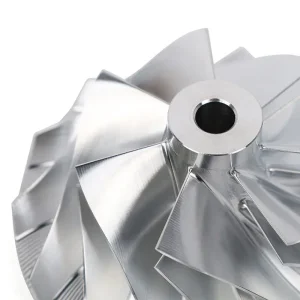
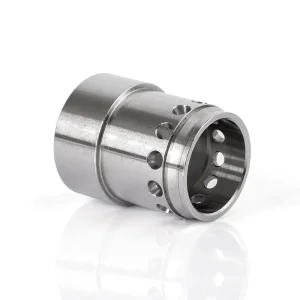
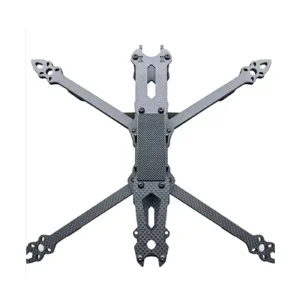
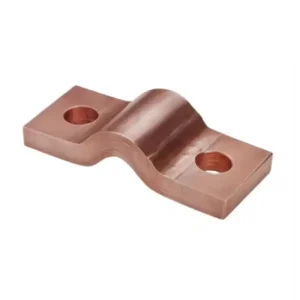
Explore our full contract manufacturing portfolio: multi-axis impellers, high-pressure hydraulic components, composite assemblies, and busbar power distribution links.