
High-Precision CNC Tooling & Mold Components (Batch 01)
Explore our tight-tolerance stainless steel, brass, and aluminum machined components engineered specifically to withstand repetitive thermal stress and cyclic wear in industrial hot runner manifolds.
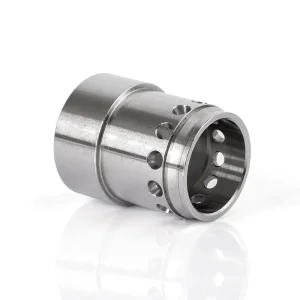
China Custom CNC Stainless Steel Drilled Filter Sleeve & Flow Control Valve Component Supplier, Suppliers
View Specifications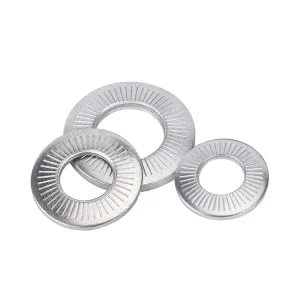
High-Quality Custom Wedge-Lock Washer Pairs Product, Quotes
View Specifications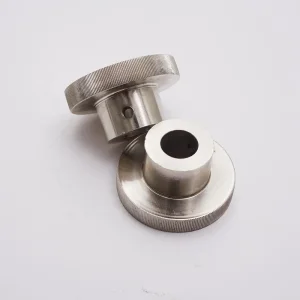
High-Quality CUSTOM CNC KNURLED FEED ROLLERS FOR PACKAGING MACHINERY Products, Factories
View Specifications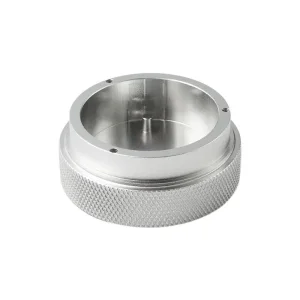
High-Quality Premium Custom CNC Machined Aluminum Control Knobs Manufacturer, Exporters
View Specifications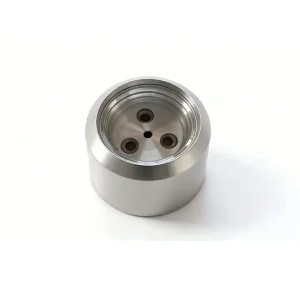
High-Quality Precision CNC Machined High-Voltage Insulator Contact Base Service, Factory
View Specifications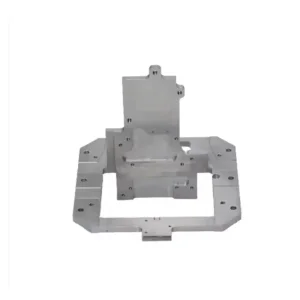
OEM Custom High-Precision CNC Machined Metal Bracket & Structural Frame Wire EDM & Milling Manufacturer, Quotes
View Specifications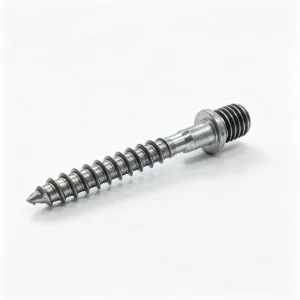
OEM Custom Precision Turned Stainless Steel Dual-Thread Hanger Bolt Manufacturer, Factory
View Specifications
ODM Custom CNC Precision Turned Stainless Steel Filter Sleeve (OEM/ODM Industrial Grade) Manufacturer, Manufacturers
View SpecificationsAdvanced Hot Runner Architecture: Engineering Thermal Homogeneity
In high-cavitation injection molding, minor temperature deviations along the melt channel cause unbalanced fill rates, warpage, and elevated gate vestige. Our toolmakers employ state-of-the-art DFM fluid dynamic simulations to deliver consistent thermal profiles.
Optimized Rheological Balancing
Melt runner bores are calculated down to micron concentricity using Moldflow shear calculations. This eliminates dead zones and stagnation points, preventing polymer degradation during extended molding cycles.
Dynamic Valve Gate Actuation
We integrate pneumatic, hydraulic, and servo-electric valve gate systems engineered to ±0.01 mm pin stroke alignment, delivering near-invisible gate witness marks and pristine surface finishes across class-A exterior parts.
Metallurgical Hardening & Wear Resistance
Manifolds and hot nozzles are constructed using premium vacuum-melted tool steels (H13, S136, 1.2344) treated to 50–54 HRC, resisting abrasive wear caused by glass-filled resins and engineering polymers.
Engineered for High-Stakes Industrial Demands
From micro-tolerance electronic housings to large-scale automotive fascias, our hot runner mold systems meet stringent global OEM qualification standards.
Automotive Precision
Structural housings, interior cockpit bezels, and under-the-hood components demanding minimal warpage, zero weld lines, and tight geometric dimensioning and tolerancing (GD&T) verified under coordinate measuring machines (CMM).
Medical Cleanroom Tooling
Direct gating systems manufactured without hydraulic fluids or contaminants for Class 10,000 cleanroom environments. Stainless steel hardened components support biocompatible resins like PEEK, PC, and medical-grade PP.
High-Density Consumer Electronics
Multi-cavity high-speed stack molds for thin-walled enclosures, drone chassis, and sensor housings holding positional tolerances down to ±0.005 mm with uniform melt temperatures across 32 to 64 cavity systems.
Shenzhen Precision Ecosystem: Agile, Transparent, Direct
Combining proprietary high-speed CNC milling and Swiss-type lathe centers with fully integrated in-house metrology, we provide direct engineering collaboration that bypasses intermediary markups and communication delays.
Sub-Tier Integration
Direct proximity to world-class steel heat treaters, certified anodizers, and vacuum coating plants ensures prototype-to-tool lead times are reduced by up to 35% compared to Western counterparts.
Closed-Loop Metrology
Our in-house QC laboratory utilizes Zeiss 3D CMMs, optical profile projectors, and surface roughness testers to validate critical steel dimensions before mold bases are assembled.
Strict IP Security
Engineers sign bilateral non-disclosure agreements before CAD transmission. Your intellectual property, core geometries, and proprietary gate setups remain protected within a private internal intranet.
Scalable Tool Life
Designed to SPI Class 101 mold standards, our hot runner tooling programs consistently withstand over 1,000,000 cycles, supported by localized spare wear-part manufacturing kits.
The Future of Intelligent Injection Molding Systems
Hot runner systems are transforming from passive steel conduits into intelligent, data-driven injection platforms. Here is how Sunmy Hardware is investing to keep our clients ahead.
Conformal Cooling via SLM Printing
By pairing CNC post-machining with Selective Laser Melting (SLM) metal additive manufacturing, we build curved conformal cooling channels around hot runner gate inserts, reducing cycle times by 20–40%.
IoT-Enabled In-Mold Cavity Sensors
Integrating piezo-electric pressure transducers and fiber-optic melt temperature sensors directly within the hot runner tip to monitor viscosity shifts and trigger real-time valve pin actuation adjustments.
Circular Economy & Bio-Resin Processing
Adapting nozzle geometry and heating element zones to process temperature-sensitive bioplastics (PLA, PHA) and post-consumer recycled (PCR) resins without thermal shearing or molecular chain breakdown.
Fulfilling Rigorous Sourcing Mandates Worldwide
Overseas procurement directors and tooling engineers require transparent documentation, standardized interfaces, and friction-free compliance. Sunmy Hardware addresses international sourcing friction head-on.
Material Traceability & RoHS
Full spectroscopic mill test certificates (MTC) matching EN 10204 3.1 standards accompany every tooling batch. Certified RoHS and REACH compliance guarantees European and North American customs clearance.
Standardized Interchangeability
We build our hot runner tooling compatible with recognized global standards including DME, HASCO, and MISUMI components. Sourcing replacement O-rings, heaters, and thermocouples locally is simple and hassle-free.
DDP International Logistics & Spare Kits
Molds and critical replacement spares ship vacuum-sealed in export-grade fumigated wooden crates via ocean or air freight under Incoterms DDP, DAP, or FOB, supported by comprehensive bilingual documentation.
High-Precision CNC Tooling & Mold Components (Batch 02)
Explore our secondary lineup of 5-axis milled blocks, semiconductor carrier fixtures, and thermal management hardware built to customer engineering drawings.
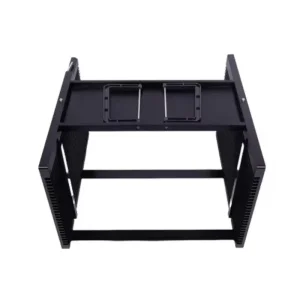
OEM Premium 8-Inch CNC Machined Aluminum Semiconductor Wafer Carrier Factories, Quotes
View Specifications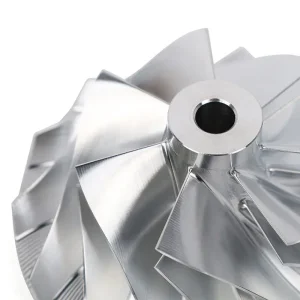
High-Quality Custom 5-Axis CNC Machined Billet Aluminum Impeller Compressor Wheel Manufacturers, Exporter
View Specifications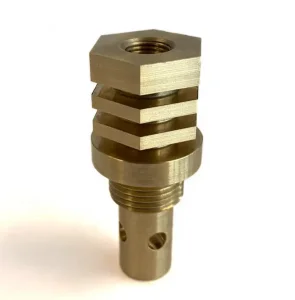
China Custom Precision CNC Machined Brass Cooling Block Factories, Quotes
View Specifications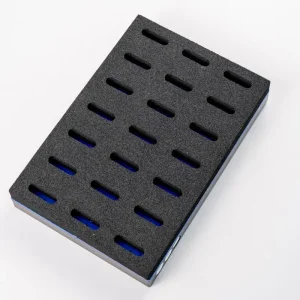
China Custom CNC Machined Foam Vacuum Gripper Plates for Robotic EOAT Manufacturer, Service
View Specifications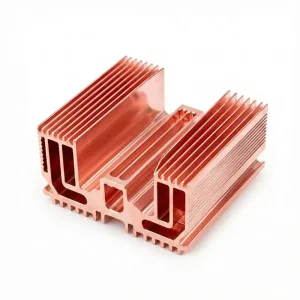
ODM High-Performance Copper Heatsink Manufacturer, Factories
View Specifications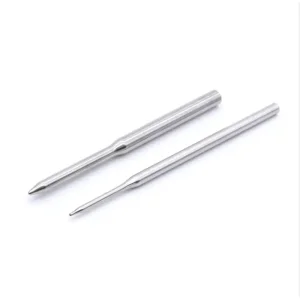
OEM Custom Stainless Steel Waterproof Sensor Probe Housing / Thermowell (OEM Support) Manufacturer, Suppliers
View Specifications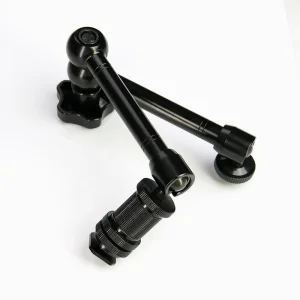
OEM 7-Inch CNC Aluminum Articulating Magic Arm for Camera & Monitor Service, Product
View Specifications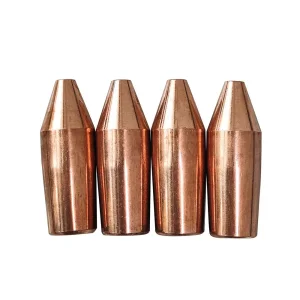
OEM Custom Resistance Spot Welding Electrode Caps Exporters, Factories
View SpecificationsFrequently Asked Questions: Engineering & Sourcing
Expert insights on mold tooling, thermal expansion allowances, gating selection, and supplier qualification for global procurement leads.
How do you balance thermal expansion between manifold and cavity plates?
Thermal expansion is engineered using calculated expansion formulas: ΔL = L × α × ΔT. During room-temperature CNC machining, nozzle centerlines on the manifold are offset inward so that at operating temperature (220°C–300°C), thermal elongation brings nozzle tips into exact coaxial alignment with cold mold cavity gates.
When should an engineer specify valve gates over open thermal sprue tips?
Valve gates are essential when molding cosmetic surfaces where zero gate vestige is needed, when filling large family molds requiring sequential fill timing to eliminate weld lines, or when molding wide glass-filled engineering resins prone to nozzle drool and stringing.
What quality assurance reports accompany exported tooling?
Each tooling shipment includes a comprehensive QA binder consisting of: steel mill test certificates (spectrometric validation), vacuum heat treatment hardness certificates, 100% CMM dimensional reports, electrical wiring schematic diagrams, heater resistance test logs, and 500-shot dry-cycle trial inspection reports.
How are replacement wear parts managed for overseas production facilities?
Every production mold is supplied with a comprehensive spare wear-kit containing replacement heater bands, thermocouples, valve pins, and nozzle tips. Critical geometry is stored securely in our ERP system for rapid on-demand CNC replacement runs dispatched within 48–72 hours via DHL/FedEx.