
Custom Machined & Hybrid Mold Insert Components
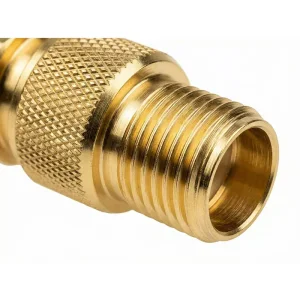
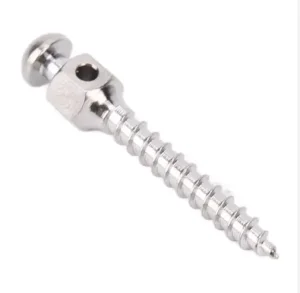
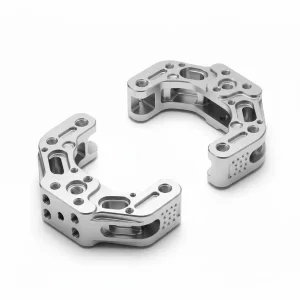
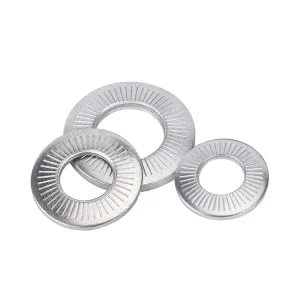
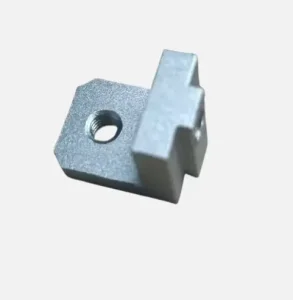
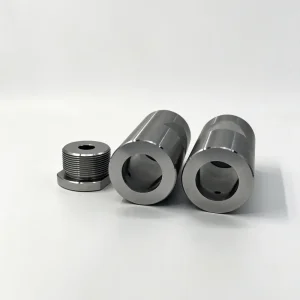
Direct synergy between CNC-machined core cavities, precision brass threaded inserts, and high-performance end-use components.
Architecting Precision in Polypropylene Injection Molding
Polypropylene (PP) is an indispensable semicrystalline polyolefin characterized by exceptional chemical resistance, fatigue endurance (living hinge properties), low density (~0.905 g/cm³), and superior tensile elongation. However, its high volumetric shrinkage rate (1.5% to 2.5%) presents critical geometric instability, sink marks, and differential warpage risks for mission-critical parts. Shenzhen Sunmy Hardware combines decades of in-house tooling mastery, Moldflow rheology prediction, and closed-loop process control to deliver sub-millimeter repeatable tolerances across global production batches.
Crystallization & Warpage Mitigation
Differential cooling drives internal crystalline orientation stresses in semi-crystalline PP. We utilize conformal cooling channels produced via DMLS tooling inserts and balanced manifold hot runners to maintain homogeneous thermal profiles, reducing volumetric shrinkage differentials by up to 68%.
Living Hinge Flow Orientation
PP enables the engineering of monolithic living hinges capable of surviving millions of flex cycles without ductile rupture. Tool designs strictly direct melt fronts perpendicular to the hinge axis, pre-orienting polymer chains during high-speed injection phases to optimize tensile resilience.
Advanced Polyolefin Formulations
We process pure homopolymer PP for stiffness, random copolymer PP for optical transparency, and heterophasic impact copolymers compounded with 10%–40% glass fiber (GF-PP) or talc filling to suppress creep and maximize automotive modulus metrics.
Engineering Polypropylene Comparative Matrix
Comprehensive selection guide mapping mechanical, thermal, and rheological parameters for demanding applications.
| PP Resin Variant | Tensile Modulus (MPa) | Izod Impact (kJ/m²) | Shrinkage Rate (%) | Thermal Deflection (HDT @ 0.45MPa) | Primary Industrial Use-Cases |
|---|---|---|---|---|---|
| PP Homopolymer (PPH) | 1,300 – 1,700 | 2.5 – 4.0 | 1.8% – 2.5% | 95°C – 105°C | Packaging closures, chemical tanks, household appliance structural brackets |
| PP Copolymer (PPC - Block) | 1,000 – 1,400 | 6.0 – 12.0 | 1.5% – 2.2% | 85°C – 95°C | Automotive battery shells, luggage luggage frames, low-temp storage bins |
| PP Random Copolymer (PPR) | 800 – 1,100 | 4.0 – 7.0 | 1.4% – 2.0% | 75°C – 85°C | Clear medical pipettes, fluidic diagnostic cartridges, sanitary food trays |
| Talc-Filled PP (20%-40%) | 2,200 – 4,500 | 3.0 – 5.5 | 0.8% – 1.2% | 120°C – 135°C | Automotive HVAC ducting, dashboard sub-structures, industrial pump bases |
| Glass-Fiber Reinforced PP (30% GF) | 5,500 – 7,500 | 8.0 – 12.0 | 0.3% – 0.7% | 145°C – 158°C | Automotive front-end carriers, powertrain brackets, high-load industrial gears |
Shenzhen Supply Ecosystem: Speed, Scale, & Total Cost of Ownership
For global Fortune 500 OEMs and scaling hardware technology leaders in North America and Western Europe, partnering directly with Shenzhen Sunmy Hardware removes unnecessary tier layers and optimizes production economics through precision mold execution.
Aggressive Tooling Lead Times
Shenzhen's industrial density enables precision hardened steel (1.2344 / H13 / S136) mold fabrication in 18 to 28 calendar days, including FAI samples, compared to 12-16 weeks across Western domestic suppliers.
Integrated Machining & Tooling
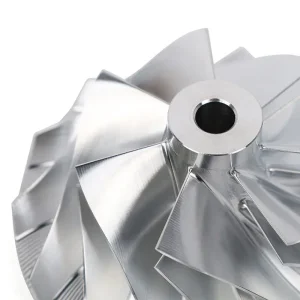
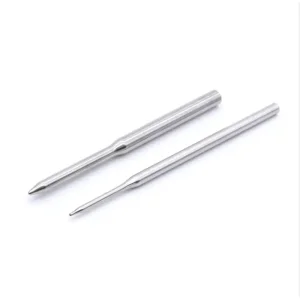
Our in-house 5-axis CNC machining, Swiss lathe turning, and sinker EDM guarantee precise tolerances on mold core-cavities and insert pins, ensuring zero-flash sealing on complex part shut-offs.
Tooling ROI & Cavitation Scaling
From single-cavity P20 bridge tooling to 64-cavity fully hot-runner high-volume steel tools, our tooling assets deliver exceptional cost amortization across multi-million cycle operational lifespans.
Direct Engineering Handshake
Clients interface directly with tooling and resin engineers. We execute complete DFM (Draft analysis, gating simulation, wall thickness variation) within 24 hours under enforceable NDA structures.
Seamless Cross-Border Compliance & Traceability
Navigating regulatory landscapes requires rigorous documentation. Sunmy ensures our PP injection molding processes comply with strict global safety, health, and environmental directives.
FDA & EU 10/2011 Food Contact
For medical liquid handling, consumer containers, and food processing equipment, we strictly utilize prime virgin PP resins with documented FDA 21 CFR 177.1520 and EU Regulation No 10/2011 compliance certificates.
RoHS, REACH & Circularity
All virgin resins, color masterbatches, and internal release agents are 100% heavy-metal-free, SVHC-tested, and fully compliant with EU RoHS and REACH regulations, complemented by post-consumer recycled (PCR-PP) options.
CMM Inspection & PPAP Level 3
Our quality lab executes full dimensional layout reports via Zeiss CMM, optical optical coordinate measuring machines, melt flow rate (MFR) testing, and standard PPAP Level 3 documentation submission.
Localized Application Scenarios & Industry Frontiers
Deploying custom PP molded components across mission-critical technical sectors where fatigue resistance, lightweighting, and chemical inertness are non-negotiable.
Automotive Electrification (EV)
Flame-retardant (UL94-V0) polypropylene enclosures, structural battery cell spacers, high-voltage busbar isolation shields, and under-hood fluid reservoirs designed for vibration dampening.
Industrial Automation & Robotics
Durable cable drag chain carrier links, pneumatic manifold enclosures, protective sensor caps, and conveyor wear shoes requiring ultra-low friction coefficients and repetitive flex resilience.
Medical Diagnostic Devices
Autoclavable specimen racks, diagnostic cassette enclosures, analytical centrifuge tubes, and chemically resistant luer fittings produced under ISO cleanroom controls.
Emerging Trends Transforming PP Injection Molding
The confluence of digital manufacturing, circular economy demands, and multi-material integration.
AI-Driven Smart Cavity Sensing
Integration of piezoelectric in-cavity pressure and temperature transducers. AI models adjust hydraulic backpressures and hold velocity profiles dynamically in real-time, accounting for resin lot-to-lot MFI fluctuations.
Certified Circular PCR-PP Compounding
Global net-zero regulations mandate higher ratios of post-consumer recycled polypropylene. We fine-tune processing windows using specialty chain extenders and impact modifiers to match virgin resin physical properties.
Multi-Shot PP/TPE Overmolding
Direct mechanical/chemical bonding of soft-touch thermoplastic elastomers (TPE/TPV) over rigid polypropylene cores in a single automated cycle, eliminating secondary adhesive assembly for waterproof gaskets.
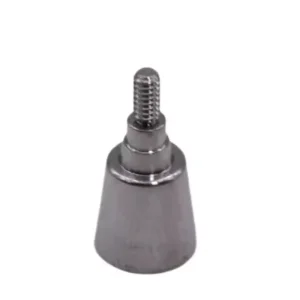
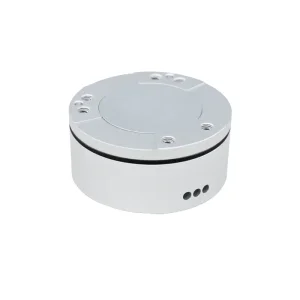
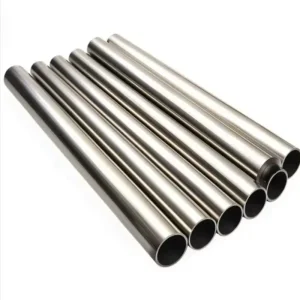
Advanced Precision Machining, Tooling & Structural Assemblies
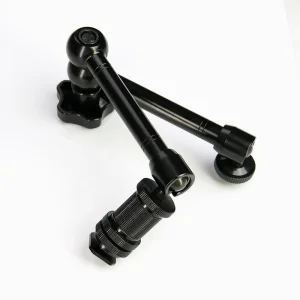
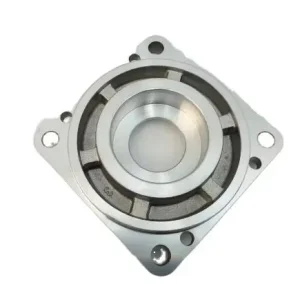
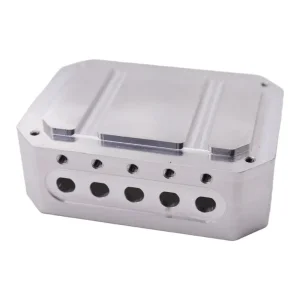
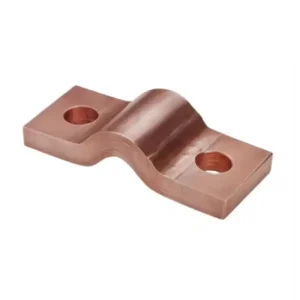
High-tolerance sensor housings, electro-mechanical busbars, and engineered tooling accessories supporting global equipment manufacturers.
Frequently Asked Questions: Technical & Sourcing
Direct engineering answers regarding PP mold shrinkage, tool steel longevity, quality documentation, and production scalability.
How does Sunmy control high volumetric shrinkage in PP injection parts?
Polypropylene has a typical volumetric shrinkage of 1.5% to 2.5%. We tackle this through advanced Moldflow simulation to pre-compensate steel dimensions in the CNC tooling process, uniform wall thickness design rules (ideally 1.5mm - 3.0mm), optimized packing pressures, and balanced conformal cooling circuits to prevent differential shrinkage and post-mold warpage.
What tool steel grades do you select for Polypropylene molds?
For prototype or low-volume bridge runs (up to 50k shots), we utilize pre-hardened P20 or 718H steel. For mass-production tools (>500k to 1M shots) or when processing abrasive glass-filled PP (GF-PP), we employ vacuum-hardened H13 (1.2344) or stainless mold steel S136 hardened to 48–52 HRC to ensure zero wear on parting lines and ejector pins.
What are the critical rules for designing a reliable PP living hinge?
A durable PP living hinge typically requires a hinge web thickness between 0.25mm and 0.50mm with generous radii (R 0.5mm - 1.0mm) on both sides to avoid notch stress concentration. The gate must be placed so that molten resin flows perpendicular across the hinge region, aligning the polymer chains in the direction of flexural stress.
Can Sunmy perform secondary CNC machining and insert overmolding on PP parts?
Yes. We integrate in-house precision Swiss-turned brass and stainless threaded inserts directly into the mold via automated or robotic placement before injection. Additionally, our 5-axis CNC machining centers can perform post-mold critical feature cutting, O-ring groove detailing, and planar facing when required tolerances exceed standard injection molding capabilities.
What documentation and quality certifications accompany overseas shipments?
Every shipment comes with standard raw material mill certificates, resin UL yellow cards, RoHS/REACH compliance letters, and First Article Inspection (FAI) reports with complete CMM dimensional scans. For automotive programs, we provide full PPAP Level 3 documentation, including CPK studies on critical-to-quality (CTQ) dimensions.
What is your rapid quotation and DFM turnaround time?
Upon receiving your 3D CAD files (.STEP / .STP / .X_T) and 2D drawings with tolerance notes, our tooling and molding engineering team delivers a comprehensive DFM manufacturability evaluation and competitive formal quotation within 24 hours.