High-Precision Machined Castings & Motion Components
Explore our integrated precision cast and CNC-machined components engineered to sub-micron concentricity, complex fluid channels, and high-load structural resilience.
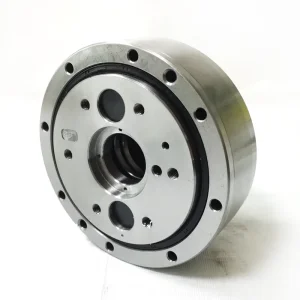
ODM Custom Hollow-Shaft Cycloidal Reducer | OEM Parts & Assembly Product
View Product Specs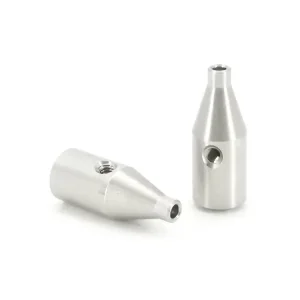
China Custom CNC Turned Aluminum Nozzle & Adapter Bodies Exporter, Factory
View Product Specs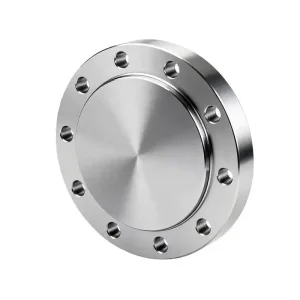
China OEM Precision CNC Machined Stainless Steel Flanges Suppliers, Exporter
View Product Specs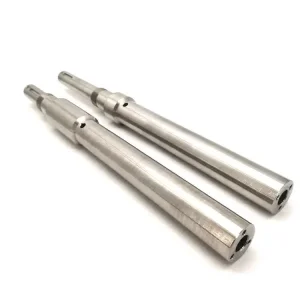
Custom Custom CNC Turned Stainless Steel Stepped Shafts with Keyways
View Product Specs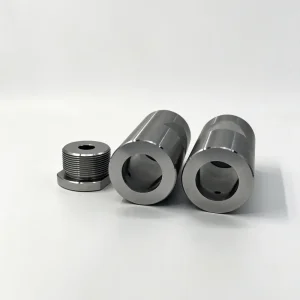
China Custom CNC Turned Tooling Sleeves & Threaded Retaining Plugs
View Product Specs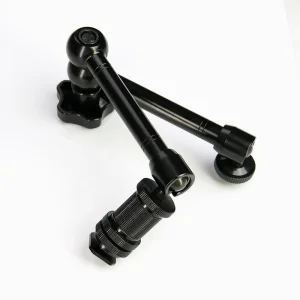
OEM 7-Inch CNC Aluminum Articulating Magic Arm for Camera & Monitor Service
View Product Specs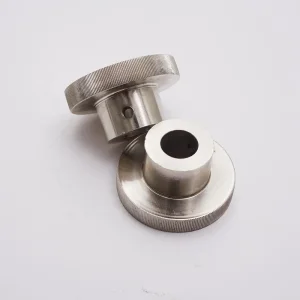
High-Quality CUSTOM CNC KNURLED FEED ROLLERS FOR PACKAGING MACHINERY
View Product Specs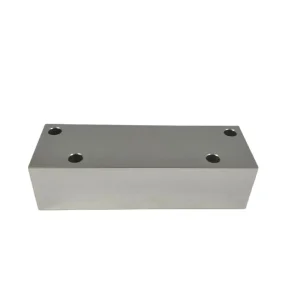
ODM Custom CNC Machined Aluminum Vacuum Manifold Block Manufacturer
View Product SpecsOvercoming Structural Bottlenecks in Modern Foundry Engineering
In high-stress industrial applications, conventional sand or gravity casting frequently compromises mechanical reliability due to subsurface entrained porosity, dendrite segregation, and unpredictable dimensional shrinkage. Our precision casting architecture solves these foundational physics hurdles.
Silica Sol Investment Casting
Utilizing high-purity colloidal silica binder matrices eliminates sodium silicate contamination, granting casting tolerances down to ISO 8062 CT4-CT6. This near-net-shape method drastically diminishes raw stock removal during secondary CNC operations.
- Surface roughness down to Ra 1.6 - 3.2 μm without polishing
- Elimination of parting line mismatch common in split molds
- Superior grain boundary homogeneity across thin wall sections
High-Vacuum Die Casting (HVDC)
By evacuating cavity air pressure below 30 mbar prior to molten shot introduction, our vacuum casting processes eliminate gas inclusions, making cast components fully heat-treatable (T6) and weldable without blistering.
- Yield strength boosted by 35% compared to conventional HPDC
- Critical automotive structural brackets with zero air pockets
- Leak-tight performance for EV cooling circuit fluidics
Integrated 5-Axis Hybrid Post-Machining
Foundry-level tolerances are wedded to sub-micron machining centers. Cast baselines are picked up by automated Renishaw touch probes, compensating for thermal expansion shifts and locking true position to ±0.005 mm.
- One-setup machining for bearing journals and dynamic seal bores
- Coordinate Measurement Machine (CMM) integrated datum verification
- Total indicated runout (TIR) guaranteed within aerospace limits
Critical CNC Milling/Turning Tolerance
HVDC Cavity Vacuum for Gas Porosity Reduction
Non-Destructive Testing (X-Ray & Dye Penetrant)
Annual Precision Stamping & Casting Output
The Global Commercial & Industrial Casting Landscape
Global procurement teams face escalating supply disruptions, shifting environmental legislation, and intensifying cost pressures. Understanding process dynamics and alloy selections is mandatory for proactive risk management.
Supply Chain Regionalization & Hedging
Tier-1 OEMs are shifting away from fragmented trading intermediaries toward direct-to-foundry alliances. Sunmy Hardware operates an integrated engineering-to-production framework from Shenzhen, eliminating layered broker markups and ensuring direct CAD-to-mold data traceability.
Scrap Mitigation & Carbon Footprint
Near-net-shape investment casting achieves 92% to 96% material utilization, radically outperforming billet subtractive machining which routinely turns 70% of high-grade aerospace titanium and alloy steel into contaminated scrap shavings.
High-Integrity Material Specifications
From 17-4PH precipitation hardening stainless steels to ADC12, A380, and specialized duplex alloys, modern manufacturing demands certified spectral melt analysis and mechanical proof testing under strict ASTM/EN standards.
| Casting Methodology | Typical Alloy Groups | As-Cast Tolerance (ISO 8062) | Surface Roughness (Ra) | Minimum Wall Thickness | Production Volume Sweet Spot |
|---|---|---|---|---|---|
| Silica Sol Investment Casting | Stainless Steels (304, 316L, 17-4PH), Superalloys | CT4 - CT6 (±0.12 - ±0.30 mm) | 1.6 – 3.2 μm | 1.2 mm | 500 to 50,000 pcs/yr |
| High-Vacuum Die Casting | Aluminum (A380, ADC12, AlSi10Mg), Zinc Alloys | CT3 - CT5 (±0.08 - ±0.20 mm) | 0.8 – 1.6 μm | 0.8 mm | 10,000 to 1,000,000+ pcs/yr |
| Gravity Low-Pressure Casting | Structural Aluminum Alloys (A356, AC4C) | CT6 - CT8 (±0.35 - ±0.60 mm) | 3.2 – 6.3 μm | 3.0 mm | 1,000 to 30,000 pcs/yr |
| Precision Sand Casting | Gray Iron, Ductile Iron (QT450-10, QT600-3), Bronze | CT8 - CT10 (±0.80 - ±1.50 mm) | 6.3 – 12.5 μm | 4.5 mm | 100 to 10,000 pcs/yr |
| Lost Foam Casting | Cast Iron, Ductile Iron, Heavy Aluminum | CT7 - CT9 (±0.50 - ±0.90 mm) | 4.0 – 8.0 μm | 3.5 mm | 5,000 to 50,000 pcs/yr |
Localized Engineering Governance & Global Compliance
Overseas OEM sourcing succeeds or collapses based on rigorous metrological transparency. We de-risk foreign manufacturing partnerships by aligning directly with European and North American quality expectations.
24-Hour DFM & Simulation
Prior to cutting steel for tooling, our engineering team executes thorough Moldflow and ProCAST thermal solidification simulations, identifying hot spots, cold shuts, and shrinkage porosity upfront.
PPAP Level 3 Documentation
Every industrial production program is backed by comprehensive Production Part Approval Process (PPAP) documentation: FMEA, Control Plans, Process Capability studies (Cpk ≥ 1.67), and gauge R&R validation.
Metallurgical Traceability
Every casting batch ships with spectrometer chemical heat analysis and EN 10204 3.1 certification. Tensile testing, Charpy V-notch impact validation, and Brinell/Rockwell hardness testing are audited on site.
Strict NDA & IP Protection
We execute legally binding bilateral Non-Disclosure Agreements before CAD file transfer. Direct interaction with our Shenzhen engineering plant means zero disclosure to domestic trading intermediaries.
Localized Engineering Use Cases & Performance Records
Precision casting parts serve as mission-critical backbones across high-reliability operating environments. Below are documented implementations where foundry-to-machining cohesion achieved operational breakthroughs.
Robotics & Harmonic Drive Housings
Joint assemblies for 6-axis articulated arms require minimal weight and extreme torsional stiffness. Vacuum die-cast aluminum bases matched with precision-machined steel internal bearing races achieve zero angular backlash and high resonance dampening.
Electric Vehicle (EV) Thermal Inverter Shells
EV power electronics require complex integrated serpentine liquid cooling passages. Thin-walled (1.5 mm) die-cast casings with high thermal conductivity aluminum alloys prevent thermal runaway in silicon carbide (SiC) MOSFET inverter modules.
High-Pressure Hydraulic Valves & Flanges
Petrochemical and fluid power systems demand investment-cast CF8M/316 stainless valve bodies capable of withstanding 600 PSI dynamic hydrostatic test cycles with zero leak paths or micro-porosity seeping.
Future Technology Trajectory: Foundry 4.0 & Additive Fusion
The convergence of computational fluid dynamics, generative design, and additive pattern tooling is reshaping precision casting economics.
Binder Jet 3D Sand & Wax Printing
Direct 3D printing of wax and ceramic molds bypasses traditional hard tooling lead times. Low-volume functional prototypes (1 to 20 parts) can be cast in structural alloys in less than 10 working days, slashing product development iteration cycles.
AI-Driven Industrial CT Scanning
Transitioning from post-production destructive sample testing to automated real-time computed tomography (CT). Volumetric X-ray algorithms assess 100% of internal void formations, confirming defect limits to ASTM E155 Grade 1 criteria automatically.
Generative Structural Light-Weighting
Using finite-element analysis (FEA) to place material only along primary load vectors. Castings achieve 30% mass reductions without sacrificing rigidity, matching aerospace mass-to-strength ratios at a fraction of forged titanium machining costs.
Questions Answered by Sourcing & Quality Specialists
Review the definitive technical and commercial criteria international buyers evaluate when qualifying our casting facilities and precision machine shops.
What tolerances can be achieved directly as-cast versus secondary CNC finishing?
With silica sol investment casting, linear dimensional tolerances typically conform to ISO 8062 CT4-CT6 (±0.15 mm per 100 mm). For critical bearing journals, dowel alignments, or thread interfaces, our in-house 5-axis CNC machining centers finish these features to ±0.005 mm with Ra 0.4 surface finishes.
How do you guarantee internal defect elimination for leak-proof fluid components?
We utilize high-vacuum die casting (<30 mbar cavity pressure) to eliminate turbulent air entrainment. For investment castings, molten degassing and ceramic filtering eliminate slag inclusion. 100% pneumatic or hydrostatic pressure testing (up to 3.5 MPa) is conducted on all hydraulic manifold bodies prior to shipping.
What documentation accompanies an overseas production shipment?
Every shipment arrives with full provenance paperwork: 3.1 Material Chemical & Mechanical Certifications, CMM Full-Dimensional Inspection Reports (evaluating key GD&T callouts), Non-Destructive Testing (NDT) reports (X-ray or dye penetrant), and RoHS/REACH compliance declarations.
How do you manage the initial transition from prototype to series tooling?
We utilize rapid bridge methods including SLA/SLS wax printing or direct billet CNC machining to deliver functional prototypes for client field validation. Once geometry is finalized, our engineers design production tooling with integrated cooling channels, providing First Article Inspection (FAI) samples within 25 days.
High-Precision Assemblies, Structural Brackets & Fasteners
Review additional precision components built to exact customer drawings, undergoing rigorous CMM verification and batch material testing before export dispatch.
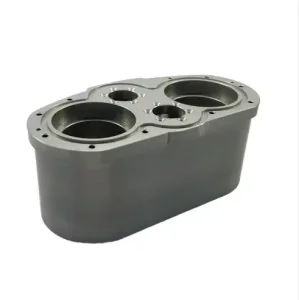
Custom Factory Custom 5-Axis CNC Machined Steel & Aluminum Universal Joint Base and Gearbox Shell for Robotics & Drone Industry Products
View Product Specs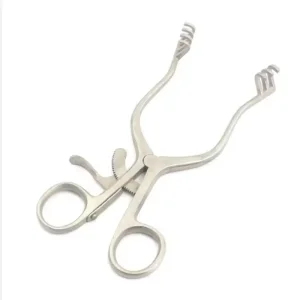
China Professional Quality Stainless Steel Custom Surgical Retractor Service, Exporter
View Product Specs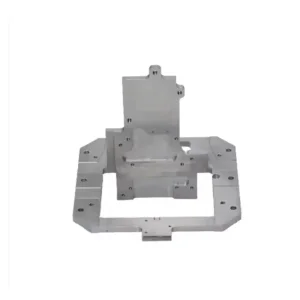
OEM Custom High-Precision CNC Machined Metal Bracket & Structural Frame Wire EDM & Milling
View Product Specs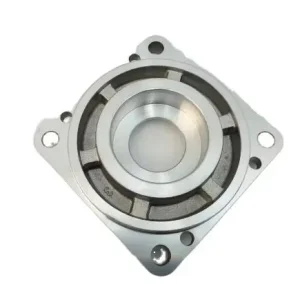
OEM Custom CNC Machining Parts / Precision Bearing Housings / Flanged Bearing Support Components
View Product Specs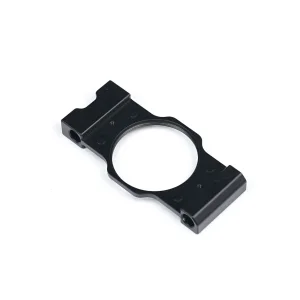
OEM Custom CNC Machined Aluminum Optical Lens Mounting Bracket (Matte Black)
View Product Specs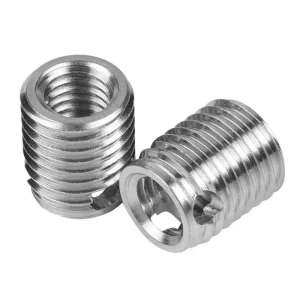
Custom Custom Self-Tapping Threaded Inserts Product, Exporters
View Product Specs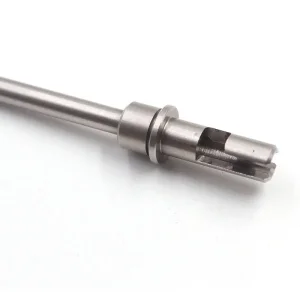
OEM Precision CNC Turned Stainless Steel Stepped Shaft Service, Products
View Product Specs