
High-Precision Production Portfolio: Mechanical & Structural Solutions
Combining primary hard polymer substrates with secondary elastomeric sealing or multi-axis metallic inserts for high-load, zero-failure structural assemblies.
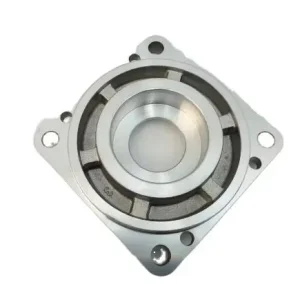
OEM Custom CNC Machining Parts / Precision Bearing Housings / Flanged Bearing Support Components Manufacturers, Service
Explore Component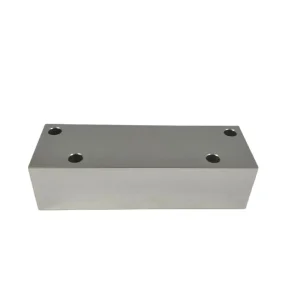
ODM Custom CNC Machined Aluminum Vacuum Manifold Block Manufacturer, Products
Explore Component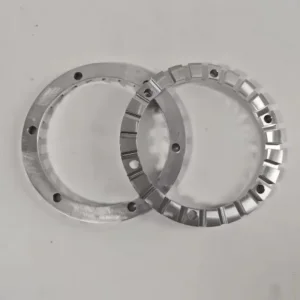
China Custom CNC Machined Anodized Sealing Rings for Semiconductor & Optical Instruments Factories, Factory
Explore Component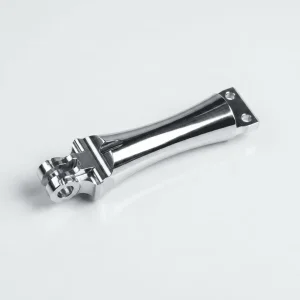
Custom Custom CNC Machined Robot Finger Joint Link Manufacturers, Exporter
Explore Component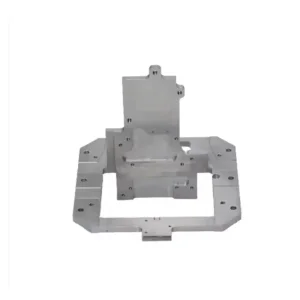
OEM Custom High-Precision CNC Machined Metal Bracket & Structural Frame Wire EDM & Milling for Aerospace & Automotive Applications
Explore Component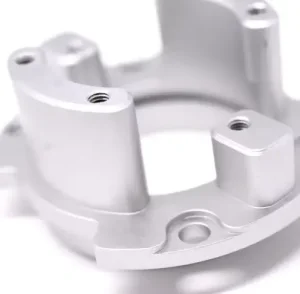
High-Quality Precision 5-Axis CNC Machined Aluminum Housing Mounting Bracket for Aerospace & Automotive Suppliers, Exporter
Explore Component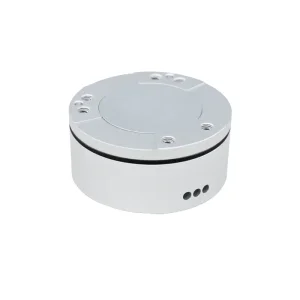
China Custom 6-Axis Force/Torque Sensor Housings & Elastic Elements | OEM/ODM Service, Factories
Explore Component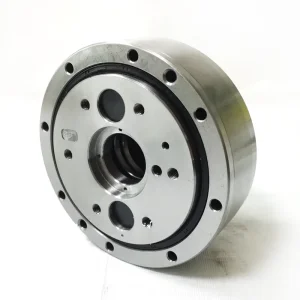
ODM Custom Hollow-Shaft Cycloidal Reducer | OEM Parts & Assembly Product, Exporters
Explore ComponentMacro-Industrial Solutions & Global State of Multi-Shot Polymer Engineering
The transition from mechanical assembly to monolithic multi-material molding is driving significant weight reduction, chemical hermeticity, and structural longevity across mission-critical sectors.
Hermetic Interfacial Bonding
Overcoming secondary manual gasket installation failures by utilizing direct thermodynamic molecular co-crystallization between incompatible substrates (e.g., PA66-GF30 to TPU/TPE). Dynamic barrel thermal mapping ensures total interfacial shear resistance above 15 MPa under severe vibration environments.
Dynamic Rotary & Transfer Kinematics
Eliminating flash and uneven cooling distortion through precision servo-driven rotary plates and high-speed robotic transfer stations. Repeatable platen indexing within ±0.005° allows sub-millimeter thin-wall barriers and optical clear components to seat without scratch or internal stress marks.
Consolidated Supply Chain Economics
Integrating assembly, ultrasonic welding, and leak inspection into a single autonomous multi-shot cell reduces bill-of-materials overhead by up to 45%. Sourcing teams mitigate scrap variance, lower working capital ties, and bypass manual secondary assembly liabilities.
Comparative Feasibility Matrix: Multi-Shot vs. Conventional Assembly
Comprehensive thermodynamic, operational, and tolerance evaluation for advanced multi-material polymer development.
| Evaluation Parameter | Two-Shot Injection Molding (2K) | Overmolding (Two-Stage Tooling) | Post-Molding Adhesive / Fasteners |
|---|---|---|---|
| Molecular Bonding Strength | Chemical cohesion at melt temperature; cohesive bond failures. | Secondary heat interface; partial chemical & mechanical interlock. | Low-to-moderate adhesive adhesion; prone to chemical aging. |
| Positional Repeatability | Direct mold indexing within ±0.010 mm tolerance boundaries. | Dependent on manual/robotic insert positioning (±0.050 mm). | Cumulative assembly tolerances; ±0.150 mm to ±0.300 mm. |
| Cycle Efficiency | Parallel injection; single machine cycle (20s - 45s). | Sequential molding; dual machine operations + cooling delays. | Multi-station manual process; cure-time delays up to 24 hours. |
| Tooling Complexity & CapEx | High initial investment (twin-injection, hot runner, rotary tables). | Moderate (two standard single-shot molds required). | Low tool expense; high recurring manual labor and fixture costs. |
| Quality Assurance & CPK | Automated closed-loop pressure monitoring; Cpk ≥ 1.67. | Variance from substrate thermal variations; Cpk 1.10 - 1.33. | High operator subjectivity; requires extensive manual NDT. |
Localized Engineering Governance & Global Compliance Framework
Seamless execution bridging Shenzhen precision manufacturing capability with North American and European design validation, risk management, and regulatory governance.
Tier-1 Quality Certifications
Operated strictly under audited ISO 9001:2015, ISO 13485 (Class II Medical Cleanroom environment), and IATF 16949 automotive standard operational protocols. Full Material Test Reports (MTR), resin certificate of analysis (CoA), and RoHS/REACH regulatory pass files provided per lot.
Direct Toolmaker IP Security
Bypassing non-technical middlemen via direct NDA-governed communications with veteran mold design engineers. Native support for Catia, NX, SolidWorks, and STEP files stored on isolated, encrypted air-gapped on-premise servers to prevent intellectual property exposure.
Global DDP Fulfillment Logistics
Full logistics ownership from customs classification (HS code accuracy) to Door-to-Door Delivered Duty Paid (DDP) freight via air express or temperature-controlled sea freight. Complete with custom foam nest packaging preventing micro-scratching on optical surfaces.
High-Performance Engineering Application Scenarios
Proven production deployments solving severe friction, insulation, ingress, and ergonomic challenges across global mission-critical programs.
Medical Diagnostics & Surgical Devices
Biocompatible ISO 10993 USP Class VI resin co-molding. Rigid polycarbonate fluidic channels with self-sealing LSR (Liquid Silicone Rubber) injection ports for IV diagnostics.
Next-Gen EV Powertrain & Battery Arrays
Flame-retardant UL94-V0 high-voltage connectors with integrated silicone water-tight sealing gaskets, designed for thermal shock cycles (-40°C to +150°C).
Industrial Robotics & Grippers
High-modulus carbon-fiber reinforced polyamides with soft polyurethane dampening pads to maximize tactile grip friction while isolating sensitive electronics from vibration.
Consumer Wearables & Electronics
Cosmetically critical smart wearable enclosures combining structural ABS chassis with soft-touch skin-contact TPE, preserving 5ATM waterproof barrier integrity.
Technological Roadmap: AI-Driven Simulation & Micro-Molding
Strategic advancements driving multi-shot precision engineering toward zero-defect, self-optimizing closed-loop production cycles.
Phase 1: Real-Time In-Mold Viscosity Sensing
Implementing piezoelectric cavity pressure transducers and infrared thermal array sensors inside both primary and secondary cavities. AI predictive algorithms adjust injection velocity in real time to counteract batch-to-batch polymer rheological drift.
Phase 2: Conformal 3D Metal Printed Tooling
Utilizing selective laser melting (SLM) in maraging steel tool cores. Conformal cooling passages conform within 1.5 mm of contoured multi-shot interfaces, shortening thermal dwell delays by 40% and eliminating differential shrinkage warpage.
Phase 3: Circular Polymer Recyclability Alliances
Developing fully separable mono-material multi-shot pairs (e.g., chemically tuned PP + olefin-based elastomer combinations) enabling standard single-stream recycling without delamination or processing contamination.
High-Precision Production Portfolio: Specialized Components
High-tolerance shafts, hydraulic manifold components, capillary tubing, and high-frequency structural elements fabricated under sub-micron CNC and tooling controls.
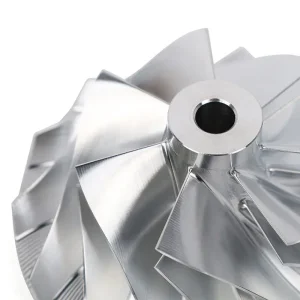
High-Quality Custom 5-Axis CNC Machined Billet Aluminum Impeller Compressor Wheel Manufacturers, Exporter
Explore Component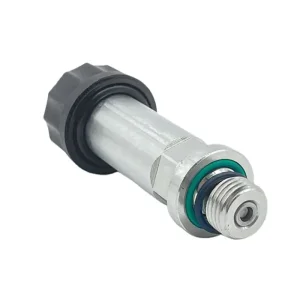
Custom High-Performance Hydraulic Solenoid Valve Core – Precision CNC Turned Excavator Spare Parts Service, Exporters
Explore Component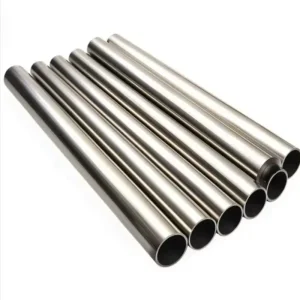
High-Quality Custom Precision Capillary Stainless Steel Pipe / Tube (OD 1mm - 8mm) Supplier, Factory
Explore Component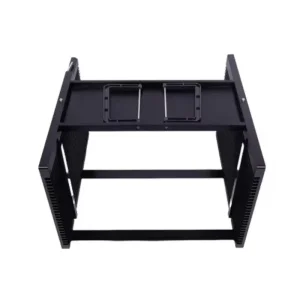
OEM Premium 8-Inch CNC Machined Aluminum Semiconductor Wafer Carrier Factories, Quotes
Explore Component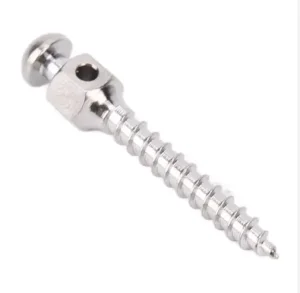
China Custom Precision Titanium Orthodontic Micro Implant Screws Manufacturers, Factories
Explore Component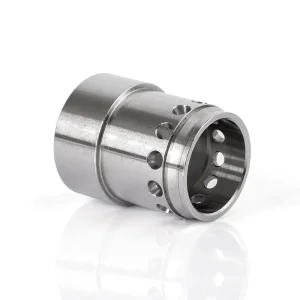
ODM Custom CNC Precision Turned Stainless Steel Filter Sleeve (OEM/ODM Industrial Grade) Manufacturer, Manufacturers
Explore Component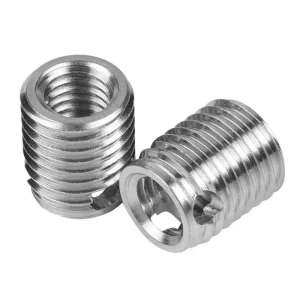
Custom Custom Self-Tapping Threaded Inserts Product, Exporters
Explore Component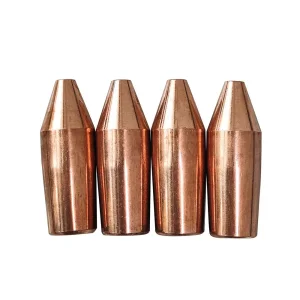
OEM Custom Resistance Spot Welding Electrode Caps Exporters, Factories
Explore ComponentFrequently Asked Questions by Tooling & Sourcing Engineers
Authoritative technical insights covering shrinkage control, core-back tooling kinematics, chemical adhesion dynamics, and qualification protocols.