Featured Precision Engineered Components (Part I)
Direct from our precision machining and lost-wax investment casting production clusters: tightly toleranced housings, sensors, boosters, and kinematic hardware engineered to global OEM/ODM specifications.
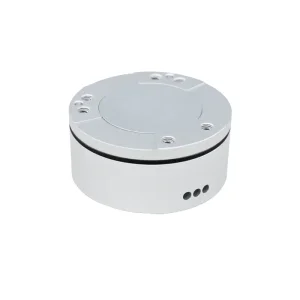
China Custom 6-Axis Force/Torque Sensor Housings & Elastic Elements
Explore Product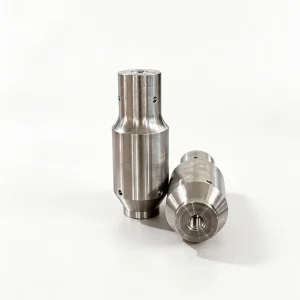
ODM Custom Titanium Ultrasonic Booster Manufacturers, Factory
Explore Product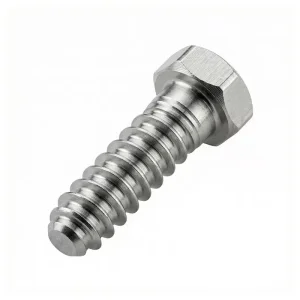
Custom Titanium Medical Implant / Bone Screw Exporter, Factories
Explore Product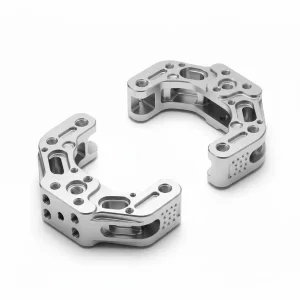
High-Quality Custom CNC Machined Robotic Gripper Jaws Service
Explore Product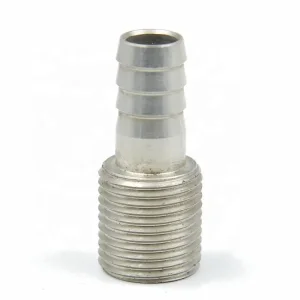
OEM Custom CNC Turned Hose Barb Fittings & Threaded Adapters
Explore Product
Precision CNC Turned Black Anodized Aluminum Lens Barrel Components
Explore Product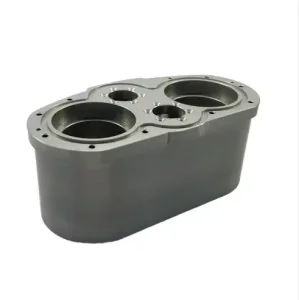
5-Axis CNC Machined Universal Joint Base & Gearbox Shell
Explore Product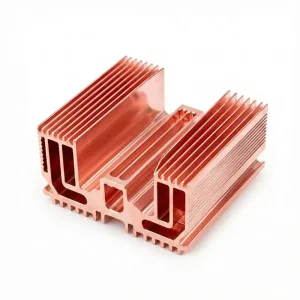
ODM High-Performance Copper Heatsink Manufacturer, Factories
Explore ProductTechnical Baseline: Advanced Silica-Sol Investment Casting Fundamentals
Lost-wax investment casting represents the gold standard for fabricating geometrically complex, thin-walled, metallurgical-grade metallic structures without the extensive tooling restrictions of die casting or the excessive roughing stock of subtractive machining.
Silica-Sol vs. Water-Glass Refractory Systems
Modern precision investment casting bifurcates sharply across binder chemistries. While historical commercial foundries rely on sodium silicate (water glass) for non-critical structural cast iron and steel, high-reliability ODM facilities exclusively utilize colloidal silica-sol binder systems. Silica sol slurries form refractory ceramic shells characterized by exceptional refractoriness, micro-structural inertness, and thermal shock resistance. This prevents metal-mold interface reactions, surface decarburization, and coarse ceramic spalling, consistently yielding Ra 1.6 to Ra 3.2 µm as-cast finishes.
Near-Net-Shape Topological Freedom
Investment casting allows mechanical design engineers to place solid material precisely along structural stress vectors. Internal bifurcated fluid passageways, undercut retaining bosses, organic variable-thickness diaphragms, and aerodynamic cooling fins that cannot be demolded via rigid metal tooling are effortlessly captured using soluble or multi-piece wax cores. This unifies multi-component assemblies into singular monolithic castings, eliminating mechanical fasteners, gasket seals, leak paths, and weld heat-affected zones.
Controlled Solidification & Shrinkage Modeling
Attaining defect-free internal cast structures demands meticulous thermal gradient management. Modern ODM casting engineers employ advanced finite element casting simulation software (e.g., ProCAST, MAGMAsoft) to simulate multi-phase liquid mold filling, heat dissipation paths, and phase transformation dynamics. Through strategically engineered directional solidification, chills, and optimized gating runners, micro-porosity, dendrite segregation, and shrinkage cavities are completely steered outside the critical functional geometry into discardable riser heads.
Macro Industry Solutions & Global Industrial Landscape
In response to international supply chain restructuring, original equipment manufacturers are re-evaluating foundries against strict criteria: metallurgical traceability, environmental decarbonization, automated process repeatabilities, and total landed cost models.
Aerospace Propulsion & Structural Airframes
Turbine stator nozzles, heat-shield baffles, fuel distribution swirlers, and flight-control bellcranks require casting alloys that retain yield strength above 850°C while resisting cyclic fatigue. Investment casting uniquely delivers vacuum induction melted (VIM) nickel-based and cobalt-based superalloys (Inconel 718, 625, Mar-M-247) in complex aerodynamic profiles. The shift toward single-crystal and directionally solidified microstructures in advanced contract foundries enables gas turbine engines to achieve higher operating temperatures and fuel burn efficiencies.
Surgical Instruments & Orthopedic Implants
Medical implantable components demand total biological inertness and fatigue endurance. Investment casting using medical-grade Cobalt-Chromium-Molybdenum (ASTM F75) and extra-low interstitial Titanium (Ti-6Al-4V ELI, ASTM F136) eliminates metallurgical fissures while achieving complex anatomically conforming articulating joints, hip stems, and femoral knee components. Integrated foundries provide hot isostatic pressing (HIP) and passivation treatments meeting ISO 13485 and FDA Class III biocompatibility parameters.
Next-Gen Robotics & Autonomous Mobile Systems
Dynamic robotic wrists, multi-axis torque-sensor bodies, cycloidal reducer shells, and articulated end-effectors require high structural stiffness paired with minimal rotational inertia. High-precision investment casting provides optimized thin-wall ribbing structures that reduce un-sprung payload weight while absorbing shock loads and harmonic oscillations, all while leaving precise stock allowances for subsequent 5-axis CNC indexing of critical bearing surfaces.
Fluid Control & Energy Transition Infrastructure
Hydrogen distribution valves, subsea high-pressure manifold blocks, cryogenic LNG impellers, and nuclear containment pump housings face severe cavitation and intergranular corrosion. Contract foundries cast Duplex (2205), Super Duplex (2507), and Monel alloys with balanced austenitic-ferritic microstructures, executing 100% helium leak testing and non-destructive hydrostatic checks up to 15,000 PSI to ensure complete seal reliability under zero-emission mandates.
Comparative Engineering Matrix: Investment Casting vs. Alternative Processes
Selecting the optimal manufacturing route requires a rigorous multi-factor trade-off between geometric complexity, tooling capital expenditure, mechanical integrity, and total lifecycle unit costs.
| Evaluation Parameter | Silica-Sol Investment Casting | High-Pressure Die Casting (HPDC) | Resin Sand Casting | Full Billet 5-Axis CNC Machining |
|---|---|---|---|---|
| Alloy Versatility | Unlimited (Steels, Superalloys, Ti, Al, Cu) | Restricted (Al, Zn, Mg non-ferrous alloys) | Broad (Cast iron, structural steels, bronzes) | Extensive (Limited by billet supply & workability) |
| Dimensional Tolerance | ISO 8062-3 DCTG 4–6 (±0.1% to ±0.2 mm) | DCTG 2–4 (±0.05 mm to ±0.1 mm) | DCTG 8–12 (±1.0 mm to ±3.0 mm) | Ultra-tight (±0.005 mm to ±0.01 mm) |
| As-Cast Surface Finish | Ra 1.6 – 3.2 µm (Smooth finish) | Ra 0.8 – 1.6 µm (Mirror finish) | Ra 12.5 – 25.0 µm (Granular rough) | Ra 0.4 – 1.6 µm (Tool marks visible) |
| Geometric Undercuts / Cores | Exceptional (Soluble wax, ceramic cores) | Severely Limited (Straight-pull side cores) | Moderate (Internal sand cores required) | Constrained (Cutter access & reach limits) |
| Internal Soundness & Density | Superior (Gas/porosity-free under HIP) | Prone to entrapment gas porosity | Moderate (Risk of sand inclusion & shrinkage) | Parent metal integrity (100% monolithic) |
| Tooling Cost & Amortization | Moderate ($1,500 – $6,000 for wax dies) | High ($15,000 – $80,000 hardened steel) | Low ($800 – $2,500 pattern boxes) | Zero Tooling (Fixtures & programming only) |
| Material Buy-to-Fly Ratio | 1.1 : 1 to 1.3 : 1 (Minimal stock) | 1.1 : 1 (Net shape runner remelt) | 1.4 : 1 to 1.8 : 1 (Excess machining stock) | 3 : 1 to 20 : 1 (Heavy chip waste) |
Comprehensive Metallurgy & Alloy Classification Spectrum
A true ODM contract foundry controls material properties at the crystallographic and chemical level, balancing elemental additions, degassing phases, and post-cast thermal treatment schedules.
Austenitic, Martensitic & Duplex Stainless Steels
We process standard AISI 304L and 316L for hygienic and chemical immersion duties, along with precipitating martensitic alloys like 17-4PH (AISI 630) that achieve H900, H1025, or H1150 aged conditions with tensile strengths exceeding 1,300 MPa. For marine environments and aggressive acidic media, Duplex 2205 (UNS S31803) and 2507 (UNS S32750) deliver Pitting Resistance Equivalent Numbers (PREN > 42), balancing exceptional mechanical yield with pitting resistance.
Nickel & Cobalt-Based High-Temperature Superalloys
Melted under precise vacuum induction melting (VIM) regimes, Inconel 718, Inconel 625, Hastelloy C-276, and Stellite 6 are cast to mitigate gamma prime phase coarsening. These grades exhibit creep rupture thresholds and thermal fatigue resistance under operational temperatures up to 980°C, proving indispensable for turbocharger turbine wheels, gas nozzle rings, incinerator nozzles, and power generation combustors.
Aerospace Titanium & Lightweight Non-Ferrous Alloys
Casting titanium requires vacuum skull melting furnaces and specialized yttria (Y₂O₃) or zirconia refractory mold coatings to eliminate the brittle surface "alpha-case" contamination layer. We cast Ti-6Al-4V (Grade 5) and Ti-6Al-4V ELI (Grade 23) for ultra-lightweight structural UAV linkages, biomedical bone screws, and specialized acoustic ultrasonic boosters, achieving strength-to-weight ratios unattainable in ferrous alloys.
Carbon & Low-Alloy Structural Steels
For heavy transport, material handling, and railway hardware, high-tensile carbon steels (WCB, WCC, AISI 1020, 1045) and chrome-moly low-alloy steels (4140, 4340, 8620) are normalized, quenched, and tempered to provide impact toughness down to -46°C. These alloys provide wear-resistant track links, suspension knuckle brackets, and industrial gear sets that withstand sustained dynamic stresses.
Localization Support, Quality Compliance & Global Supply Chain Governance
Reliable contract manufacturing goes beyond melting metal: it requires absolute regulatory conformance, dual-sourcing resilience, verifiable non-destructive evaluation (NDE), and strict intellectual property firewalls.
Full Regulatory & Aerospace Quality Certifications
Every casting run operates under documented Quality Management Systems compliant with ISO 9001:2015, IATF 16949 (Automotive), AS9100D (Aerospace), and ISO 13485 (Medical). Foundries maintain full heat-number batch traceability back to raw scrap/ingot chemistry. Complete mill test reports (MTR) according to EN 10204 3.1 are provided alongside chemical optical emission spectrometry (OES) logs, tensile test records, and Charpy V-notch energy absorptions.
Non-Destructive Testing (NDT) & Metrological Verification
To qualify mission-critical cast structures, internal testing centers execute Level II/III certified NDT regimens conforming to ASTM E1417 (Fluorescent Liquid Penetrant Inspection), ASTM E1444 (Magnetic Particle), and ASTM E1742 (Industrial Digital Radiography / X-Ray). Internal coordinate measuring machines (CMM) and laser scanning systems verify GD&T profiles to within ±0.005 mm on critical post-machined datums, with 100% First Article Inspection (FAI) reports following AS9102 protocols.
Dual-Shoring Architecture & Nearshore Buffering
Mitigating cross-border freight volatility, modern ODM operations coordinate production through unified digital MRP systems linked to bonded warehousing hubs across North America and Western Europe. By supporting Just-in-Time (JIT) releases and Vendor-Managed Inventory (VMI) frameworks, overseas buyers combine high-volume production cost advantages with local security inventories, maintaining 30-to-60-day safety stocks near end-assembly plants.
Zero-Intermediary IP Firewalls & Legal Protection
CAD datasets, proprietary topological algorithms, and mold designs represent vital OEM capital. Direct factory-to-buyer collaboration bypasses export-import brokers and trading company re-sellers. Non-Disclosure Agreements (NDAs) enforceable across international jurisdictions govern all STEP/IGES CAD uploads, protecting confidential blueprints inside ISO 27001-certified internal data repositories.
Technology Roadmap: Industry 4.0 & Decarbonized Casting Outlook
The traditional investment casting foundry is rapidly transforming into a smart, sensor-instrumented, digitized production system capable of rapid turnaround and reduced carbon footprints.
Tool-Less Additive Rapid Pattern Making
Bridging prototyping and full serial casting, industrial Stereolithography (SLA) and Binder Jetting 3D printers print sacrificial castable photopolymer resins and PMMA patterns directly from CAD files in under 48 hours. By eliminating hard aluminum wax injection tooling during early engineering verification phases, design changes are executed rapidly. Physical functional metal castings are delivered for dynamometer testing before steel dies are cut.
Automated Robotic Shell-Building & Slurry Control
Manual ceramic shell dipping introduces variable shell wall thicknesses and dry-time anomalies that lead to shell cracking and mold runouts. Modern foundries integrate 6-axis robotic dipping clusters operating in humidity-controlled climate rooms. Precision viscometers, density transmitters, and ultrasonic sand fluidizers maintain continuous slurry rheology, ensuring uniform coating around thin knife-edge turbine details.
Digital Twin Solidification & AI Defect Prediction
Thermocouple-instrumented shells linked to machine-learning algorithms construct real-time thermal profiles of individual pouring operations. By comparing live solidification cooling curves against predictive digital twins, anomalies like localized hot spots or premature choke freezes are flagged instantly. This feedback automatically adjusts runner dimensions and preheat temperatures on subsequent casting sequences, establishing true adaptive process controls.
Decarbonization, Scrap Reclamation & Green Foundry Operations
Energy-intensive foundries are modernizing through high-efficiency medium-frequency IGBT induction furnaces, closed-loop waste heat recovery systems, and sustainable wax dewaxing autoclaves that reclaim over 95% of pattern wax for reuse in runner systems. Combining solar-supplemented microgrids with argon-purged slag recycling protocols significantly cuts carbon emissions per kilogram of finished casting, helping OEM buyers achieve Scope 3 supply chain decarbonization milestones.
Sourcing & Engineering FAQ: Procurement Due Diligence
Key technical answers to common questions asked by supply chain managers, quality directors, and chief mechanical engineers when qualifying contract investment casting facilities.
What is the standard linear tolerance capability for silica-sol investment casting?
Under standard ISO 8062-3 and VDG P690 investment casting guidelines, linear tolerances comfortably achieve DCTG 4 to DCTG 6. For general dimensions, this translates to ±0.1 mm to ±0.15 mm per 25 mm of length. Tighter tolerances—down to ±0.05 mm on critical bores, bearing journals, and ground mating interfaces—are achieved through secondary multi-axis CNC milling and Swiss-turning operations integrated in-house.
How does an ODM casting factory eliminate sub-surface gas and shrinkage porosity?
Porosity mitigation combines three engineering pillars: (1) computational gating and riser fluid-solidification simulations that place the thermal center outside the component geometry; (2) argon degassing and vacuum melt induction that purges dissolved hydrogen, nitrogen, and oxygen from the liquid melt; and (3) Hot Isostatic Pressing (HIP) at high temperatures and pressures (1,150°C and 100 to 150 MPa in argon), which collapes internal micro-voids via plastic creep, consolidating internal density to 100% theoretical soundness.
What documentation accompanies every finished production batch?
Shipments leave our facilities with an export-compliant quality dossier including: EN 10204 Type 3.1 Material Certificate detailing actual spectroscopic chemical heats; mechanical tensile/yield/elongation and hardness test results; First Article Inspection (FAI) dimensional reports via CMM; RoHS/REACH compliance letters; and, when specified by OEM procurement contracts, Level II NDT certification cards (digital X-ray and fluorescent penetrant test records).
Can investment casting support small lot sizes, or is it strictly for mass production?
Our agile manufacturing model supports pilot builds and low-volume production. Utilizing stereolithography (SLA) 3D printed sacrificial patterns, we deliver small runs (1 to 50 pieces) without investing in hard tooling. As volumes scale into hundreds or tens of thousands of parts annually, we transition the approved CAD files to multi-cavity hardened steel wax injection dies, reducing piece-part costs.
How are tool maintenance, mold lifecycle, and replacement costs structured?
For series ODM contracts, precision aluminum or P20/H13 tool steel wax injection molds carry an unconditional lifetime production guarantee. The customer covers the initial non-recurring engineering (NRE) die fabrication charge, and the factory owns all routine preventative maintenance, cleaning, cavity polishing, and dimensional re-qualification throughout the project lifecycle.
Featured Precision Engineered Components (Part II)
A broad range of high-tolerance mechanical hardware: hydraulic spool cores, semiconductor carriers, aerospace mounting brackets, and vacuum robotic components machined and cast to precise print tolerances.
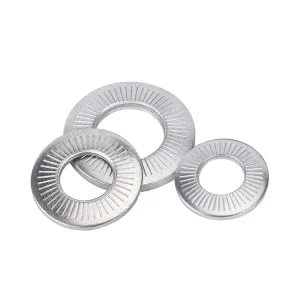
High-Quality Custom Wedge-Lock Washer Pairs Product, Quotes
Explore Product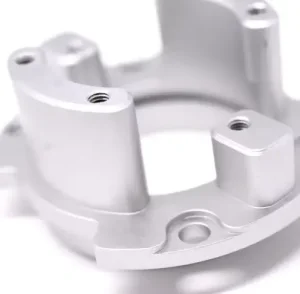
Precision 5-Axis CNC Machined Aluminum Housing Mounting Bracket
Explore Product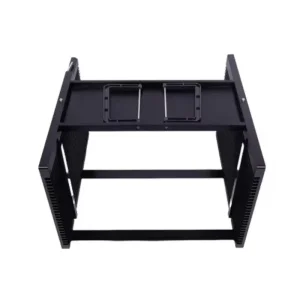
OEM Premium 8-Inch CNC Machined Aluminum Semiconductor Wafer Carrier
Explore Product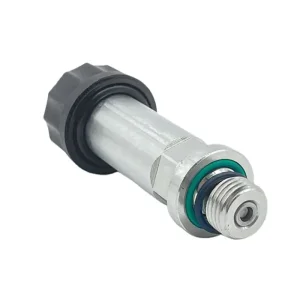
High-Performance Hydraulic Solenoid Valve Core – Precision CNC Turned
Explore Product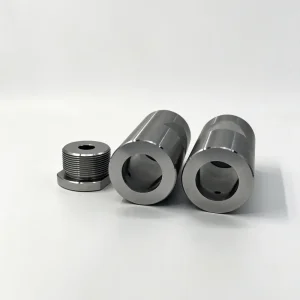
Custom CNC Turned Tooling Sleeves & Threaded Retaining Plugs
Explore Product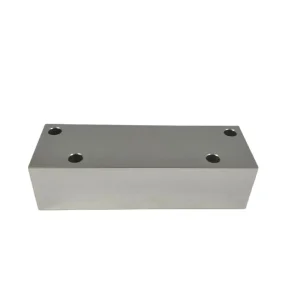
ODM Custom CNC Machined Aluminum Vacuum Manifold Block
Explore Product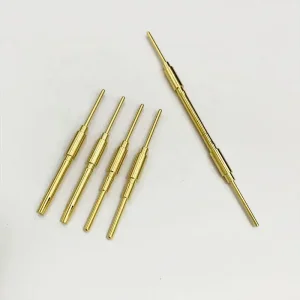
ODM Custom CNC Turned Contact Pins & Test Probe Components
Explore Product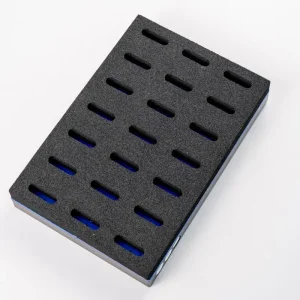
Custom CNC Machined Foam Vacuum Gripper Plates for Robotic EOAT
Explore ProductInitiate Your ODM Investment Casting Engineering Review
Direct communication with foundry metallurgists and tooling engineers. Send your 2D drawings with critical GD&T callouts and 3D native CAD files (.STEP, .IGES, .X_T) for rapid DFM evaluation and transparent production quotations within 24 hours.
Request Technical DFM & Quote