
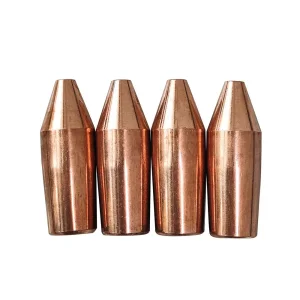
Precision Portfolio Series A
High-Precision Machined & Finished Components
Explore custom engineered parts manufactured to strict tolerances down to ±0.005 mm, featuring advanced surface treatments, electro-polishing, and rigorous coordinate measuring machine (CMM) validation.
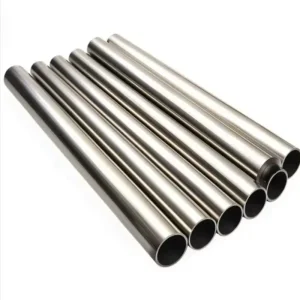
High-Quality Custom Precision Capillary Stainless Steel Pipe / Tube (OD 1mm - 8mm) Supplier, Factory
View Product Details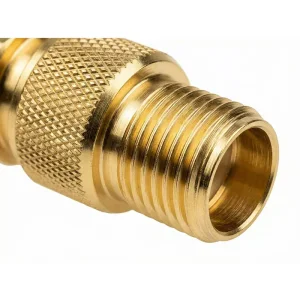
High-Quality Precision Knurled Brass Threaded Connector Manufacturers, Factories
View Product Details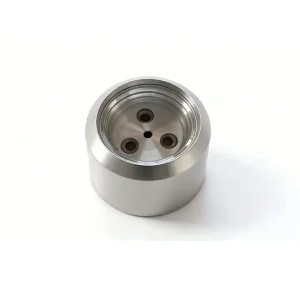
High-Quality Precision CNC Machined High-Voltage Insulator Contact Base Service, Factory
View Product Details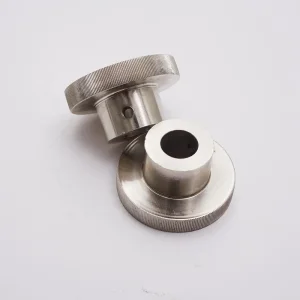
High-Quality CUSTOM CNC KNURLED FEED ROLLERS FOR PACKAGING MACHINERY Products, Factories
View Product Details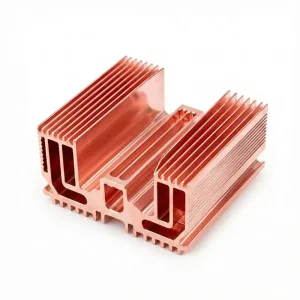
ODM High-Performance Copper Heatsink Manufacturer, Factories
View Product Details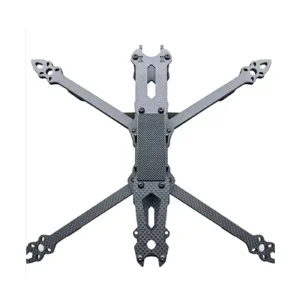
China Custom CNC Machined Carbon Fiber Drone Frame Kits | High-Performance Quad/Hexacopter Frames for Agriculture & FPV Suppliers, Manufacturers
View Product Details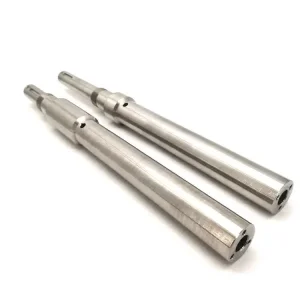
Custom Custom CNC Turned Stainless Steel Stepped Shafts with Keyways Product, Factories
View Product Details
Engineering Whitepaper
Electrochemical Thermodynamics in OEM Anodizing
Anodizing is fundamentally an electrolytic passivation process that transforms the native, chemically vulnerable metallic substrate into a coherent, non-conductive, highly structured aluminum oxide (Al₂O₃) hexagonal columnar lattice. Unlike painted or powder-coated films that rely purely on mechanical anchoring, the anodic layer grows directly from the metal base, becoming fully integral with the underlying atomic structure.
In precision CNC manufacturing at Sunmy Hardware (Shenzhen Sunmy Hardware Co., Ltd.), understanding the ionic transport across the barrier layer is paramount. Under controlled DC or pulsed current densities (1.2 to 2.4 A/dm²), oxygen anions migrate through a sulfuric or chromic electrolyte bath to react with aluminum cations at the barrier interface, balancing simultaneous oxide formation and acidic dissolution to create controlled cellular nanopores.
Sub-Micron Dimensional Growth Compensation Rule:
During standard sulfuric acid anodizing, the oxide layer typically penetrates 50% into the parent material and builds up 50% outward from the original surface. For a specified 25 µm hardcoat thickness, the external dimension expands by approximately 12.5 µm per surface (25 µm on outer diameters). Our engineering teams adjust pre-machining tolerances accordingly during upfront Design for Manufacturability (DFM) reviews.
- Type I (Chromic Acid): Thinnest film (0.5–5 µm), low fatigue impact, preferred for critical aerospace components and complex bonded structures.
- Type II (Sulfuric Acid): Versatile architectural and industrial finishing (8–25 µm), exceptional receptivity to organic and inorganic dye saturation.
- Type III (Hardcoat): Dense high-wear dielectric layer (25–75 µm), achieving surface hardness up to 60–70 HRC equivalent (400–600 HV), verified via Vickers micro-indentation.
- Micro-Arc Oxidation (MAO/PEO): Plasma-assisted ceramic layer growth on non-ferrous metals, delivering supreme thermal shock endurance and dielectric breakdown protection.
Microstructural Nanopore Morphology
The morphology of an anodic coating consists of millions of hexagonal cells per square millimeter, each containing a central cylindrical pore perpendicular to the substrate. The diameter of these pores (typically 10 to 25 nm) and cell wall thickness are strictly dictated by bath temperature (0°C to 20°C) and bath voltage. Precise hydrothermal sealing with nickel acetate or environmentally compliant zirconium seals prevents hydration leaching and retains long-term colorfastness.
ASTM B117 Salt Spray > 1000 HoursDirect Interfacial Adhesion & Zero Flaking
Because the anodic layer is metallurgical in nature rather than an applied coating, it will never peel, flake, or delaminate under rapid thermal cycling (-40°C to +300°C). This makes OEM anodizing the undisputed surface finish for high-frequency vibration enclosures, optical sensor brackets, space-grade optical housings, and subsea robotic manipulator assemblies.
Zero Delamination Risk
Sourcing & Procurement Analysis
Cross-Industry Procurement Requirements for Anodized Assemblies
Global original equipment manufacturers require far more than generic aesthetic coloring. Procurement specifications demand micro-inch surface roughness control, electrical insulation, high-vacuum compatibility, and audited compliance with internationally accepted standards.
Aerospace & Defense
Mandates MIL-A-8625 Type II & Type III Class 1 (non-dyed) and Class 2 (dyed). Requirements include Taber abrasion testing (ASTM D4060), Nadcap accredited processes, zero stress-risers in critical fatigue joints, and comprehensive AS9102 First Article Inspection reports.
AMS 2469 / MIL-A-8625Medical & Life Sciences
Biocompatibility per ISO 10993 and resistance to repetitive autoclaving cycles (superheated steam up to 134°C). Requires non-cytotoxic, inorganic mineral pigments that resist chemical degradation by alkaline hospital disinfectants and ultrasonic cleaning.
ISO 10993 BiocompatibleSemiconductor & Vacuum
Demands Ultra-High Vacuum (UHV) compatibility with negligible outgassing rates (ASTM E595). Eliminates volatile organic compounds (CVCM < 0.1%), suppresses particle flaking in plasma etch chambers, and guarantees dielectric breakdown strengths exceeding 1,200V.
ASTM E595 Low-OutgassingAutomotive & E-Mobility
Heavy emphasis on dielectric isolation for battery thermal management housings, busbars, and inverter chassis. Components must withstand CASS copper-accelerated salt spray (>240 hrs) and severe gravel-meter impact wear without loss of surface passivation.
CASS & Dielectric Safe| Anodizing Type & Military Spec | Typical Film Thickness | Coating Hardness (HV) | Dielectric Breakdown | Salt Spray Corrosion (ASTM B117) | Primary Industrial Use-Cases |
|---|---|---|---|---|---|
| Type I - Chromic Acid (MIL-A-8625) | 0.5 µm - 5 µm | 200 - 300 HV | < 200 V | 336 hrs minimum | Aerospace structural skins, bonded honeycomb ribs, thin-wall bellows |
| Type II - Sulfuric Acid (Class 1 Clear) | 10 µm - 20 µm | 250 - 350 HV | 300 - 600 V | 500 - 1,000 hrs | Electronic enclosures, optical brackets, consumer product housings |
| Type II - Sulfuric Acid (Class 2 Color Dyed) | 12 µm - 25 µm | 250 - 350 HV | 400 - 650 V | 750 - 1,000 hrs | Robotic links, automotive dress panels, precision lab equipment |
| Type III - Hardcoat (MIL-A-8625) | 25 µm - 75 µm | 450 - 650 HV | 1,000 - 2,500 V | 1,000 - 3,000 hrs | Pneumatic cylinders, sliding valve bodies, semiconductor wafer carriers |
| Micro-Arc Oxidation (MAO / PEO) | 15 µm - 120 µm | 800 - 1,400 HV | > 2,000 V | > 2,500 hrs | Extreme wear military components, surgical implants, turbomachinery |
Manufacturing Problem-Solving
Macro-Level Engineering Solutions for Complex Anodizing Challenges
In high-mix, high-precision custom production, unpredictable chemical reactions and geometric variations can compromise yields. Sunmy Hardware deploys structured engineering countermeasures across every phase of production.
Alloy Metallurgy & Color Shift
Challenge: Combining wrought alloys (6061, 7075) with cast aluminum (ADC12, A380) in the same product line causes massive color discrepancies and cloudy anodic layers due to high silicon and copper phase segregation.
Sunmy Countermeasure: Customized electrolyte chemistries with hydrofluoric deoxidation baths specifically tailored for cast alloys, and spectral matching spectrophotometry (ΔE < 0.5) across varied heat-treatment lots.
Thread & Bore Tolerance Stack-Up
Challenge: Type III Hardcoating on fine internal threads (e.g., M2 to M6, 4H/6H classes) leads to thread pitch interference and binding when dimensional growth is ignored during initial CNC tapping.
Sunmy Countermeasure: Special oversized taps (GH class) are engineered in the CNC machining routing to leave calculated clearance for the 50% film growth, ensuring free-spinning thread engagement and certified go/no-go gauge pass rates.
Complex Geometry Selective Masking
Challenge: Components requiring high-voltage earthing contact pads or tight press-fit bearing seats must remain bare aluminum while exterior walls receive hardcoat protection.
Sunmy Countermeasure: High-precision CNC-milled custom silicone plugs, automated liquid chemical resist dispensing, and laser ablation masking to maintain zero chemical edge seepage and sharp transition boundaries.
Full Material Traceability & Certification
Every single mill lot of raw metal—whether 6061-T651, 7075-T6, AlSi10Mg, brass, or stainless steel—is accompanied by EN 10204 3.1 chemical composition and mechanical inspection test certificates. Optical emission spectrometry confirms alloy integrity before CNC spindles start turning.
Direct Factory-to-Engineer Communication
We eliminate trading-company layers. Overseas customers work directly with bilingual metallurgical and mechanical engineers in Shenzhen, China. From initial 3D CAD analysis to First Article Inspection (FAI) per AS9102 Rev B, project transparency is guaranteed under signed Non-Disclosure Agreements.
Regulatory Assurance
Global Environmental Compliance & Sealing Standards
Modern global supply chains require uncompromising adherence to environmental regulations. Sunmy Hardware has completely eliminated hazardous substances across its finishing lines to ensure seamless entry into European, North American, and Asia-Pacific markets.
RoHS & REACH Compliance Protocols:
Our anodizing processes utilize exclusively trivalent chromium (Cr3+) conversion solutions and nickel-free, PFAS-free high-temperature hot water sealing chemistries, fully compliant with EU Directives 2011/65/EU (RoHS) and EC 1907/2006 (REACH SVHC list).
- PFAS-Free Wetting Agents: Elimination of fluorosurfactants in all acid mist suppression systems.
- Closed-Loop Rinse Water Recovery: Zero heavy-metal discharge with ion-exchange recycling.
- ASTM B137 Coating Mass Validation: Accurate gravimetric analysis verifying film weight and porosity compaction.
- ISO 7599 Standard Verification: Regular testing of anodic oxide coating appearance, thickness, and color retention.
Future Technology Roadmap
The 2025–2030 Horizon: Intelligent Surface Finishing
The convergence of artificial intelligence, high-frequency pulsed power supplies, and eco-friendly chemistries is revolutionizing anodizing. Explore how our engineering roadmap empowers future hardware systems.
Phase 01 · 2025-2026
AI-Controlled Pulse Anodizing
Integration of dynamic bipolar pulse rectifiers regulated by machine-learning algorithms. Modulating pulse frequency and duty cycle dissolves heat concentration at micro-peaks, producing up to 30% denser hardcoat layers with superior microhardness.
Phase 02 · 2026-2027
Optical In-Line Colorimetry
Continuous robotic multi-angle spectrophotometers dynamically monitor dye tank absorption in real time. Eliminating human optical assessment ensures absolute color consistency (ΔE < 0.3) across batch runs of 50,000+ units.
Phase 03 · 2027-2028
Zero-PFAS Nanocomposite Sealing
Deploying colloidal silica and bio-derived organic sealants with embedded ceramic nanoparticles to achieve self-healing properties that exceed 2,000 hours in CASS corrosive salt-spray testing without relying on heavy metals.
Phase 04 · 2029-2030
Digital Twin Process Analytics
Comprehensive virtual simulation of anodizing tank current density distributions over complex 5-axis milled geometries. Predicts localized film thickness variations prior to dipping, minimizing masking iterations and shortening lead times.
Engineering Knowledgebase
Frequently Asked Questions on OEM Anodizing & Precision Manufacturing
Expert answers to critical questions commonly raised by lead mechanical designers, quality assurance heads, and global sourcing executives.
What tolerances can Sunmy Hardware hold on CNC machined anodized parts?
For pre-anodized critical CNC features, we hold ±0.005 mm (5 microns) on turning and milling operations. Post-anodizing tolerance capability depends on the process: Type II anodizing typically adds 5–15 µm thickness variation, while Type III hardcoat can be controlled to within ±5 µm through calibrated dwell timing and tank refrigeration. All final dimensions are validated on in-house CMM equipment.
How does anodizing affect the fatigue strength of critical aerospace parts?
Thick anodic coatings—particularly Type III hardcoat exceeding 50 µm—can reduce fatigue strength by 15% to 35% due to the brittle ceramic nature of the aluminum oxide lattice under cyclic tensile loading. For cyclic-stress aerospace assemblies, we recommend Type I chromic acid anodizing, thin-film sulfuric anodizing (under 10 µm), or pre-anodizing shot-peening to introduce compressive surface stresses.
Why do 6061-T6 and 7075-T6 look different after identical black anodizing?
The metallurgical alloying elements fundamentally determine the optical response. 6061 contains magnesium and silicon, which form clear, uniform oxide layers that absorb black dye intensely and evenly. In contrast, 7075 contains 5.6–6.1% zinc and significant copper, producing a slightly greyish or bronze-tinted undertone. We compensate by fine-tuning bath dwell times and utilizing specialized organic dye concentrations.
Can cast aluminum alloys like A380 and ADC12 be decorative anodized?
High-pressure die-cast alloys like A380 and ADC12 contain 9–12% silicon. During anodizing, insoluble silicon particles remain embedded in the oxide layer, resulting in a dark, mottled, non-uniform finish unsuitable for bright cosmetic colors. For die-cast components requiring uniform cosmetic finishes, we recommend hardcoat anodizing for wear, micro-arc oxidation (MAO), or precision powder coating.
What quality documentation accompanies international orders?
Every shipment is delivered with comprehensive quality documentation, including raw material chemical & physical mill test reports (MTR), full AS9102-standard First Article Inspection (FAI) reports, CMM dimensional inspection protocols, anodic coating thickness verification (eddy-current ASTM B244), and RoHS/REACH compliance certificates.
How does Sunmy Hardware safeguard intellectual property (IP)?
We execute legally binding bilateral Non-Disclosure Agreements (NDAs) prior to receiving any 3D CAD or 2D technical drawings. All design data is stored on encrypted, role-restricted internal servers. Furthermore, as an integrated Shenzhen manufacturer, you communicate directly with our engineering plant without third-party trading brokers ever seeing your IP.
Precision Portfolio Series B
Advanced Structural & Optical Components
Engineered hardware parts built to exact customer specifications, featuring optical matte black anodizing, micro-hole drilling, high-aspect ratio turning, and multi-axis CNC surface profiling.
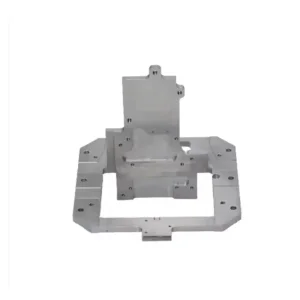
OEM Custom High-Precision CNC Machined Metal Bracket & Structural Frame Wire EDM & Milling for Aerospace & Automotive Applications Manufacturer, Quotes
View Product Details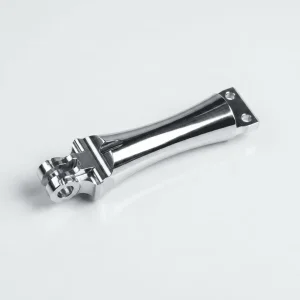
Custom Custom CNC Machined Robot Finger Joint Link Manufacturers, Exporter
View Product Details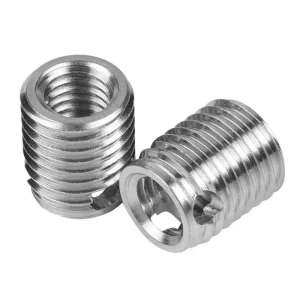
Custom Custom Self-Tapping Threaded Inserts Product, Exporters
View Product Details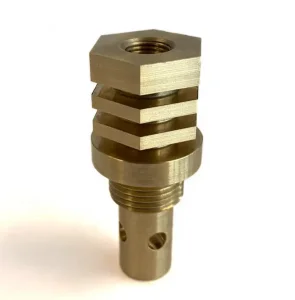
China Custom Precision CNC Machined Brass Cooling Block Factories, Quotes
View Product Details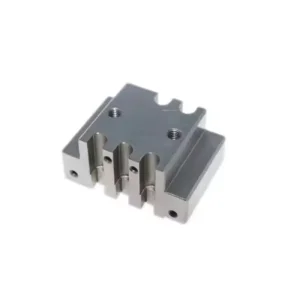
ODM OEM Precision CNC Machining Aluminum Parts & Custom Industrial Components Exporters, Quotes
View Product Details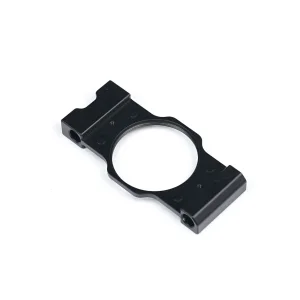
OEM Custom CNC Machined Aluminum Optical Lens Mounting Bracket (Matte Black) Service, Products
View Product Details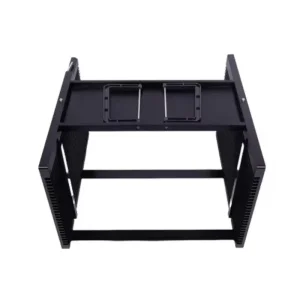
OEM Premium 8-Inch CNC Machined Aluminum Semiconductor Wafer Carrier Factories, Quotes
View Product Details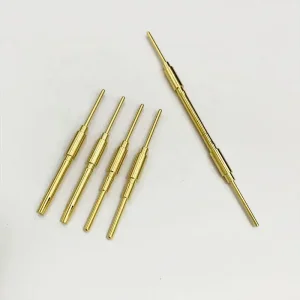
ODM Custom CNC Turned Contact Pins & Test Probe Components Manufacturer, Exporters
View Product Details
Rapid Engineering Evaluation
Ready to Validate Your Anodized Component Drawings?
Upload your STEP, STP, IGES, or DWG files with complete 2D GD&T specifications. Our senior manufacturing engineers in Shenzhen review draft angles, wall thickness, masking requirements, and sub-micron growth allowances within 24 hours.