
High-Precision Turned & CNC Machined Components
Explore our export-ready custom assemblies and CNC turned solutions engineered in Shenzhen for global OEMs in North America, Europe, and Asia-Pacific.
The Global Commercial & Industrial Landscape of Brass Turned Parts
A comprehensive examination of global supply chains, metallurgical market growth, and geopolitical trends driving precision brass machining procurement.
Market Capitalization & CAGR
The global precision turned parts market exceeds $48 billion USD annually, with brass components accounting for nearly 27% of all non-ferrous lathe throughput. Sustained demand stems from expanding electrification, renewable energy micro-grid distribution, and industrial IoT connectivity hardware requiring non-sparking, low-friction, high-conductivity couplings.
- Projected 6.4% CAGR in micro-turned contact elements through 2032.
- Rapid replacement cycles in EV battery monitoring harnesses.
Material Versatility & Wear Physics
Brass alloys (Cu-Zn systems) possess intrinsic dry-lubricating characteristics and galling resistance that stainless steel and aluminum cannot mirror without expensive coatings. This makes precision brass turning irreplaceable for hydraulic pressure relief spools, threaded plumbing cartridges, and high-frequency RF coaxial connector sleeves.
- Superior acoustic damping and micro-vibration absorption.
- Zero magnetic interference in sensitive electronic housings.
Geopolitical Supply Chain Realignment
While European and North American OEMs retain domestic rapid-turn tooling shops for initial R&D revisions, high-volume production requires massive capital expenditures in multi-spindle automatic bar turning. Global procurement directors rely on vetted Asian OEM clusters capable of guaranteeing scalable capacity while adhering strictly to ASTM and DIN EN standards.
- Dual-sourcing strategies hedge against regional raw material surcharges.
- Strategic supply agreements stabilizing LME copper price shifts.
The Chinese Factory Advantage: Ecosystem Synergy, Velocity & Cost Control
How concentrated precision industrial clusters in Shenzhen leverage automated Swiss turning, raw material scrap circularity, and in-house DFM validation to outperform traditional job shops.
Continuous High-Speed Bar Turning & Swarf Recirculation
Our Shenzhen production floors deploy multi-axis CNC Swiss lathes equipped with hydro-dynamic 3-meter automatic bar feeders. Operating continuously under high-pressure oil lubrication, these systems turn complex brass profiles at surface speeds reaching 180 to 220 m/min without thermal taper. Crucially, the local ecosystem operates closed-loop swarf briquetting and recycling channels directly back to smelters, offsetting up to 35% of raw material stock costs compared to Western Western machining houses.
- Continuous 24/7 lights-out turning with auto tool-breakage detectors.
- Strict chip collection separates lead-free brass swarf from standard alloys.
Single-Setup Mill-Turn Operations (Eliminating Fixture Error)
Conventional production divides turning and milling across separate work centers, introducing cumulative runout errors between external diameters and cross-drilled passages. Sunmy Hardware utilizes twin-spindle, multi-turret Swiss turning centers with live radial and axial tooling. By turning threads, knurling cylindrical grips, and cross-milling hex flats or fluid orifices in a single setup, geometric concentricity and perpendicularity are locked within 0.005 mm.
- Zero inter-machine handling eliminates denting on critical cosmetic surfaces.
- Integrated pneumatic part conveyors with non-marking nylon grippers.
Brass Turned Parts Alloy Matrix & Micro-Machining Parameters
Selecting the optimal brass grade directly impacts tensile strength, machinability rating, lead leaching compliance, and total production cost.
| Alloy Standard | Common Name | Composition (Cu/Zn/Pb/Sn) | Machinability Index | Tensile Strength (MPa) | Key Industrial Applications |
|---|---|---|---|---|---|
| UNS C36000 / CW614N | Free-Cutting Brass | Cu 60-63%, Zn Bal, Pb 2.5-3.0% | 100% (Benchmark) | 380 - 480 | Sensor housings, pneumatic valves, electrical connectors, precision standoff pins. |
| UNS C46400 / CW706R | Naval Brass | Cu 59-62%, Sn 0.5-1.0%, Zn Bal | 30% | 450 - 550 | Marine propeller shafts, seawater fittings, salt-spray exposed instrumentation. |
| UNS C26000 / CW505L | Cartridge Brass | Cu 70%, Zn 30% (Pb <0.05%) | 30% | 310 - 450 | Deep drawing parts, threaded ferrules requiring post-turning crimp deformability. |
| CW724R / Eco-Brass | Lead-Free Silicon Brass | Cu 75-77%, Si 2.7-3.5%, P 0.05% | 80% | 500 - 620 | RoHS/REACH potable water valves, medical fluid conduits, food equipment fittings. |
| UNS C38500 / CW617N | Forging/Architectural Brass | Cu 57-59%, Pb 1.6-2.5%, Zn Bal | 90% | 390 - 490 | Hot forged and post-turned heavy plumbing couplings, HVAC manifold bodies. |
Thread Profile Precision
We execute standard metric (M0.8 to M64), unified imperial (UNC/UNF), and micro-threads via CNC single-point threading or thread-whirling attachments. Whirling guarantees pitch accuracy without burrs on lead-in threads, crucial for fiber-optic and micro-fluidic assemblies.
Surface Texturing & Knurling
Our lathes perform cut knurling and form knurling (diamond DIN 82-RGE, straight RAA, or spiral cross) to provide precise interference-fit pullout resistance when insert-molding brass bushings into plastic automotive enclosures.
Electrochemical Surface Finishes
Turned brass components can be electroplated with bright nickel, electroless nickel (ENP for chemical resistance), gold/silver (for mil-spec electrical contact resistance), or tin plating for PCB solderability.
Localized High-Performance Industrial Application Scenarios
From micro-contact probe sleeves to heavy hydraulic valves, examine how custom brass turned parts serve mission-critical industrial assemblies worldwide.
Automotive & Electric Vehicle (EV) Power Units
High-voltage battery junction systems and inverter busbars require high-amperage conductive brass studs, current-collector pins, and sensor glands. Brass turned parts deliver uninterrupted current flow without galvanic oxidation against copper conductor terminals.
- EV thermal management coolant hose barb connectors.
- Pressure sensor threaded bodies for regenerative braking.
HVAC, Fluidics & Pneumatic Valving Systems
Refrigerant-control valves, compressed-air quick disconnects, and industrial flowmeter metering pistons depend on precision turned brass seats. The low coefficient of friction against Nitrile and Viton seals ensures bubble-tight sealing over hundreds of thousands of cycles.
- Leak-free metal-to-metal flare seats holding up to 350 bar.
- Micro-metering needle valves with 0.01 mm orifice accuracy.
Precision Robotics & Factory Automation
Robot end-effector gripper guides, articulation dowels, and encoder drive bushings exploit brass's innate anti-friction properties. Operating as sacrificial wear sleeves or self-lubricating rotary pivots, they prevent costly galling on titanium or stainless joint shafts.
- Anti-backlash miniature lead-screw brass nuts.
- Non-sparking pneumatic end-stop dampers.
Strategic Global Sourcing Trends & Factory Auditing Matrix
How supply chain executives evaluate OEM brass turning suppliers to balance RoHS 3 lead limits, commodity market indexing, and zero-defect delivery.
The Shift Toward Lead-Free Silicon Brass (RoHS 3 / REACH)
Global regulatory bodies continue to lower permissible lead thresholds in consumer electronics and drinking water systems (under NSF/ANSI 61 and California AB 1953). Traditional free-cutting brass (C36000) contains up to 3% lead to act as an internal chip-breaker and lubricant. Our engineering department has mastered the micro-machining of unleaded alloys like Eco-Brass (CW724R), deploying specialized diamond-coated tooling and modified chip-breaker geometries to resolve the stringy swarf issues common in lead-free materials.
- Certified RoHS 3 compliance documentation backed by XRF spectroscopy.
- Segregated manufacturing cells preventing cross-contamination with leaded alloys.
Total Cost of Sourcing (TCS) & Metal Hedging
Savvy procurement departments look past simple piece-part pricing. Sunmy Hardware provides structured commodity pricing pegged to real-time London Metal Exchange (LME) copper-zinc indexes. This transparency allows enterprise buyers to lock in quarterly raw-material contracts while capitalizing on Shenzhen's ultra-low tooling overhead and streamlined international ocean/air shipping channels.
- Index-linked copper quoting mitigates spot-market volatility risks.
- In-house direct customs export clearance without trading company fees.
OEM Brass Turned Parts Supplier Quality Evaluation Checklist
Before qualifying a new brass turning manufacturing partner, tier-1 engineering and sourcing directors must audit three foundational quality pillars:
In-house Zeiss CMMs, optical profile projectors (Keyence IM series), and pneumatic air-gauges calibrated for cylindrical bore concentricity.
Live Cp/CpK tracking on all critical-to-quality (CTQ) dimensions. Minimum CpK threshold of 1.33 for standard runs, 1.67 for automotive safety features.
Multi-stage degreasing and ultrasonic wash tanks removing 100% of cutting oils, brass chips, and microscopic particulate from internal passages.
Engineering Case Studies: Problem, Process & Quantified Results
Real-world manufacturing scenarios where Sunmy Hardware resolved critical dimensional, structural, or quality failures for international OEMs.
Case CS-01: Electronics Enclosure
CNC & Surface FinishChallenge: An overseas customer faced inconsistent assembly gaps and poor cosmetic uniformity from their domestic supplier on an anodized aluminum alloy enclosure.
Solution: Sunmy engineers re-optimized multi-axis milling tool paths, tightened positional tolerances to ±0.01 mm, and instituted 100% cosmetic visual inspection alongside custom packaging.
Full product line transferred entirely to Sunmy Hardware Shenzhen facility.
Case CS-02: Automotive Bracket
Die Cast & Post-CNCChallenge: Structural die-cast brackets from an earlier supplier suffered internal porosity and part deformation during post-machining, failing salt-spray tests.
Solution: Switched to high-vacuum die casting to suppress gas porosity, redesigned runner geometries, and engineered rigid CNC clamping fixtures to ensure flat mating surfaces.
Achieved direct Tier-1 supply chain approval for ongoing mass assembly.
Case CS-03: Industrial Robotics Link
Molding & AssembliesChallenge: Functional polymer parts exhibited sink marks and short shots, causing catastrophic structural brittleness during high-acceleration robot wrist movements.
Solution: Performed comprehensive Moldflow finite-element analysis, relocated injection gates, optimized pack-and-hold pressures, and expanded mold cavity venting.
Awarded 7 consecutive follow-on robotic manufacturing projects.
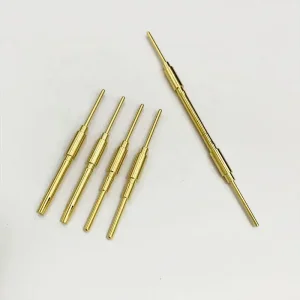
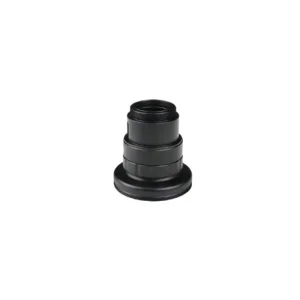
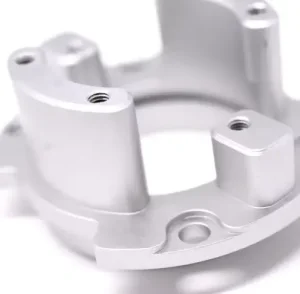
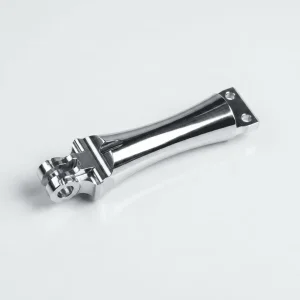
Custom Turned, Milled & Fabricated Solutions
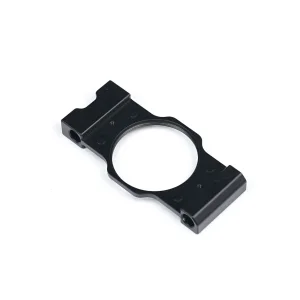
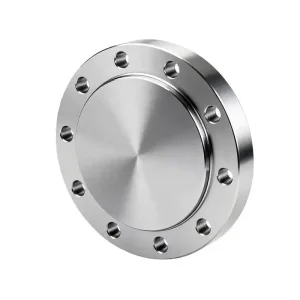
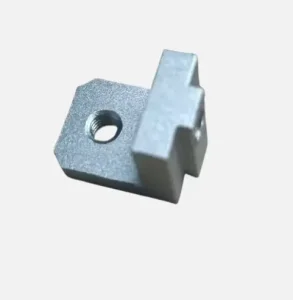
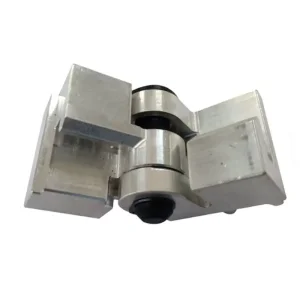
Explore additional verified custom parts fabricated for global clients spanning robotics, optics, packaging, and aerospace systems.
Frequently Asked Engineering & Sourcing Questions
In-depth responses regarding manufacturing tolerances, metallurgical certifications, DFM workflows, and intellectual property safety.
What critical machining tolerances can Sunmy Hardware hold on OEM brass turned parts?
How does Sunmy Hardware guarantee compliance with lead-free regulations (RoHS 3 / REACH)?
Which manufacturing operations are kept in-house versus outsourced?
How are customer 2D drawings, 3D CAD files, and IP protected?
What documentation is provided with volume production shipments?
What is your typical turnaround timeline for prototypes and mass production orders?
Can you turn parts with complex cross-holes, eccentric features, or micro-threads?
How do you handle surface deburring on micro-turned brass parts?
Ready to Transition Your CAD Models Into Precision Parts?
Submit your 2D engineering drawings and 3D CAD files (.STEP, .IGES, .X_T). Our tooling engineers will return a comprehensive DFM manufacturability evaluation and formal quotation within 24 hours.