
AL-6061-T6
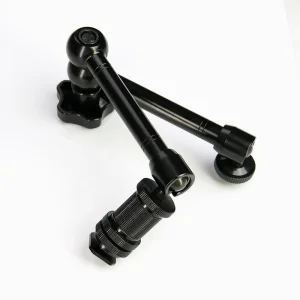
Explore our core production capabilities across ultra-thin housings, articulating hardware, and aerodynamic components manufactured under strict ISO and CMM validation.
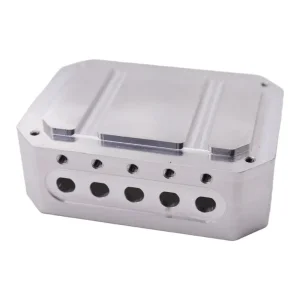
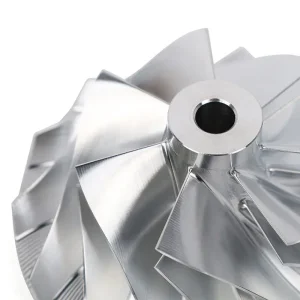
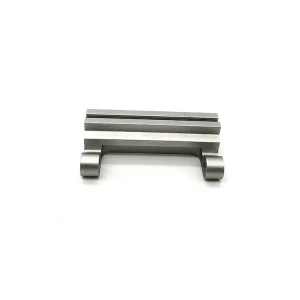
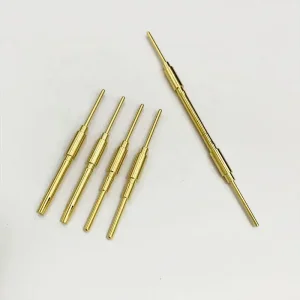
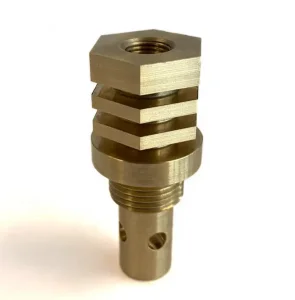
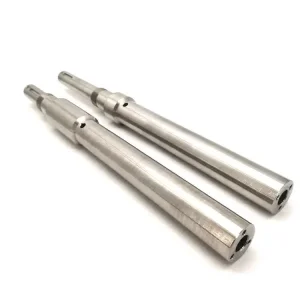
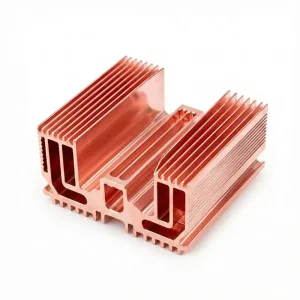
In the contemporary realm of high-performance manufacturing, Thin Wall Die Casting has transformed from an aggressive lightweighting experimental process into an indispensable industrial necessity. Conventional high-pressure die casting (HPDC) has historically operated within standard wall thicknesses ranging from 2.0 mm to 4.5 mm. However, across mission-critical aerospace, electric vehicles (EV), satellite telecommunications, and advanced robotic end-effectors, mechanical engineers face extreme pressures to eliminate parasite deadweight without compromising structural rigidity, electromagnetic shielding effectiveness (EMI/EMC), or hermetic sealing integrity.
In structural die casting terminology, a component is categorized as "Thin-Walled" when its nominal cross-sectional wall thickness falls below 1.2 mm for aluminum alloys (such as ADC12, A380, and AlSi10MnMg), or below 0.75 mm for magnesium alloys (AZ91D, AM60B) and high-fluidity zinc alloys (Zamak 3, Zamak 5). In specialized micro-electronic enclosures produced at our Shenzhen facility, local wall partitions can be consistently realized down to 0.45 mm over discrete runner distances.
Operating below the 1.0 mm threshold completely alters the thermodynamic behavior of molten metal during cavity injection. At standard casting thicknesses, molten aluminum retains thermal energy long enough to execute a predictable filling profile under modest gate speeds. In thin wall casting, the surface-area-to-volume ratio increases exponentially, leading to severe thermal loss into the H13/Dievar steel mold within milliseconds. If the injection velocity, cavity vacuum level, and mold thermal equilibrium are not meticulously synchronized via scientific shot control, premature solidification occurs—manifesting as cold shuts, surface knit lines, laminations, and disastrous internal gas entrapment.
The cavity filling time ($t$) in ultra-thin casting must be drastically compressed according to: $t = K \cdot \left(\frac{T_i - T_f + S}{T_i - T_d}\right) \cdot T$, where gate velocities frequently exceed 45 m/s to 75 m/s, requiring ultra-responsive multi-stage hydraulic intensification systems operating at injection pressures exceeding 1,200 bar.
| Alloy Family & Designation | Standard Yield Strength (MPa) | Thermal Conductivity (W/m·K) | Min. Achievable Wall (mm) | Primary Industry Target |
|---|---|---|---|---|
| AlSi10MnMg (Silafont-36) | 120 – 150 (As-Cast) / 210 (T6) | 130 – 160 | 0.80 mm | EV Battery Trays & Structural Crash Frames |
| ADC12 (High Silicon Aluminum) | 160 – 180 | 96 | 0.90 mm | RF Sensor Housings & Telecommunication Radomes |
| AZ91D (Magnesium Alloy) | 150 – 165 | 72 | 0.65 mm | Aerospace Avionics & Handheld Robotic Frames |
| Zamak 3 (High Purity Zinc) | 208 | 113 | 0.45 mm | Optical Connectors & Micro Precision Actuators |
| A380 (General Engineered Al) | 160 | 100 | 1.00 mm | Industrial Heat Dissipation Shells & Manifolds |
How localized industrial sectors leverage our lightweight, structural casting capabilities to resolve tight space constraints, thermal dissipation bottlenecks, and rigorous mass-budget targets.
Electric mobility demands extreme volumetric efficiency. Thin-walled die cast battery tray partitions and electronics covers reduce curb weight while preserving rigorous IP67/IP69K sealing against moisture infiltration and thermal runaway propagation.
Millimeter-wave RF transceiver modules necessitate continuous internal partition shields to mitigate electromagnetic cross-talk between high-frequency amplifiers and digital control logic boards without adding unnecessary payload on cell towers.
For high-speed automated pick-and-place robots and articulated kinematic arms, reducing end-of-arm mass directly enhances cycle frequency, reduces motor inertia strain, and prevents mechanical resonance during sudden deceleration stops.
Sunmy Hardware actively integrates advanced metallurgical simulations, vacuum-assisted filling techniques, and digital closed-loop process monitoring to advance beyond legacy casting constraints.
Traditional venting cannot exhaust air fast enough before 0.6mm fronts freeze. Our multi-stage hydraulic vacuum evacuation draws die cavities down to sub-25 mbar before the shot sleeve plunger traverses the pour hole, eliminating adiabatic gas compression bubbles and making components fully heat-treatable and weldable.
By injecting aluminum in a globular thixotropic semi-solid state rather than a turbulent liquid phase, shear stresses decrease and flow characteristics behave as laminar fluid. This allows laminar filling across expansive, razor-thin geometry without turbulent splash, yielding dense, pore-free matrices with superior mechanical fatigue endurance.
We deploy dynamic conformal die cooling circuits coupled with infrared thermographic telemetry. AI control algorithms adjust localized oil-chilling pulse cycles shot-by-shot, eliminating mold hot spots and maintaining die face thermal stability at ±3°C to suppress differential thermal shrinkage and part warpage.
How our Greater Bay Area manufacturing ecosystem drives rapid tooling turnarounds, seamless post-CNC machining, and significant lead-time compression compared to fragmented global alternatives.
In-house high-speed Makino and GF machining centers cut hardened die steel (H13, Böhler W300, Dievar) with micron-level EDM electrode spark erosion, slashing mold delivery times by 50% compared to Western foundries.
Eliminate cross-vendor handoffs. Freshly cast thin-shell parts move straight to our owned CNC lines for precision face-milling, robotic thread tapping, and bearing seat reaming under a single unified engineering team.
From ultra-fine zirconium passivation, automated robot powder coating, to micro-arc oxidation (MAO) and Type II/III hard anodizing, all finishing is tightly governed to guarantee salt-spray resistance over 1,000 hours.
Founded in 2016, Shenzhen Sunmy Hardware operates owned CNC machining and precision metal stamping lines alongside audited casting partner foundries. Every single casting run is inspected in-house at Sunmy's Shenzhen metrology laboratory using Carl Zeiss CMM coordinate measurement, Spectro optical spectrometry, and First Article Inspection (FAI) reports before dispatch.
Engineered components destined for tier-one North American and European OEM assemblies demand uncompromising paperwork, ethical material provenance, and verifiable mechanical traceability.
We supply EN 10204 3.1 chemical spectrometry and mechanical tensile test certificates with every production batch. Ingot lots are traced back to the primary smelt supplier, verifying non-recycled scrap contamination in mission-critical applications.
Thin-walled electronic modules fully comply with EU Directive 2011/65/EU (RoHS 3) and Regulation (EC) No 1907/2006 (REACH). Heavy metals like lead (Pb), mercury (Hg), and hexavalent chromium (Cr6+) are strictly audited through SGS chemical laboratory assays.
Before receiving your 3D CAD files (STEP, Parasolid, IGES), Sunmy Hardware executes bilateral Non-Disclosure Agreements directly signed by company officers. Your proprietary geometry is held securely on encrypted engineering intranets without middleman leakage.
A rigorous, five-stage engineering development protocol designed to identify manufacturability risks early and deliver verified dimensional conformity before volume shipment.
Engineering review of draft angles (target 1.5°–2°), wall uniformity, gate thickness, and air vent placement within 24h of CAD receipt.
Tool design and CNC/EDM tool fabrication utilizing premium H13/Dievar steel with hardened core pins and vacuum chill channels.
Initial shots verified via Carl Zeiss CMM, real-time X-ray porosity examination, and AS9102-standard First Article Inspection documentation.
High-precision multi-axis CNC milling, diamond thread tapping, surface sandblasting, anodizing, or custom electrostatic coating.
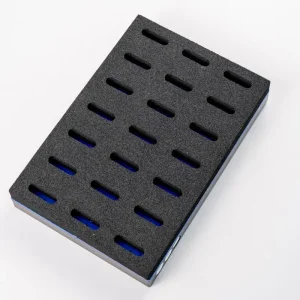
Custom foam-nest packaging, moisture-barrier vacuum bagging, container palletization, and DDP/FOB export clearance handling.
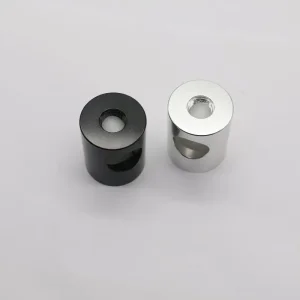
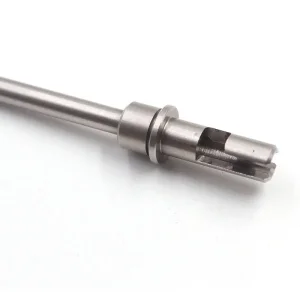
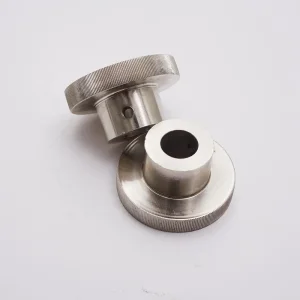
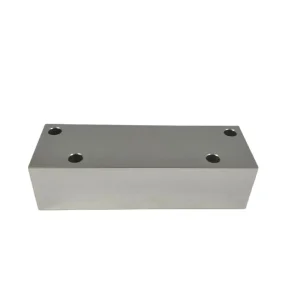
Explore custom robotic end-of-arm tooling, vacuum manifold blocks, feed rollers, and medical turned parts designed to complement cast enclosures.
In-depth responses to technical queries regarding wall constraints, gating defects, mold lifespans, and direct factory quotation workflows.
Consult directly with our die casting toolmakers and metallurgists in Shenzhen. Get rapid DFM feedback on wall transitions, draft angles, and vacuum shot feasibility within 24 hours.
Accepting .STEP, .STP, .X_T, .IGES, .DWG, .PDF formats
Strict NDA Prior to CAD Upload