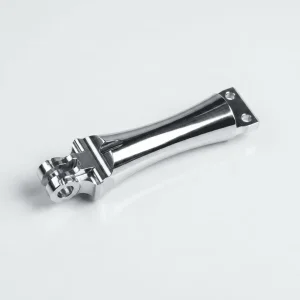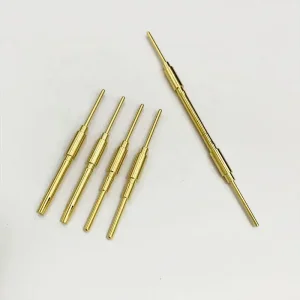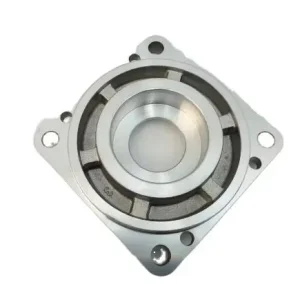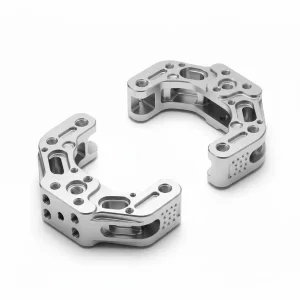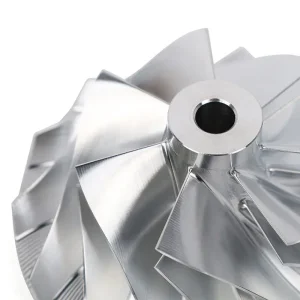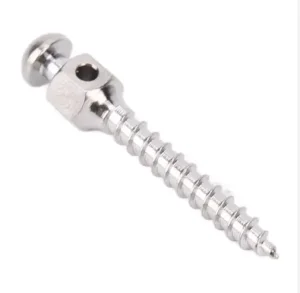
Precision Fabricated Assemblies & Machined Components
Engineered hardware and integrated multi-axis precision units delivered directly from our Shenzhen production facilities to international OEM assembly lines.
High-Integrity Tube Bending & Geometric Form Stabilization
In high-pressure and high-vibration applications, the structural boundary between fluid dynamics and mechanical stability is governed by wall-thinning ratios, cross-sectional ovality, and plastic deformation dynamics during bending operations.
Rotary Draw & Mandrel Bending
Engineered for tight centerline radius (CLR) geometries below 1.5×D. By utilizing multi-ball flexible mandrels, wiper dies, and pressurized clamp blocks, we eliminate wrinkling on the intrados while restricting extrados wall thinning to less than 10-12% under cyclic working conditions.
CNC Multi-Stack & Roll Bending
Seamlessly transitioning between fixed tight radii and sweeping variable curvature profiles in a single clamping setup. Our automated tooling turrets process compound geometries without intermediate rechucking, ensuring absolute spatial true-positioning across all Euler angles.
Metallurgical Stress Control
Full control over strain-hardening curves in austenitic stainless steels (304/316L), titanium Grade 2/5, 6061-T6 aluminum, and low-carbon hydraulic tubing. Thermal pre-annealing and controlled post-bending solution treatments prevent stress corrosion cracking (SCC).
Localized Applications Across Advanced Engineering Sectors
From cleanroom semiconductor gas manifolds to aerospace pneumatic ducts, custom bent tubing guarantees fluid continuity without the leak vulnerabilities of welded elbows.
Aerospace Environmental Systems
Ultra-thin wall (0.5–1.0mm) titanium and aluminum ducting designed for cabin air cycles, bleed air delivery, and low-weight structural frames complying with AMS 4082 & AS9100 tolerances.
Heavy Commercial & EV Powertrains
Large-bore aluminum coolant loops, brake circuits, and hydroformed chassis structural substructures capable of resisting high dynamic shock loads and harmonic operational resonance.
Biopharma & High-Purity Gases
Seamless 316L tubing mechanically polished and electropolished to Ra < 0.25 µm. Orbital weld-ready end preps, free from microscopic micro-fissures and stagnant internal crevices.
Robotics & Automation Gantries
Rigid precision pneumatic feed lines and robotic articulated conduits routed through tight internal arm cavities where spatial deviation limits exceed standard ISO 2768-m standards.
Precision Specifications & Multi-Axis Bending Roadmap
Comprehensive engineering capabilities comparing our primary manufacturing protocols, geometric limits, and QA validation frameworks.
| Fabrication Parameter | Rotary Draw Mandrel Bending | 3-Roll Profile Bending | Hydroforming & Free-Form Bending |
|---|---|---|---|
| Outer Diameter (OD) Scope | Ø4.0 mm – Ø152.4 mm | Ø25.4 mm – Ø250.0 mm | Ø8.0 mm – Ø101.6 mm |
| Wall Thickness Ratio (D/t) | High flexibility (Up to D/t = 120 with multi-ball) | Medium to heavy wall (D/t < 40) | Ultra-thin to variable wall cross-sections |
| Centerline Radius (CLR) | Tight (1.0×D to 3.0×D) | Large sweeping curves (> 5.0×D to ∞) | Compound multi-axis transitional curves |
| Ovality / Roundness Loss | Controlled ≤ 3.0% on critical sections | Standard ≤ 5.0% across arc length | Ultra-precision ≤ 1.5% throughout |
| Extrados Wall Thinning | Typically ≤ 10–12% (DFM dependent) | Negligible (≤ 5%) | Balanced redistribution via hydraulic pressure |
| Primary QA Inspection | Non-contact laser arm & 3D CMM coordinate probe | Full-profile sweep radius templates & laser gauge | Computed tomography (CT) & ultrasound gauge |
Shenzhen Precision Manufacturing: Scalability, Speed, and Cost Efficiency
Operating from the core of China's premier hardware and advanced manufacturing ecosystem, Shenzhen Sunmy Hardware integrates upstream raw material extrusion, specialized precision bending, secondary 5-axis CNC post-machining, and automated surface treatment into an unbroken value chain.
Zero-Intermediary Model
By engaging directly with our Shenzhen engineering staff, tier-1 OEMs and precision instrument developers eliminate unnecessary broker margins, secure instantaneous revision control on CAD revisions, and prevent proprietary IP leakage.
Integrated Post-Machining
Unlike conventional tube fabricators who rely on outsourced machine shops for porting, flanging, and threading, our internal 3-, 4-, and 5-axis CNC machining centers finish complex end fittings and multi-port interfaces in unified tooling setups.
Dynamic Prototype-to-Scale Transition
Rapid low-volume validation curves are executed in days using additive fixtures and flexible CNC rotary equipment, smoothly scaling into dedicated multi-cavity dies, automated mandrel feeders, and batch surface-treatment operations.
Macro Industrial Status: Transitioning from Segmented Fittings to Bent Monoliths
Modern engineering design is rapidly eliminating mechanical fittings and welded miter joints in favor of continuous, cold-formed bent tube architectures to lower assembly cycle times and prevent fluid boundary failures.
Elimination of Welded Leak Points
In thermal management and hydraulic power systems, every orbital or hand-welded joint introduces heat-affected zones (HAZ) prone to particulate inclusion and fatigue failure. Monolithic CNC bent tubes eliminate up to 70% of intermediate weldments, streamlining quality documentation.
Optimized Fluidic Flow Dynamics
Sharp welded miter transitions disrupt laminarity, driving localized turbulence, cavitation, and substantial system pressure loss. Cold draw bending provides continuous hydraulic radii, permitting smaller pipe diameters to sustain equivalent flow rates without excess pump sizing.
Weight Optimization in Next-Gen Mobility
With electric mobility demanding extreme mass reduction, thin-wall hydroformed aluminum, titanium, and high-strength micro-alloyed steel tubing replace casting and billet assemblies, lowering curb weight while maintaining structural torsional rigidity.
Global Compliance, Metallurgical Traceability & Regulatory Safeguards
Exporting engineered assemblies across the European Union, North America, and the Asia-Pacific region requires exhaustive conformance to strict environmental and physical testing standards.
Full Metallurgical Traceability
Every tube heat number is logged from raw mill extrusion. Sunmy delivers EN 10204 Type 3.1 material test certificates detailing chemical spectrography and tensile/yield elongation parameters for aerospace and high-pressure vessel integrity.
RoHS, REACH & Surface Protection
All plating, passivating, clear and colored anodizing, and powder coatings comply with strict EU RoHS (Directive 2011/65/EU) and REACH criteria, supported by salt spray corrosion evaluations lasting upwards of 240 to 1,000 hours.
Coordinate Metrology Verification
Dimensional sign-off utilizes multi-axis articulated inspection arms, optical 3D tube measuring systems, and laser scanning CMM equipment to cross-validate point clouds directly against master STEP/IGES models before release.
Frequently Asked Questions: Technical Engineering & International Procurement
Authoritative technical guidance compiled by Sunmy Hardware's senior metrology and tooling engineering teams.
What are the limiting factors regarding minimum Centerline Radius (CLR) in CNC mandrel bending?
How does Sunmy Hardware manage material springback and batch-to-batch yield strength variation?
Can end-forming, flaring, beading, and multi-axis CNC machining be consolidated on the same part?
What documentation accompanies export shipments destined for US and EU markets?
How does Sunmy protect intellectual property and proprietary engineering drawings?
Complex Kinetic Systems & Multi-Material Assemblies
Engineered hardware and integrated multi-axis precision units delivered directly from our Shenzhen production facilities to international OEM assembly lines.