
Featured Precision OEM Components & Assemblies
Combining high-precision electronic plastic enclosures with in-house CNC machining, turned shafts, thermal heatsinks, and custom conductive busbars for turn-key electro-mechanical hardware assemblies.
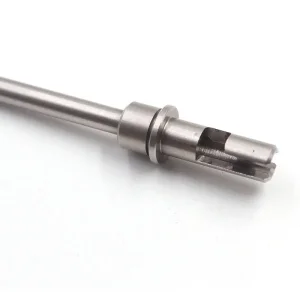
OEM Precision CNC Turned Stainless Steel Stepped Shaft Service, Products
View Product Specs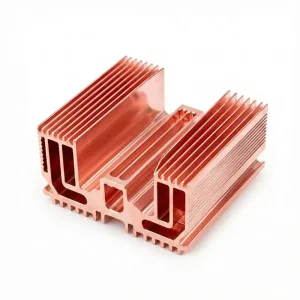
ODM High-Performance Copper Heatsink Manufacturer, Factories
View Product Specs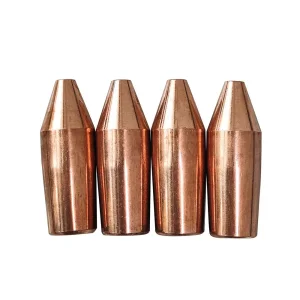
OEM Custom Resistance Spot Welding Electrode Caps Exporters, Factories
View Product Specs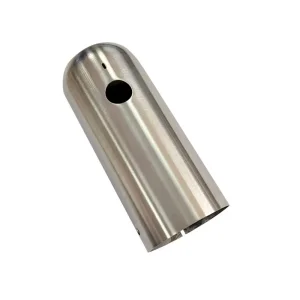
China Custom Precision CNC Turned Medical Sleeve Bushing Suppliers, Factory
View Product Specs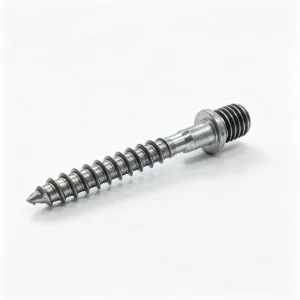
OEM Custom Precision Turned Stainless Steel Dual-Thread Hanger Bolt Manufacturer, Factory
View Product Specs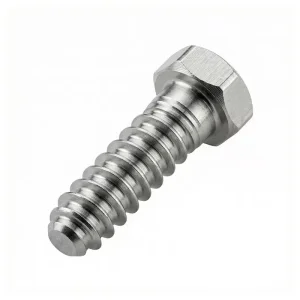
Custom Titanium Medical Implant / Bone Screw Exporter, Factories
View Product Specs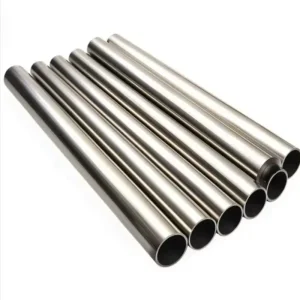
High-Quality Custom Precision Capillary Stainless Steel Pipe / Tube (OD 1mm - 8mm) Supplier, Factory
View Product Specs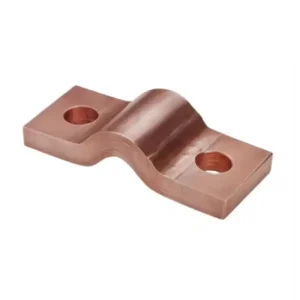
Custom Custom Flexible Laminated Copper Busbar for Battery & Electrical Equipment Service, Products
View Product SpecsThe Structural Paradigm Shift in Electronic Plastic Enclosure Manufacturing
As electronics transition toward higher compute densities, 5G/6G RF frequencies, and extreme environmental ruggedization, the electronic plastic housing has ceased to be an aesthetic shell—it is now an active structural, electromagnetic, and thermodynamic component.
Micro-Miniaturization & Ultra-Thin Walls
Modern handheld IoT, consumer wearables, and smart automotive sensors require wall thicknesses scaled down to 0.40mm - 0.60mm without structural buckling or weld-line embrittlement. Achieving this requires high-speed electric injection units, high-flow liquid crystal polymers (LCP), and polyphthalamide (PPA) blends coupled with vacuum-assisted cavity evacuation.
- Sub-0.5mm nominal wall thickness capability
- Differential shrinkage mitigation via Moldflow
Thermally Conductive Engineering Resins
High-power density electronics (such as GaN fast chargers, LED controllers, and ADAS edge computers) are dumping metal die-castings for weight reduction. Through ceramic- and graphite-filled polymers (TC-plastics reaching 1.0 to 15.0 W/m·K), our injection molding processes yield enclosures that actively dissipate heat while offering dielectric electrical isolation up to 25 kV/mm.
- Conductivity range: 1.5 - 12.0 W/m·K (in-plane)
- Zero-corrosion, 40% weight reduction vs ADC12
Integrated EMI/RFI Shielding Solutions
Eliminating the messy secondary operation of conductive spray painting or nickel plating, modern housing engineering leverages carbon-nanotube (CNT) doped compounds, stainless steel fiber masterbatches, and selective in-mold physical vapor deposition (PVD). This delivers 40dB - 70dB attenuation across 30 MHz to 18 GHz frequencies directly out of the press tool.
- Compliance: FCC Part 15 & CISPR 32 Class B
- Eliminates secondary chemical overspray costs
Post-Consumer Recycled & Bio-Polymers
Global carbon border taxes and ESG directives mandate sustainable engineering materials. We formulate UL-Yellow-Card certified post-consumer recycled (PCR) polycarbonates (up to 85% rPC) and bio-based Polyamides (PA1010/PA11) that preserve halogen-free UL94-V0 flame retardancy, RTI values over 105°C, and pristine cosmetic piano-black or frosted finishes.
- UL 94-V0 flammability down to 0.75mm
- Complete material traceability & RoHS/REACH
De-risking Global Procurement: Critical Engineering Failure Modes We Eliminate
Hardware procurement directors and mechanical lead engineers face costly assembly scrap when overseas molders compromise on steel grades, gate thermodynamics, or GD&T verification. Here is our systemic methodology for resolving industry-wide supply chain vulnerabilities.
| Engineering Challenge | Root Cause in Conventional Sourcing | Sunmy Precision Factory 4.0 Resolution | Measurable Output / SLA |
|---|---|---|---|
| Dimensional Tolerance Stack-Up | Inconsistent mold cooling channels, tool thermal expansion, and non-compensated polymer anisotropic volumetric shrinkage. | Conformal cooling 3D printed tool inserts, automated cavity pressure transducers (Kistler), and electric servo injection with closed-loop holding profile control. | Tolerance envelope within ±0.010 mm; Cpk index > 1.67 maintained across 1,000,000-shot tool life. |
| Weld Line Embrittlement & Optical Blemishes | Improper gate positioning, cold slugs, sub-optimal melt temperatures, and air traps behind internal threaded bosses and display cutouts. | Dynamic mold temperature control (Rapid Heat Cycle Molding / RHCM) combined with high-vacuum mold evacuation and numerical rheological simulation. | Weld line tensile strength retention > 92%; zero visible cosmetic knit lines under ANSI/ASQ Z1.4 Level II inspection. |
| Hermetic Ingress Failure (IP67 / IP68) | Secondary liquid adhesive bead inconsistency, particulate contamination, and uneven compression on elastomeric perimeter gaskets. | Rotary two-shot (2K) injection overmolding (LSR liquid silicone rubber or TPE onto rigid PC/PBT substrate) achieving molecular cohesive bonding. | 100% automated pressure decay leak testing (0.05 bar delta); guaranteed submersibility at 2.0 meters for 60 minutes. |
| Post-Assembly Creep & Snap-Fit Fracture | Selection of low-grade resin regrinds, excessive shear stress during recovery, and un-radiused sharp internal corners causing stress risers. | Virgin medical/aerospace polymer lots with lot-level spectroscopy verification, FEA snap-deflection simulation (< 2.5% strain), and uniform radius transitions (> 0.6x thickness). | Cycle life exceeds > 5,000 mating/unmating cycles without cantilever deformation or stress-cracking. |
| Flame Retardant Migration & Tool Pitting | Low-quality halogenated additives blooming to the cosmetic surface under UV exposure, corroding mold cavity tool steels. | High-grade Böhler M390 / Stavax ESR stainless steels hardened to 52-54 HRC; non-halogenated phosphorous-based polymer chemistry. | Zero bloom after 1,000 hours Xenon-arc weathering; UL94-V0 compliant down to 0.75mm with full UL Yellow Card documentation. |
China Factory 4.0: Agile Tooling, Automated Production & Shenzhen Supply Cluster
Shenzhen's Greater Bay Area precision manufacturing corridor provides uncompromised engineering speed. By coupling European/Japanese high-precision CNC toolroom equipment with automated Industry 4.0 cyber-physical production lines, Sunmy Hardware compresses the lead time from CAD authorization to First Article Approval by up to 55%.
Ultra-High Precision Toolroom Tech
Tool durability is the bedrock of electronic housing consistency. Our tooling facilities operate 5-axis Makino D200Z and Roku-Roku high-speed graphite milling centers (up to 40,000 RPM) paired with Swiss AgieCharmilles Form 200/300 mirror-finish EDMs. This guarantees intricate rib roots, undercut slider locks, and core-cavity alignment accuracy within 3 microns.
- Steel Grades: ASSAB S136, Stavax ESR, NAK80, 1.2343
- Mirror Polish: SPI A-1 diamond finish (Ra < 0.012 µm)
All-Electric Injection & Robotics
Our cleanroom injection cell houses clamping forces from 30 tons to 650 tons powered by all-electric Sumitomo and Fanuc Roboshot machines. Digital closed-loop servo feedback provides injection speed control to 0.01 mm/s. Integrated 6-axis linear robots ensure zero-contact part demolding, insert placement, and continuous automated visual sorting.
- Class 100,000 (ISO Class 8) cleanroom production
- Automated brass threaded insert heat-staking
Metrology Laboratory & Automated AOI
Quality control is executed in an environmentally controlled constant-temperature metrology suite. Every batch is evaluated against critical GD&T features using bridge-type Zeiss CMMs, Keyence automated optical image measuring systems, and laser 3D scanning for comprehensive surface contour error color mapping.
- Volumetric measurement accuracy: 0.9 µm + L/350
- Real-time statistical process SPC chart generation
Domain-Specific Applications for Precision Electronic Plastic Housings
We deliver custom-tailored polymer housing solutions engineered to withstand mechanical shock, chemical aggression, extreme UV index, and continuous high-voltage breakdown across demanding industries.
Automotive & EV Power Electronics
Onboard Charger (OBC) covers, Battery Management System (BMS) junction enclosures, inverter gate driver shells, and ADAS radar radomes. Molded in PBT-GF30, PA66-GF35, or PPA with laser direct structuring (LDS) for integrated antenna integration and Class-A ultrasonic seal lines.
- Operating Temperature: -40°C to +155°C continuous
- High CTI (Comparative Tracking Index) > 600V
Medical Electronics & Clinical Diagnostics
Diagnostic ultrasound transducer shells, point-of-care test reader cases, clinical infusion pump housings, and wearable monitor enclosures. Produced using biocompatible, sterilizable resins (ISO 10993 compliant) that resist aggressive hospital-grade chemical disinfectants (bleach, IPA, quats).
- Sterilization: Autoclave, Gamma radiation, EtO resistant
- Medical polymer grades: Makrolon 2858, Radel PPSU
Industrial IoT, Edge Computing & Smart Grids
Rugged DIN-rail enclosures, field telemetry sensor nodes, LoRaWAN gateways, and outdoor solar inverter control pods. Molded in impact-modified Polycarbonate (PC) and ASA with f1 weatherability ratings according to UL 746C to prevent embrittlement and discoloration.
- Mechanical impact protection rating: IK08 to IK10
- Flame retardancy rating: UL94 5VA / V-0 certified
Comprehensive DFM Review & Multi-Stage Quality Gates
Quality is designed into the component before tool steel is ever cut. Our DFM protocol systematically eliminates common molding non-conformities through high-fidelity finite element rheology.
DFM Stage 1: Wall & Rib Optimization
We audit internal boss towers and stiffening ribs to adhere strictly to a 0.50x to 0.60x nominal wall ratio, preventing sink marks on Class-A cosmetic surfaces. Draft angles are evaluated at a minimum of 1.0° to 1.5° for smooth ejection, with heavy textured finishes (VDI 3400 / SPI) optimized up to 3.0° - 5.0° to prevent drag scarring.
DFM Stage 2: Rheological Fill & Warpage FEA
Utilizing Autodesk Moldflow Insight, we simulate fiber orientation vectors in reinforced plastics (e.g. PA66-GF30) to predict anisotropic shrinkage and warpage before steel machining. Gate designs (valve-gated hot runners, sub-gates, edge fans) are precisely engineered to locate weld lines outside of high-stress zones.
DFM Stage 3: Verification & Environmental Stress
Validation covers First Article Inspection (FAI) with 100% full-dimension bubble drawings. Parts undergo thermal shock testing (-40°C to +85°C across 500 cycles), glow wire flammability (GWFI/GWIT), salt spray fog corrosion testing on overmolded pins, and drop impact testing from 1.5 meters onto solid concrete.
Frequently Answered Questions for Sourcing Engineering Teams
Clear, unequivocal engineering answers regarding mold steel selection, lead times, tolerance capabilities, secondary surface treatments, and international compliance documentation.
What mold tooling steel grades do you specify for abrasive or high-volume electronic enclosures?
How do you achieve IP67 / IP68 waterproof ratings on electronic plastic housings?
Can you achieve integrated EMI/RFI shielding without secondary conductive paint?
What is your typical lead time from final CAD sign-off to First Article Inspection (FAI) samples?
How are critical cosmetic requirements managed (Texture, Piano Black, Light Guides)?
How does Sunmy Hardware ensure intellectual property (IP) protection for custom electronic designs?
Precision CNC Machining, Optical Mounts & Custom Robotics Hardware
Explore our full OEM/ODM precision manufacturing matrix designed to support electronic plastic housings with mating metal mounting plates, optical fixtures, precision pulleys, and robotic joints.
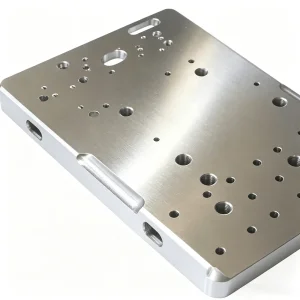
OEM Custom CNC Machined Aluminum Multi-Hole Mounting Plate Manufacturer, Suppliers
View Product Specs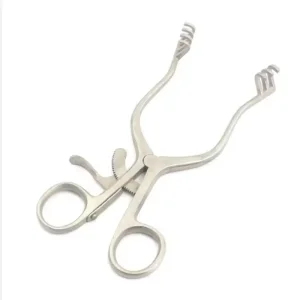
China Professional Quality Stainless Steel Custom Surgical Retractor Service, Exporter
View Product Specs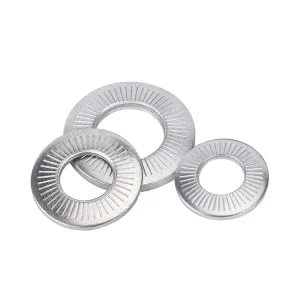
High-Quality Custom Wedge-Lock Washer Pairs Product, Quotes
View Product Specs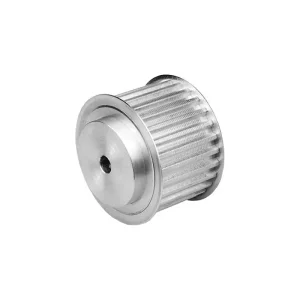
OEM Custom CNC Machined HTD 3M Aluminum Timing Belt Pulley Supplier, Products
View Product Specs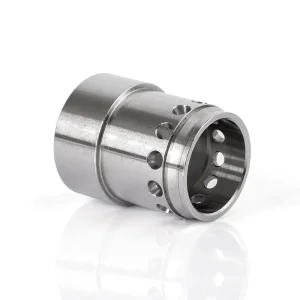
ODM Custom CNC Precision Turned Stainless Steel Filter Sleeve (OEM/ODM Industrial Grade) Manufacturer, Manufacturers
View Product Specs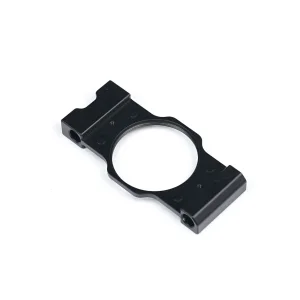
OEM Custom CNC Machined Aluminum Optical Lens Mounting Bracket (Matte Black) Service, Products
View Product Specs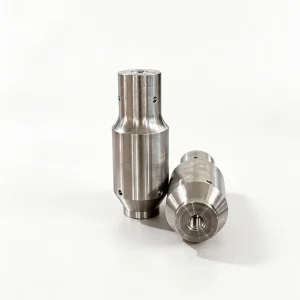
ODM Custom Titanium Ultrasonic Booster Manufacturers, Factory
View Product Specs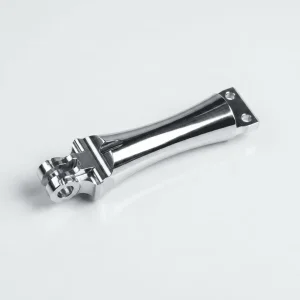
Custom Custom CNC Machined Robot Finger Joint Link Manufacturers, Exporter
View Product SpecsAccelerate Your Electronic Enclosure to Production
Submit your 3D CAD (.STEP / .STP / .IGS) and 2D GD&T drawings. Our manufacturing engineers will provide an actionable, comprehensive DFM report and tooling proposal within 24 hours under NDA.