
Featured OEM & High-Tolerance Engineered Components
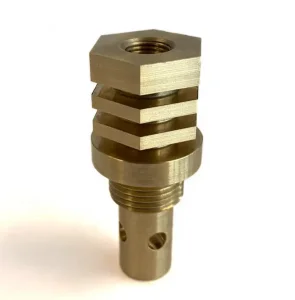
Manufactured with high-speed press lines, multi-station tooling, and automated Swiss turning. Fully certified with material lot traceability and First Article Inspection (FAI) reports.
Compound Die Stamping: Principles, Tooling Architecture & Micron Precision
For high-volume flat and planar components requiring uncompromised concentricity, compound stamping dies represent the gold standard in sheet metal fabrication. By executing blanking and piercing synchronously in a single stroke, dimensional drift caused by inter-station strip transfer is completely eradicated.
Absolute Concentricity Control
Unlike progressive dies where blanking and piercing occur at adjacent strip pitches, a compound die performs internal piercing and external blanking within the same press stroke. This structural synchronization eliminates pitch feed errors, maintaining critical concentricity and hole-to-edge tolerances within ±0.005 mm.
Pitch Deviation = 0.00 mmSuperior Flatness Retention
Equipped with integrated spring or nitrogen-gas-cushioned pressure pads, the stock sheet is securely clamped throughout the entire cutting cycle. This dynamic clamping inhibits internal stress relief and sheet curling, resulting in virtually zero camber and superior planarity across electric motor laminations and shims.
Flatness ≤ 0.02 mmOptimized Tooling ROI
Compound dies combine multiple station operations into a compact, single-die footprint. For thin-gauge washer, disc, diaphragm, and stator geometries, this tooling strategy slashes tooling development lead times by up to 40% while trimming overall steel die investment compared to complex multi-station progressive dies.
Up to 40% Lower Tooling CostEngineering Selection Guide: Compound vs. Progressive vs. Transfer Dies
Understanding the trade-offs between precision metal stamping architectures allows tier-1 buyers and design engineers to optimize unit economics without sacrificing mechanical part tolerances.
| Evaluation Parameter | Compound Die Stamping | Progressive Die Stamping | Transfer Tooling Press |
|---|---|---|---|
| Typical Part Geometry | Flat, 2D planar components (washers, shims, laminations) | Complex, multi-bend 3D formed parts and brackets | Deep-drawn shells, large enclosures, heavy housings |
| Concentricity & Positional Accuracy | ±0.005 mm to ±0.015 mm (Single setup) | ±0.025 mm to ±0.05 mm (Subject to strip pitch) | ±0.05 mm to ±0.10 mm (Gripper handoff drift) |
| Part Flatness Capability | Exceptional (Clamped by pressure pads) | Moderate (Material twisting along strip) | Variable (Requires restrike flattening stations) |
| Initial Tooling Investment | Low to Medium | Medium to High (Long multi-station tool) | High to Very High (Automated transfer arms) |
| Stroke Cycle Speed | 150 – 450 strokes/minute | 250 – 800+ strokes/minute | 30 – 90 strokes/minute |
| Scrap & Strip Utilization | Up to 88% (No extensive carrier strip required) | 65% – 75% (Requires continuous side carrier ribbon) | Variable based on blank nested layout |
Supply Chain Resilience, Automation & Shenzhen Manufacturing Speed
Headquartered in Longgang, Shenzhen, Sunmy Hardware merges smart factory automated stamping with direct global logistics. Experience transparent contract manufacturing with no trading-house markups and direct engineer-to-engineer communication.
Direct Engineering Dialogue
Collaborate directly with our native bilingual tooling engineers. DFM feedback, GD&T feasibility analysis, and strip layouts are delivered within 24 hours under binding bilateral NDAs, preventing intellectual property leakage.
Zero Middleman OverheadSensorized Press Feedback
Our high-speed compound press cells incorporate piezoelectric acoustic sensors and linear tonnage monitors. Real-time tonnage spike detection prevents punch breakage and halts operations before off-spec parts enter the lot.
Smart Process ControlIntegrated Tool & Die Shop
We manufacture our stamping tooling in-house using high-precision wire EDM, CNC optical profile grinding, and vacuum heat treatment for SKD11, D2, and tungsten carbide dies, securing punch wear life exceeding 5,000,000 strokes.
In-House ToolingShenzhen Logistics Edge
Located minutes from Yantian and Shekou deepwater container terminals and Shenzhen/Hong Kong international air hubs. We ensure streamlined customs clearance, FOB/CIF/DDP international delivery, and anti-corrosive VCI export packaging.
Global Door-to-DoorEngineered Applications: Where Compound Die Stamping Dominates
From aerospace instrumentation to next-generation electric vehicle traction motors, compound die stamping powers high-reliability assemblies worldwide.
EV & Industrial Motor Laminations
Silicon steel rotor and stator laminations (e.g., 35W300, 50W470) require microscopic burr control (≤0.01 mm) and minimal residual stress to optimize electromagnetic flux and suppress eddy current core losses. Compound stamping delivers near-perfect stack-to-stack consistency.
Silicon Steel / CRNGOAutomotive Brake & Transmission Shims
Precision multi-layer friction plates, clutch core discs, and acoustic dampening brake shims made from heat-treated alloy steels. Strict parallelism and thickness uniformity prevent NVH (noise, vibration, harshness) anomalies in vehicle wheel ends.
SAE 1075 / SK5 High CarbonAerospace & Medical Diaphragms
Ultra-thin metal pressure sensor diaphragms, fluid control metering gaskets, and spring washers in stainless steel 301/316L, beryllium copper, and phosphor bronze. Compound dies ensure clean edge profiles without micro-fracturing under cyclic dynamic fatigue.
SUS304 / BeCu / InconelAudited Quality Systems & Metrology Documentation
At Sunmy Hardware, every production run is accompanied by an extensive documentation pedigree, fulfilling strict European (RoHS/REACH) and American automotive tier standards.
Material Mill Certificates
Every raw coil arrives with accredited Mill Test Certificates (MTC EN 10204 3.1) detailing chemical spectrometry, tensile yield, elongation, and hardness characteristics.
Traceability GuaranteedFAI Reports (AS9102 Format)
Before production release, First Article Inspection reports verify 100% of ballooned drawing dimensions using automated Coordinate Measuring Machines (CMM) and optical video measurement.
100% Dimensional Buy-OffStatistical SPC Capability
We calculate real-time Cp and Cpk capability indexes on critical part dimensions. We guarantee Cpk ≥ 1.67 for mission-critical automotive safety and aerospace components.
Cpk ≥ 1.67 StandardRoHS & REACH Compliance
Third-party lab certified non-hazardous material verification. Full documentation provided for zero hazardous heavy metals (lead, mercury, cadmium, hexavalent chromium).
EU Directive CompliantFrequently Asked Questions: Compound Die Stamping Sourcing
Direct technical answers for supply chain managers, tooling buyers, and mechanical engineering teams.
What specific geometric conditions make compound die stamping optimal?
How does Sunmy Hardware control burr height on thin electrical steel laminations?
What is the typical tooling lead time and sample approval cycle?
Can Sunmy handle secondary deburring, heat treatment, and surface plating?
How are overseas engineering files, 3D CAD data, and IP protected?
What are your standard export packaging protocols for precision stamped shims?
Explore Sunmy's Advanced Component Portfolio
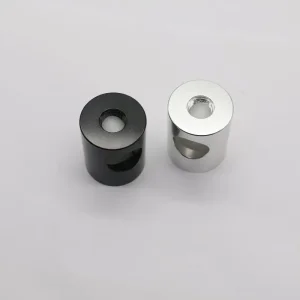
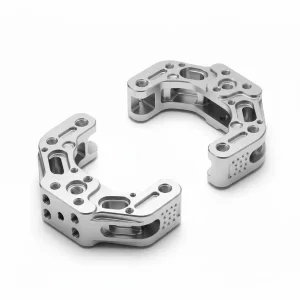
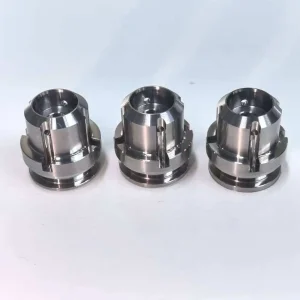
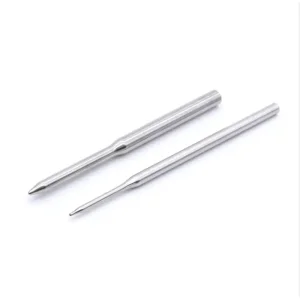
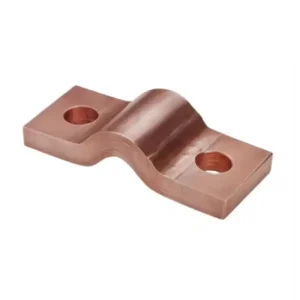
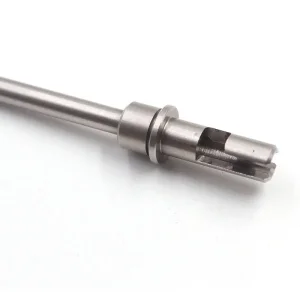
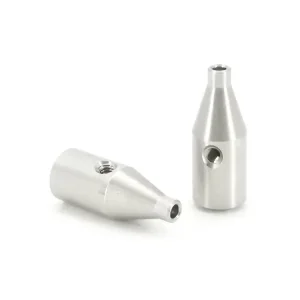
Complementing our compound die stamping expertise, our facility operates over 60 multi-axis CNC milling, Swiss turning, and custom fabrication centers in Shenzhen.
Accelerate Your Stamping Project with Shenzhen Engineering Agility
Direct factory pricing, comprehensive DFM reviews within 24 hours, and guaranteed repeatability. Upload your drawings or STEP models to connect directly with our chief tool design engineers.