
Precision Engineered Assemblies & Tooling Modules
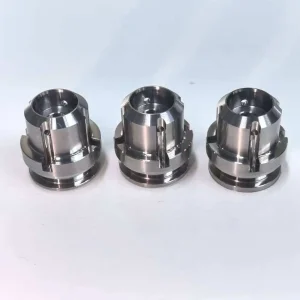
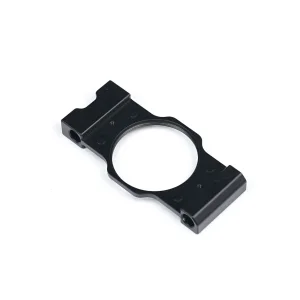
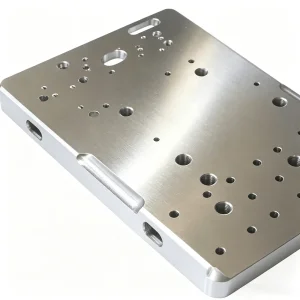
Demonstrating ultra-tight machining synergy, our proprietary stamping dies and precision machined components meet international ASTM, DIN, and ISO specifications.
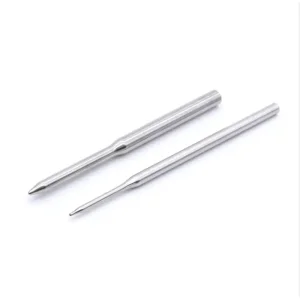
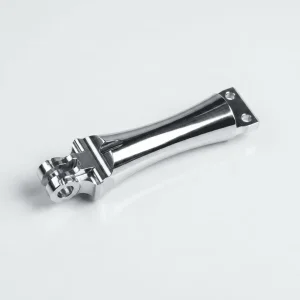
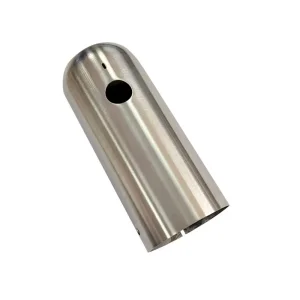
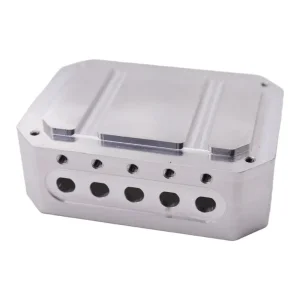
Next-Generation Stamping Tooling & Mold Engineering
Analyzing structural industry shifts, finite element simulation integration, and cross-border delivery parameters governing high-throughput stamping tooling.
The contemporary landscape of metal manufacturing has transcended conventional mechanical pressing. As global original equipment manufacturers (OEMs) and original design manufacturers (ODMs) push the envelopes of lightweight alloys, high-strength low-alloy (HSLA) steels, ultra-thin electrical steels, and miniature terminal geometries, the burden of precision rests firmly on the toolmaker. An experienced ODM stamping mold maker no longer simply machines blocks of tool steel according to static 2D prints; modern tooling houses operate as integrated research and development extensions, utilizing high-end simulation paradigms, autonomous sensor telemetry, and advanced multi-stage metallurgical formulations.
In the high-stakes sectors of electric vehicle (EV) battery architecture, precision avionics, medical robotics, and distributed telecommunications arrays, minor deviations in progressive die clearances translate into millions of dollars in production line stoppages, edge burrs, micro-cracking, or contact resistance spikes. The requirement for precision tool and die exporters is clear: deploy advanced Design for Manufacturability (DFM), adopt finite element forming simulations (AutoForm/Dynaform), integrate optical coordinate measuring systems, and execute verifiable Quality Management Systems (QMS) compliant with ISO 9001:2015 and IATF 16949 standards.
Global Enterprise Sourcing Paradigms & Criteria
What Fortune 500 procurement leaders and Tier-1 engineering directors demand from custom stamping mold manufacturers.
Tooling Longevity & Metallurgy
Global buyers require verified alloy provenance. From Japanese DC53 and SKD11 to Swedish Uddeholm Vanadis 4 Extra powdered metallurgical tool steels, molds must achieve sustained dimensional stability through cryogenically tempered carbide inserts.
HRC 60-64 Matrix RigidityFull In-Die Sensor Automation
Modern procurement guidelines stipulate integrated optical or inductive acoustic sensors directly inside the die. Real-time pitch verification, scrap jam monitoring, and misfeed detection prevent cataclysmic tool breakage in 800+ SPM continuous press runs.
Zero Unplanned DowntimeComplete FAI & PPAP Level 3
Exported tooling must arrive with complete First Article Inspection (FAI) dossiers, full ballooned drawing CMM inspection logs, CpK / PpK statistical process capability data (≥ 1.67), and metallurgical certification confirming chemical and physical homogeneity.
IATF & ISO Traceability| Evaluation Parameter | Legacy Stamping Supplier | Advanced ODM Mold Exporter (Shenzhen/China) | Engineering Benefit |
|---|---|---|---|
| Pre-Engineering Simulation | Empirical trial-and-error, manual grinding | FEA digital twin forming analysis (AutoForm/PAM-STAMP) | Eliminates 3+ re-tooling iterations, 45% faster T0 samples |
| Punch Clearance Precision | ±0.015 mm via manual wire EDM | ±0.002 mm via Sodick / Makino nano-wire cutting | Burr height maintained below 3% of sheet metal thickness |
| Die Life Expectancy | 2,000,000 to 5,000,000 strokes | 20,000,000 to 50,000,000+ strokes (Tungsten carbide) | Substantially lower amortization cost per stamped unit |
| IP Protection Protocols | Standard corporate boilerplate | Strict bilateral NDA, segregated CAD silos, direct plant access | Eliminates intermediary file leaking and design exposure |
China Factory 4.0: Supply Chain Resilience & Tooling Agility
How the Greater Bay Area tooling cluster leverages autonomous smart factories, localized raw material pipelines, and digital traceability to compress lead times.
The global narrative surrounding manufacturing supply chains increasingly focuses on agile responsiveness, component modularity, and risk mitigation. China’s advanced industrial manufacturing clusters, particularly in the Shenzhen and Pearl River Delta innovation corridor, have transitioned from traditional labor-intensive operations to fully digitized, data-driven Industry 4.0 smart tooling ecosystems. For international sourcing managers, this technological leap unlocks tangible efficiency gains across lead time, unit pricing, and tool customization.
1. Hyper-Localized Tooling Ecosystem & Raw Material Density
Within a 50-kilometer radius of our Shenzhen manufacturing hub, engineers source certified premium alloys, vacuum heat treatment furnaces capable of multi-stage sub-zero cryogenic processing, Swiss high-speed CNC centers, and Japanese oil-bath wire-cut EDM units. This concentrated supply chain density mitigates external logistical disruptions, condensing raw tooling lead times by up to 60% compared to fragmented Western or Southeast Asian counterparts.
2. Closed-Loop Digital Metrology & Adaptive Machining
Tooling blocks do not leave the machining cell until laser-guided tool-setting probes and in-situ touch probes confirm volumetric accuracy. Upon completion, punch inserts and die plates undergo Zeiss and Mitutoyo Coordinate Measuring Machine (CMM) verification in temperature-regulated (20°C ± 0.5°C) inspection cleanrooms. Inspection coordinate datasets are autonomously compared against native STEP / IGES mathematical models, generating non-alterable inspection registries.
3. Total Program Accountability: From DFM to Export Delivery
Rather than managing disjointed subcontractors for mold base machining, EDM spark erosion, surface treatment (DLC, TiN, TD coating), and initial sample press trials, our direct-factory architecture provides single-source engineering accountability. Buyers conduct direct engineering video conferences with bilingual tool design leads, bypassing commercial trading brokers and ensuring rapid turnaround on revisions.
Mission-Critical Industry Applications & Use Cases
Deploying specialized progressive, transfer, and deep drawing stamping tooling across rigorous commercial domains.
Electric Vehicles & Power Architecture
Custom progressive dies for copper and aluminum busbars, battery cell terminal interlinks, and motor stator/rotor lamination stacks requiring specialized electrical steel handling and interlocking stamp sequences.
High Conductivity · Zero BurrMedical Diagnostics & Surgical Devices
Micro-stamping tooling for surgical staples, fluidic valve diaphragms, endoscopic articulating link arms, and titanium implant fasteners requiring surgical-grade burr-free edges and bio-compatible passivated finishes.
Titanium & SS316L MasteryAI Server Racks & RF Telecommunications
Complex multi-station progressive stamping for EMI/RFI shielding cans, liquid cooling heat spreader fins, high-density backplane connector pins, and precision bracket assemblies holding planar tolerances under 0.05 mm.
High Thermal & RF ShieldingIndustrial Robotics & Actuators
Heavy-gauge compound stamping and deep drawing tooling for cycloidal reducer retainers, harmonic drive flexspline blanks, encoder shields, and hardened structural clips subjected to continuous dynamic fatigue.
Fatigue-Resistant AlloysFrequently Asked Questions for Global Tooling Sourcing
In-depth responses covering engineering review timelines, intellectual property security, tool warranties, and export compliance.
? What specific design deliverables are required to initiate an ODM stamping mold quote and DFM?
? How does Sunmy Hardware guarantee intellectual property (IP) protection for overseas clients?
? What is the standard tooling lead time from design freeze to First Article Inspection (FAI) sample sign-off?
? How are stamping molds packaged, preserved, and supported for overseas container freight?
? Can your facility manage both the mold fabrication and continuous long-term piece-part mass production?
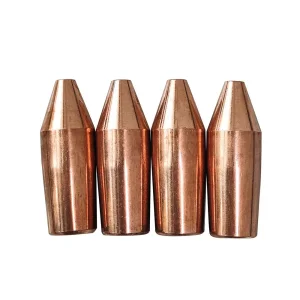
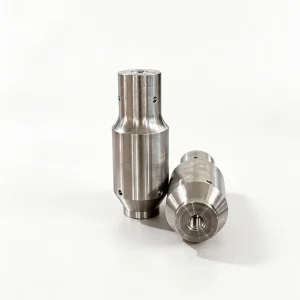
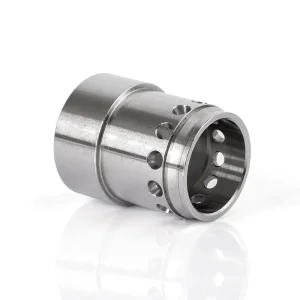
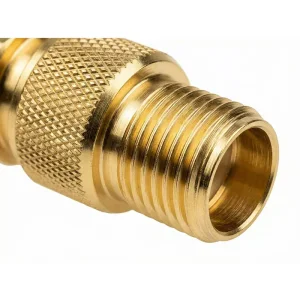
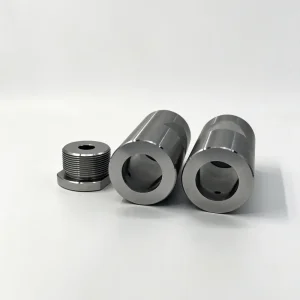
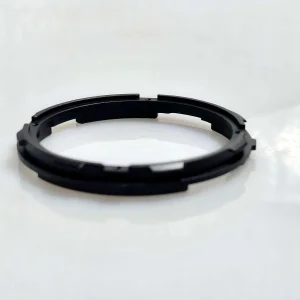
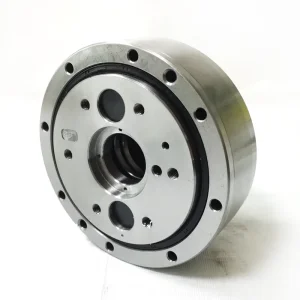
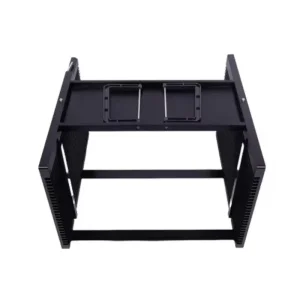
Advanced Production Hardware & Sub-Assemblies
Explore our extensive precision component capabilities engineered to complement custom stamping and contract manufacturing programs.
Initiate Your Custom Stamping Tooling Program
Connect directly with our senior tool design engineers for comprehensive DFM analysis, stripping simulations, and quotation packages delivered within 24 hours.
From micro-contact terminal stamping tools to massive transfer dies for automotive structural members, Shenzhen Sunmy Hardware provides end-to-end tooling engineering backed by empirical metrology, strict IP confidentiality, and reliable international export logistics.