
Engineered Tooling & Custom Precision Components
Explore high-spec assemblies and tooling assets engineered for extreme mechanical reliability, low birefringence, and ultra-tight optical tolerances.
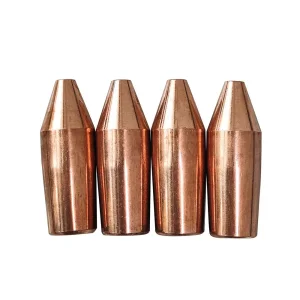
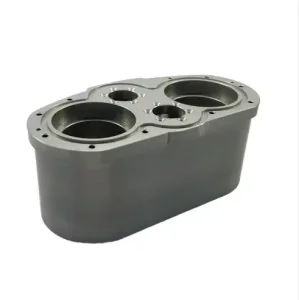

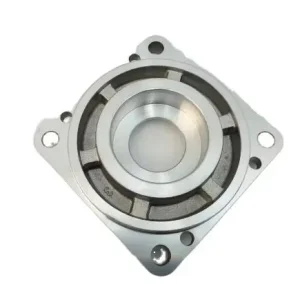
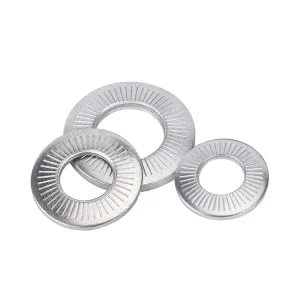
State of Clear Plastic Molding: Transition to Micro-Optics and Precision Medical Fluidics
In modern high-tech industries, clear plastic molding is no longer merely about structural aesthetics or simple transparency; it is an unforgiving domain of optical physics, fluid dynamics, and micro-mechanical precision. From microfluidic point-of-care biochips and endoscopic lenses to automotive LiDAR apertures and augmented reality waveguide frames, engineering buyers face strict tolerances where fractional micron deviations or micro-scale internal stress can render an entire production batch non-viable.
Historically dominated by boutique European and Japanese shops, the precision clear polymer manufacturing ecosystem has undergone a profound structural shift toward Shenzhen Sunmy Hardware Co., Ltd. and tier-1 Chinese precision engineering facilities. Modern Chinese manufacturers leverage direct CAD-to-tooling workflows, AI-assisted mold cavity thermal balancing, sub-micron electric injection machinery, and in-house 5-axis CNC mold core milling (holding critical tolerances down to ±0.005 mm). This convergence of material science, automation, and speed allows international OEMs to drastically compress development timelines while reducing unit costs by 35% to 55% compared to Western counterparts.
Critical Tooling Tolerance on 5-Axis CNC Mold Cores
Average Luminous Transmittance Across Optical PMMA Grades
Cleanroom Molding Standard for Medical & Optical Substrates
Engineering DFM & Moldflow Thermal Turnaround
Global Procurement Demands & Defect Mitigation Protocols
Sourcing transparent components involves engineering challenges that opaque parts never encounter. Transparent polymers visually magnify every internal shear line, void, weld artifact, and thermal discoloration.
Stress Birefringence Elimination
Residual molded-in stress distorts polarized light in optical instrumentation and causes premature environmental stress cracking (ESC). Chinese Class 4.0 molders mitigate this via dynamic mold temperature controllers, dual-stage compression molding, and calibrated thermal annealing ovens.
Optical Diamond Mirror Polishing
Optical transparency demands mold cavity surface roughness below Ra 0.025 μm (SPI A1 standard). Achieving this without waviness requires multi-step hand lapping, automated magnetic field-assisted polishing, and precision diamond turning on copper/nickel inserts.
Black Speck & Splay Invalidation
Even single-micron carbon speck contamination or microscopic moisture streaks cause line rejections. Sunmy hardware maintains desiccant wheel dehumidifying dryers operating below -40°C dew points and automated robotic closed-loop hopper loaders directly in cleanrooms.
Technical Note on Thick-Walled Optical Molding
When injection molding optical lenses and prism components with cross-sectional thicknesses exceeding 5.0 mm, volumetric shrinkage can induce internal vacuum voids and severe sink marks. Advanced China molders utilize Injection Compression Molding (ICM) where the mold cavity is left slightly expanded during fill and hydraulically clamped during the holding phase to distribute packing pressure evenly across non-uniform wall profiles.
Optical Resin Comparison Matrix: Sourcing Trade-Offs
Selecting the optimum transparent thermoplastic requires balancing refractive properties, impact resistance, thermal stability, and chemical exposure.
| Polymer Classification | Refractive Index (nD) | Light Transmission (%) | Abbe Value (Dispersion) | Heat Deflection Temp (°C @ 0.45MPa) | Sterilization & Chemical Resistance | Primary Industrial Use-Case |
|---|---|---|---|---|---|---|
| PMMA (Acrylic) | 1.491 | 92% – 93% | 58 | 95°C – 105°C | Moderate / UV Stable | Optic lightguides, displays, architectural lighting, HUD lenses |
| PC (Polycarbonate) | 1.586 | 88% – 90% | 30 | 130°C – 140°C | High Impact / EtO Compatible | Automotive headlamps, safety shields, industrial sight glasses |
| COC / COP (Cyclic Olefin) | 1.533 | 91% – 92% | 56 | 120°C – 170°C | Superior / Gamma, Autoclave | IVD microfluidic chips, pre-filled syringes, camera lenses |
| Polysulfone (PSU / PES) | 1.630 | 80% – 85% (Amber) | 23 | 175°C – 205°C | Extreme / Repeated Steam Autoclave | Medical dialysis manifolds, aerospace cabin transparencies |
| PETG / Tritan Copolyester | 1.567 | 89% – 91% | 35 | 85°C – 95°C | BPA-Free / Lipids & Alcohols | Medical diagnostic cassettes, consumer drinkware, wearable frames |
China Factory 4.0: Tooling Resilience, Automation & Speed
How Shenzhen Sunmy Hardware integrates additive mold tooling, digital twin simulation, and closed-loop process robotics to outperform standard global benchmarks.
Conformal Cooling via 3D Printed Steel
Standard straight-drilled cooling channels fail to uniformly extract heat from deep optical ribs or curved lenses. By utilizing direct metal laser sintering (DMLS) 3D printing in 1.2709 tooling steel, we manufacture conformal cooling circuits that hug complex geometry. This slashes cycle times by up to 35% while eliminating non-uniform thermal shrinkage.
Cavity Pressure Sensor Closed-Loops
Piezoelectric pressure transducers mounted directly behind ejector pins monitor the flow front in real time. If batch resin viscosity shifts by even 1.5%, the electric injection machine dynamically modulates holding pressure, ensuring absolute repeatability from shot-to-shot with zero flash or short shots.
Dense Greater Bay Ecosystem Speed
The concentration of hardened tool steel distributors, laser texturing centers, optical coating facilities (anti-fog, AR, hard coating), and resin compounding plants within a 30-minute radius of Shenzhen allows Sunmy Hardware to cut tooling lead times down to 18-24 business days from CAD freeze to FAI.
Localized Application Scenarios & Case Histories
From sub-millimeter medical diagnostics to rugged industrial robotics, explore how precision clear molding operates across sectors.
In-Vitro Diagnostics & Microfluidics
Lab-on-a-chip cartridges require micro-channels measuring 50 μm wide by 30 μm deep with perfect capillary flow properties and near-zero auto-fluorescence. Utilizing medical-grade COP (Cyclic Olefin Polymer) molded in Class 100k cleanrooms ensures pristine molecular assay reads without reagent contamination.
Automotive LiDAR & Optical Sensors
Autonomous driving sensor arrays require clear polycarbonate covers with integrated infrared passing filters. Tooling demands multi-cavity precision with zero knit lines over critical sensor optical paths, backed by downstream robotized silicon-based anti-scratch and hydrophobic hard-coating.
Industrial Sight Manifolds & Flow Meters
Process plant flow monitors demand burst-pressure ratings over 30 Bar with complete resistance to aggressive hydraulic fluids and temperature cycles. Sunmy engineers thick-walled polysulfone and heavy-section PMMA bodies using multi-stage cycle annealing to guarantee leak-free operation.
Metrology, First Article Inspection & Compliance Framework
Every shipment is backed by data. We substantiate optical clarity, structural integrity, and dimensional GD&T through accredited in-house testing protocols.
Zeiss CMM & Non-Contact Optical Metrology
Optical contours cannot be touched with standard mechanical probes without risking micro-scratches. Sunmy employs non-contact laser confocal and structured-light optical 3D scanners capable of capturing complex freeform lens curves to a spatial resolution of ±0.001 mm.
Spectrophotometer & Polariscope Analysis
We verify luminous transmittance across 380 nm – 780 nm spectrum bands, haze percentage (< 0.5% standard), and yellowing index (YI). Full-field transmission polariscopes identify any latent molecular shear stresses prior to lot dispatch.
First Article Documentation (FAI & IQ/OQ/PQ)
We supply complete ballooned drawing inspection packages, raw resin certificates of analysis (CoA) with lot numbers, UL94 flammability certs, and full RoHS / REACH documentation ensuring your internal validation team can audit parts on arrival.
Frequently Asked Questions: Clear Plastic Molding
Clear technical answers to help engineering and supply chain leaders de-risk their molding programs.
How does Sunmy prevent knit/weld lines from ruining transparency in optical parts?
What is the typical mold life when running abrasive or high-temperature clear resins?
What tolerances can you reliably hold on precision clear injection molded components?
How do you safeguard client intellectual property and 3D CAD data during engagement?
Can you support low-volume bridge tooling and rapid prototyping for transparent components?
How are sink marks avoided in thick-section transparent components like prisms or lightguides?
What secondary finishing and optical coating capabilities are performed in-house?
How does Sunmy handle drying and handling of hygroscopic transparent materials like PMMA and PC?
What is your standard turnaround time for a custom mold DFM review and quotation?
How are shipping and customs documentation structured for exports to the US and EU?
Robotics, Sensors & Micro-Precision Machined Assemblies
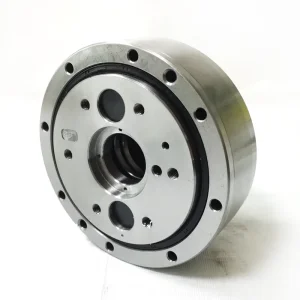
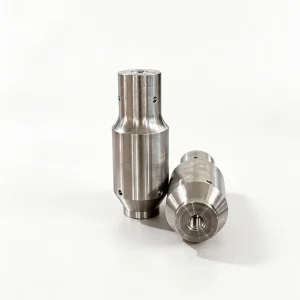
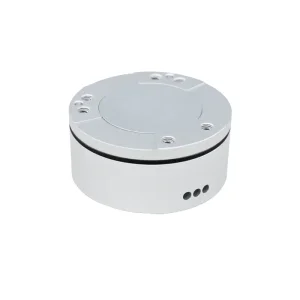
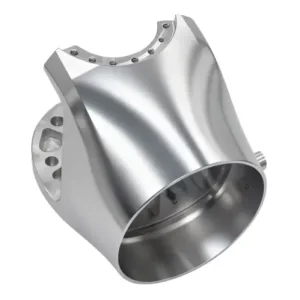
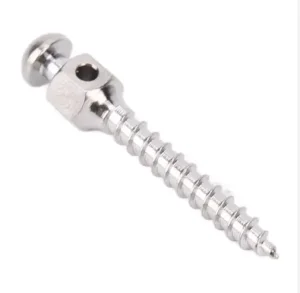
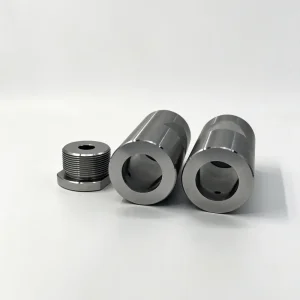
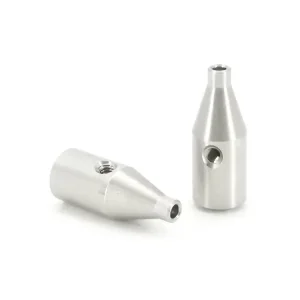
Explore high-precision CNC turning, titanium implants, harmonic elements, and force sensor housings engineered for demanding industrial ecosystems.
Launch Your Clear Plastic Tooling Project
Send 3D drawings (STEP, X_T, IGES) and 2D critical prints. Receive direct engineering DFM, Moldflow gating simulation, and an itemized quote within 24 hours under NDA.